
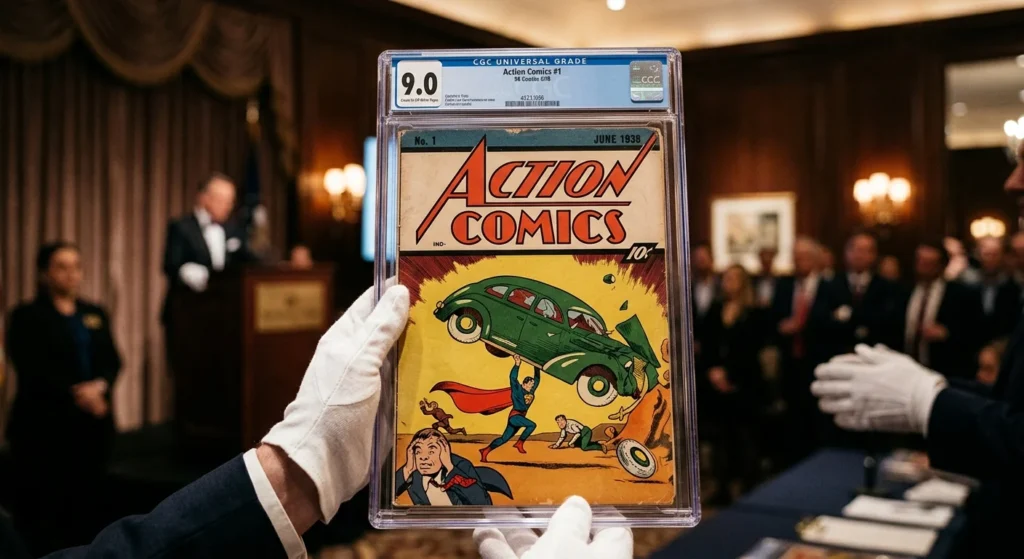
Comic books have evolved from inexpensive entertainment into a collectible market where rare issues can sell for thousands or even millions of dollars. From early Superman and Batman appearances to modern first appearances and limited editions, certain comics have attracted significant interest from collectors and high-end buyers.
But are comic books a good investment in 2026? The answer depends on what you buy, how much you pay, and whether demand for a particular issue holds up over time.
The market has delivered notable results in 2025 and 2026. In November 2025, a copy of Superman #1 sold for a record $9.12 million at Heritage Auctions. In February 2026, two landmark comics, Batman #1 and Superman #1, were involved in a reported $13 million private transaction. These sales demonstrate the potential value of exceptional collectibles, but they do not represent the typical performance of an ordinary comic book collection.
In this guide, we’ll examine recent market data, compare comic books with the S&P 500, identify collectible categories worth researching, and explore what the market could look like in 2027.
Disclaimer: This article is for educational purposes only and is not financial advice. Comic book values can fluctuate, and past auction results do not guarantee future returns.
Please note: This article is for informational purposes only and does not constitute financial or investment advice. Comic Buying Center is not a certified financial advisory firm. Always conduct your own research and consult a qualified financial advisor before making investment decisions.
Why Are Comic Books Valuable?
Comic books do not generate dividends or interest. Their value depends on scarcity, collector demand, historical significance, condition, and the price buyers are willing to pay.
Several factors help explain why some issues become valuable while others remain inexpensive.
Rarity and Scarcity
Many older comics were purchased to read rather than preserve. Over the decades, copies were damaged, discarded, or lost, leaving fewer surviving examples in collectible condition.
However, age alone does not guarantee value. A scarce, historically important issue may command a premium, while a common comic from the same era may attract limited interest.
First Appearances and Key Issues
Issues that introduce iconic characters or establish important storylines often have enduring appeal.
Examples include Action Comics #1, featuring Superman’s first appearance, Amazing Fantasy #15, which introduced Spider-Man, and Incredible Hulk #1, the Hulk’s debut issue.
These comics have historical significance beyond their original stories, helping sustain interest among collectors.
Condition and Professional Grading
Condition can substantially affect a comic’s market value. Spine stress, creases, stains, page quality, missing pieces, and restoration can all influence its grade.
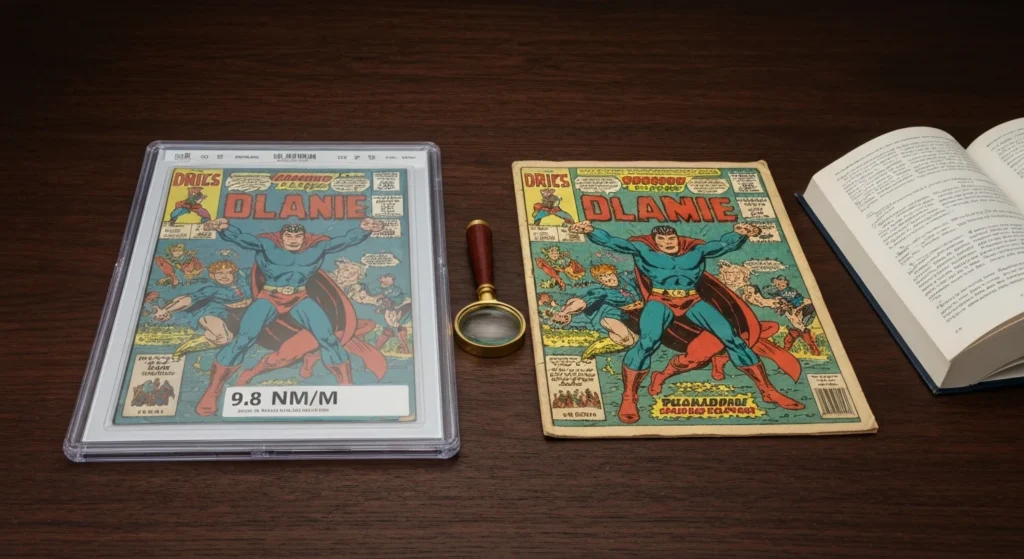
Professional grading companies such as Certified Guaranty Company (CGC) authenticate eligible comics, assess condition, and encapsulate them in protective holders.
Higher grades can command substantial premiums for desirable issues. Nevertheless, grading is not a guarantee of appreciation, and the additional cost may not be worthwhile for common or inexpensive books.
Collector Demand and Cultural Relevance
Movie releases, television adaptations, anniversaries, and renewed interest in particular characters can influence comic book prices.
However, popularity can be temporary. An issue may rise sharply after an entertainment announcement and decline when the initial excitement fades. Long-term collector demand and genuine scarcity are more meaningful than short-lived hype.
Do Comic Books Go Up in Value Over Time?
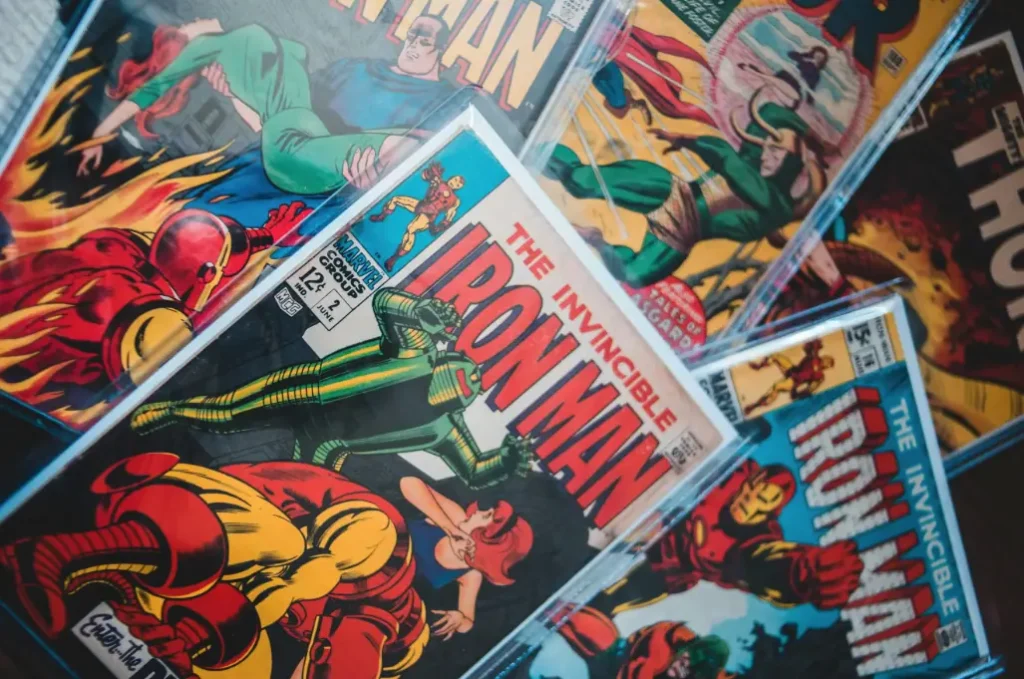
Some comic books have appreciated considerably over the decades, particularly rare Golden Age and Silver Age issues in desirable condition. Others have remained relatively inexpensive or lost value after a speculative surge.
The most compelling historical examples generally combine several characteristics:
- A significant first appearance or publishing milestone.
- Limited surviving supply.
- Strong and sustained collector demand.
- Desirable condition and verifiable authenticity.
- A track record of completed sales supporting the asking price.
The record-setting sale of Superman #1 in November 2025 illustrates the potential of exceptional material. According to Heritage Auctions, a CGC 9.0 copy sold for $9.12 million, including the buyer’s premium.
Yet this was an extraordinary transaction involving a landmark issue in exceptional condition. It would be misleading to use that sale as evidence that comic books generally deliver high investment returns.
For anyone considering comic books as investment assets, the more useful question is which issues have a credible combination of scarcity, historical importance, and sustainable demand.
Comic Book Market Trends in 2025–2026
Recent industry and auction data offer useful insights into the market, although publishing sales and collectible auction prices measure different things.
The Broader Comics Industry Reached a New High in 2025
In February 2026, industry research publisher ICv2 reported that sales of comics and graphic novels in the United States and Canada reached an estimated $2.2 billion in 2025. According to its report, direct-market sales grew nearly 30%, with comic shop sales approaching $1 billion.
These figures indicate substantial consumer activity across the comics industry. However, they include spending on comics and graphic novels broadly and should not be interpreted as investment returns for collectible back issues.
Record-Breaking Auction Results in 2025
Heritage Auctions reported $216.2 million in 2025 sales for its Comics & Comic Art department, its second-highest annual total.
The most notable comic book result came on November 20, 2025, when Superman #1 from 1939 sold for $9.12 million, establishing a record for a comic book sold at auction.
The sale followed the $6 million auction result for Action Comics #1 in April 2024. Together, these transactions demonstrate the extraordinary prices that historically important comics can command when rarity, condition, and buyer competition align.
Landmark Sales Continued in 2026
In February 2026, Heritage Auctions announced a $13 million private transaction involving two landmark issues: a CGC 9.4 copy of Batman #1 sold for $6 million, while a CGC 8.5 copy of Superman #1 sold for $7 million.
In May 2026, Heritage’s combined Comics & Comic Art auctions generated approximately $22.39 million. Among the standout comic book results, a conserved CGC 7.0 copy of Action Comics #1 sold for $1.403 million, while a CGC 6.5 copy of Detective Comics #27 sold for $1.525 million.
Heritage’s July 2026 comics and comic art event generated more than $21 million in sales, further demonstrating activity at the premium end of the market.
These results support a measured conclusion: significant demand exists for historically important comics, but the market is highly selective. Exceptional auction results should not be treated as representative of ordinary collections or as proof of consistent year-over-year appreciation.
Sources: Heritage Auctions’ 2025 results, February 2026 transaction, May 2026 auction results, and ICv2’s 2025 industry sales report.
Comic Books vs. the S&P 500: Which Is the Better Investment?
Comparing collectible comics with the S&P 500 helps clarify the differences between owning physical collectibles and investing in the stock market.
The S&P 500 tracks approximately 500 leading publicly traded U.S. companies. Investors can gain diversified exposure through index funds and ETFs, while comic book collectors typically depend on the performance of individual issues or collections.
How Did the S&P 500 Perform in 2025?
The S&P 500 delivered a total return of approximately 17.88% in 2025, including reinvested dividends, according to published index performance data. This figure is a useful benchmark, but it does not represent a guaranteed annual return or predict the market’s performance in 2026 or 2027.
Comic books do not have one universally accepted market index that tracks the performance of all eras, issues, and grades. Auction records can show what individual collectibles achieved, but they cannot establish a directly comparable annual return for the entire comic book market.
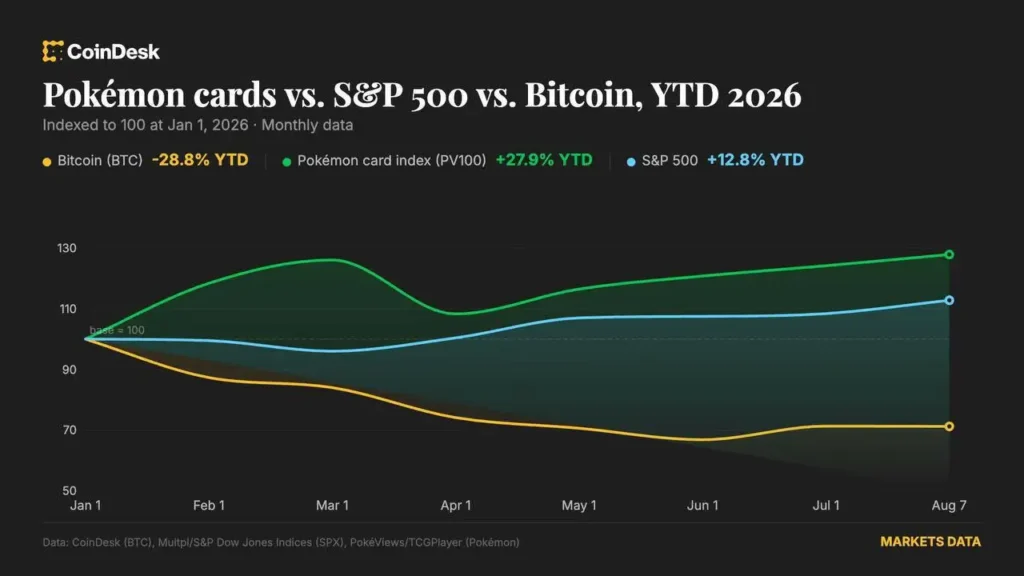
For more context on collectibles and alternative investments, see our related article, Are Pokémon Cards a Good Investment?. It offers a complementary perspective on the factors that influence collectible values.
Key Differences Between Comic Books and Stocks
| Factor | Comic Books | S&P 500 Index Funds |
|---|---|---|
| Return potential | Highly variable; exceptional issues may appreciate significantly | Market-linked returns with extensive historical data |
| Diversification | Requires selecting multiple issues or categories | Broad exposure to hundreds of companies |
| Liquidity | Depends on demand, condition, price, and sales channel | Major index ETFs generally trade readily during market hours |
| Income | No dividends or interest | Dividends may be distributed or reinvested |
| Transaction costs | Grading, shipping, insurance, and selling fees | Fund expenses and applicable trading costs |
| Valuation | Often requires specialist knowledge and comparable sales | Public prices are available during trading hours |
| Storage | Physical protection and potentially insurance are needed | No physical storage required |
| Main risks | Damage, counterfeits, changing demand, and limited buyers | Market volatility and exposure to stock-market declines |
Are Comic Books a Better Investment Than the S&P 500?
Not necessarily.
A rare comic may outperform the S&P 500 over a particular period, but identifying that comic in advance is difficult. Its eventual selling price may also be reduced by grading expenses, insurance, auction commissions, and other costs.
The S&P 500 offers diversified exposure and a standardized way to measure performance. Comic books offer tangible ownership and the possibility of value appreciation driven by scarcity, history, and collector demand.
For most people, comic books are better approached as collectibles with potential financial upside than as a direct replacement for a diversified investment portfolio.
Best Comics for Long Term Investment
Collectors researching the best comics for long term investment should focus on historical importance, demonstrable scarcity, sustained demand, and the price paid relative to comparable sales.
No category guarantees a profit, but several deserve consideration.
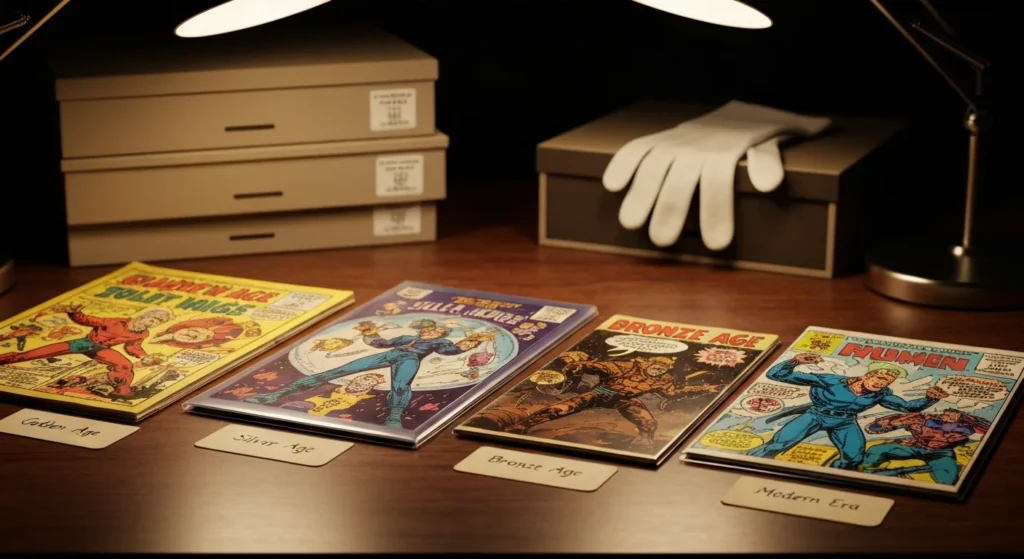
1. Golden Age Comics (1938–1956)
The Golden Age produced many of the most historically significant superhero comics, including early Superman and Batman publications.
Key issues from this period can attract strong demand because relatively few surviving copies remain in desirable condition.
Why collectors consider them: Historical importance, scarcity, and established collector recognition.
What to watch for: High purchase prices, restoration, fragile paper, and substantial differences in value between grades.
2. Silver Age Comics (1956–1970)
The Silver Age introduced or redefined many characters who remain central to comic books and popular culture.
Notable issues include Amazing Fantasy #15, Fantastic Four #1, X-Men #1, and Incredible Hulk #1.
Why collectors consider them: Important first appearances, recognizable characters, and long-standing collector interest.
What to watch for: Condition sensitivity, differences between editions, and the fact that not every issue from this era is scarce.
3. Bronze Age Key Issues (1970–1985)
Bronze Age comics introduced major characters and storylines while expanding the range of themes in superhero comics.
Certain first appearances and historically important issues can offer alternatives to the highest-priced Golden Age and Silver Age books.
Why collectors consider them: Established characters and potentially more accessible entry prices for selected key issues.
What to watch for: Higher surviving supply for some titles and changing demand for specific characters or storylines.
4. Important Modern Age Comics (1985–Present)
Modern comics can become valuable when they feature significant first appearances, important storylines, or genuinely scarce editions.
Examples include New Mutants #98, associated with the first appearance of Deadpool, and The Walking Dead #1, the debut issue of the influential series.
Why collectors consider them: Some issues have accessible entry prices and attract new generations of fans.
What to watch for: Large print runs, abundant variants, and speculation driven by entertainment announcements rather than sustained demand.
5. High-Grade, Professionally Graded Comics
Professionally graded comics may appeal to buyers who prioritize authentication and independently assessed condition.
Why collectors consider them: A recognized grade can simplify comparisons and increase buyer confidence for certain high-value issues.
What to watch for: Grading costs, the premium paid for higher grades, restoration concerns, and whether comparable sales justify the price.
The best opportunities are not necessarily the most expensive comics. They are the issues for which historical importance, rarity, condition, and purchase price make sense together.
Are Graded Comics a Good Investment?
Are graded comics a good investment? They can be, particularly when a comic’s authenticity and condition have a substantial influence on its market value.
Professional grading may be worthwhile for rare key issues, high-grade vintage books, and collectibles for which buyers commonly expect certification. However, grading should be treated as a cost-benefit decision rather than an automatic step.
Before submitting a comic, consider:
- Estimated market value: Compare completed sales of the same issue in similar grades.
- Condition: Check the cover, spine, pages, staples, and signs of restoration.
- Authenticity: Determine whether professional authentication could materially improve buyer confidence.
- Total expense: Account for grading, shipping, insurance, and handling.
- Potential resale premium: Estimate whether the difference in selling price is likely to exceed the added costs.
For a common comic worth relatively little, grading may cost more than the value it adds. For an important, scarce issue, certification may make it easier to establish authenticity and marketability.
Pros and Cons of Investing in Comic Books
Comic books can combine collecting enjoyment with potential appreciation, but they have significant limitations as financial assets.
Pros
- Potential appreciation: Scarce, historically important issues may become more valuable.
- Tangible ownership: Collectors own physical pieces of publishing and pop-culture history.
- Established collector communities: Popular characters and key issues attract dedicated audiences.
- Flexible entry points: Collectors can choose among different eras, publishers, and price ranges.
- Personal enjoyment: Comics can provide entertainment and historical interest while being held.
Cons
- Unpredictable returns: Prices can rise or fall as demand changes.
- Limited liquidity: Some issues take time to sell at an acceptable price.
- Condition sensitivity: Small defects can materially affect value.
- Additional expenses: Grading, storage, insurance, and selling costs reduce net proceeds.
- Authenticity risks: Counterfeits and undisclosed restoration can complicate purchases.
- Uneven market performance: Record sales are concentrated in exceptional collectibles and do not represent the wider market.
The key distinction is between buying comics because you enjoy collecting them and buying them primarily because you expect their prices to rise.

Comic Book Investment Outlook for 2027
In 2027, demand for key issues featuring iconic characters, first appearances, and major storylines may continue to support the collectible comic book market. However, performance will likely vary by title, condition, rarity, and buyer interest.
Collectors considering comic books as a long-term investment should prioritize well-preserved, historically significant issues, research recent sales, and account for grading and selling costs. As with any collectible, appreciation is not guaranteed.
How to Evaluate Comic Books Before Buying or Selling
Whether you are building a collection or preparing to sell, a disciplined approach can help you avoid unrealistic expectations.
Research Completed Sales
Compare actual completed transactions involving the same issue, edition, grade, and relevant characteristics. Asking prices are not proof of market value.
Where possible, review multiple transactions and account for differences in condition, restoration, provenance, and selling fees.
Understand the Issue’s Significance
Research first appearances, key storylines, print variants, and historical milestones. A comic’s importance to the medium may matter more than its age or original cover price.
Assess Condition Carefully
Examine the cover, spine, corners, pages, staples, and signs of restoration. For potentially valuable books, consider a qualified professional assessment.
Calculate Total Costs
Include purchase price, grading, shipping, storage, insurance, and selling expenses when estimating potential returns.
Avoid Buying Solely on Hype
A movie announcement or sudden surge in popularity can raise prices temporarily. Before paying a premium, consider whether the issue has genuine scarcity and lasting collector appeal.
Get an Expert Opinion on Your Existing Collection
You may own valuable comics without realizing it. An experienced buyer can help identify key issues, explain condition-related differences, and provide a more realistic view of the collection’s potential market value.
Should You Sell Your Comic Book Collection in 2026?
The right time to sell depends on your goals, the comics you own, and the demand for those issues.
If you have rare first appearances, vintage comics, important key issues, or high-grade books, a professional evaluation can help you understand their potential market value.
Selling may make sense if you want to reduce your collection, free up space, or realize value from comics you no longer collect. Holding may appeal to collectors who enjoy owning the books and accept the uncertainty of future prices.
Before you sell comic books, organize your collection by publisher, series, and issue number. Keep grading certificates and purchase records where available, and avoid cleaning or attempting repairs on potentially valuable books without expert guidance.
Comic Buying Center helps collectors evaluate comic books and other collectibles. A knowledgeable appraisal can help you identify potentially valuable items and understand your options before deciding what to do next.
Get Your Comic Book Collection Appraised
Wondering whether your old comics could be worth more than you expect?
Comic Buying Center helps collectors evaluate comic books from different eras, including vintage issues, key first appearances, and modern collectibles. Whether you have a few treasured comics or an extensive collection, a professional assessment can help you understand what you own and explore your selling options.
Ready to find out what your comics are worth?
Request a comic book appraisal from Comic Buying Center.
Get an informed evaluation, understand your collection’s potential market value, and make your next decision with greater confidence.
Frequently Asked Questions
Are comic books a good investment in 2026?
Comic books can be worthwhile collectibles for people who understand the market and select issues carefully. Rare first appearances, historically important publications, and scarce high-grade copies may appreciate, but returns are unpredictable. Comic books should not be treated as guaranteed investments.
Do comic books increase in value over time?
Some do, particularly scarce issues with lasting historical significance and strong collector demand. Others remain stable or decline in value. Age alone is not a reliable indicator of future appreciation.
Are graded comics a good investment?
Graded comics can be attractive when authentication and condition meaningfully affect value. However, grading costs money and does not guarantee appreciation. Compare the expected price premium with the total cost of grading and selling.
What are the best comics for long term investment?
Historically important Golden Age and Silver Age key issues are popular with collectors. Certain Bronze Age and modern comics with significant first appearances may also attract long-term demand. No specific issue or category guarantees a profit.
Can modern comic books become valuable?
Yes. Modern comics featuring important character debuts, scarce variants, or major storylines can become valuable. However, many modern issues were printed in large quantities, so popularity alone is not enough to establish long-term potential.
Will comic books increase in value in 2027?
Some may appreciate, especially scarce, historically important issues with sustained demand. However, market conditions, buyer preferences, and individual comic characteristics will influence results. There is no reliable basis for assuming that all comic books will increase in value in 2027.
How much is my comic book collection worth?
The value depends on the issues you own, their condition, authenticity, grade, rarity, and current demand. Comparing recent completed sales and obtaining a professional appraisal can help establish a realistic estimate.
Should I sell my comic books now or hold them?
There is no universally correct answer. Consider current comparable sales, your goals, the collection’s condition, and the costs of continued storage and insurance. A professional appraisal can help you make a more informed decision.