
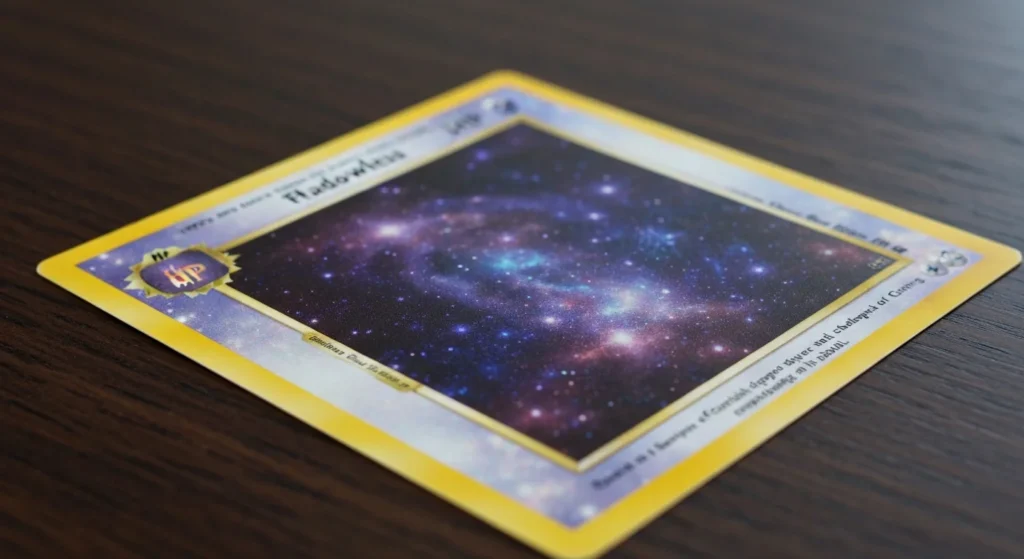
For collectors evaluating vintage 1999 Base Set collections, identifying shadowless Pokémon cards is the difference between a standard find and a highly valuable treasure. To determine if your card is shadowless, look immediately at the right-hand border of the character illustration window. If the artwork box lies completely flat against the yellow border without a dark grey drop shadow, the card is a scarce shadowless print. If you see a thick, dark drop shadow on the right and bottom edges, you have a common Unlimited print. First Edition cards are also shadowless but feature a distinct “Edition 1” black stamp on the bottom-left of the artwork. Use this drop-shadow test first to classify your vintage collection. Knowing this distinction prevents you from selling rare cards at common Unlimited prices.
Key Takeaways
- Drop-Shadow Test: True shadowless cards completely lack the dark grey drop shadow along the right side of the character art frame.
- Exclusive to Base Set: The shadowless variant only exists in the original 1999 English Base Set.
- The Copyright Tell: Shadowless Trainer and Energy cards display the year “99” at the end of the bottom copyright line.
- Value Premium: Shadowless cards command up to five times the value of standard Unlimited prints, especially for holographic cards.
- Grading Matters: Submitting rare shadowless cards to professional grading companies like PSA can unlock thousands of dollars in value.
What Is a Shadowless Pokémon Card in Vintage Collecting?
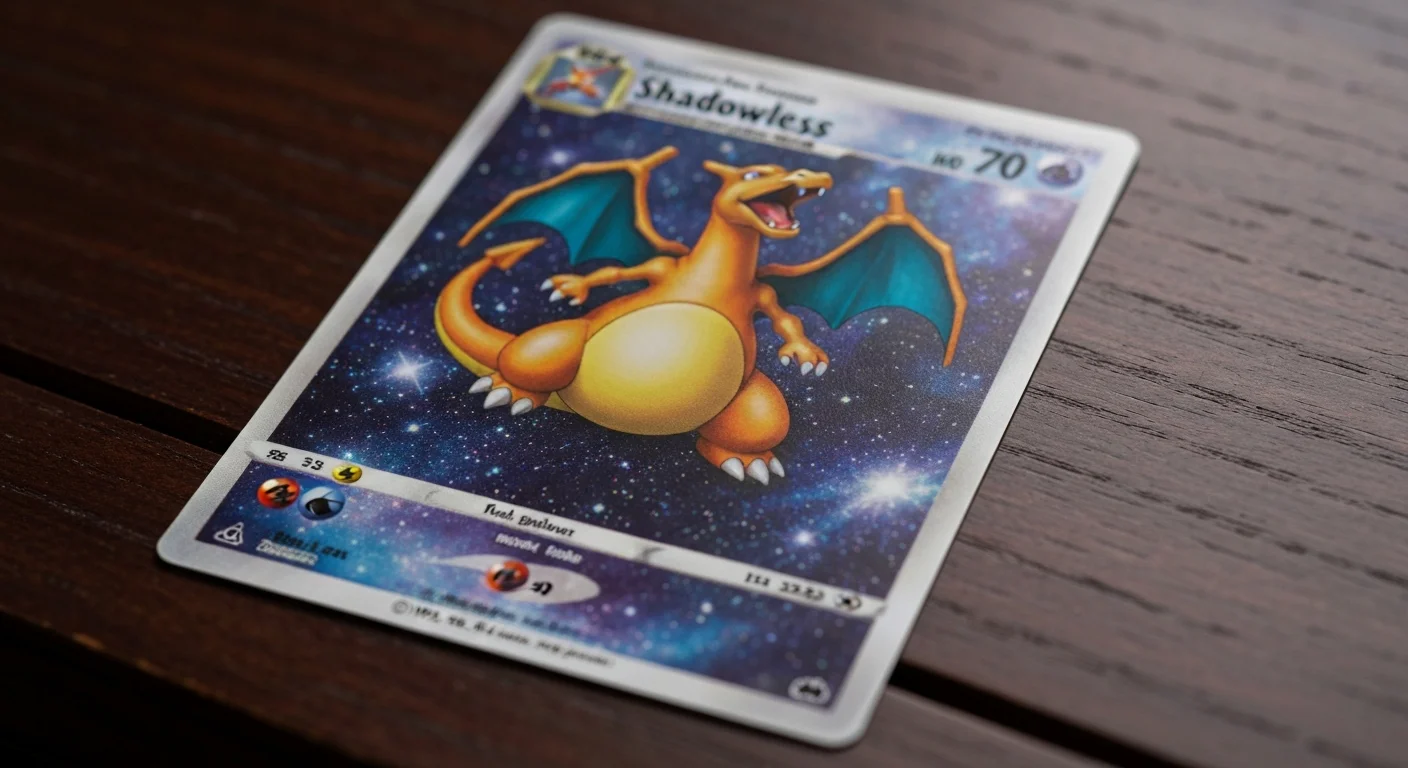
A shadowless Pokémon card represents a transitional phase in the early production history of the franchise. When Wizards of the Coast first printed the English Base Set in early 1999, the graphic designers omitted a drop shadow behind the illustration frame. This design choice left the artwork border clean and flat against the surrounding yellow card frame. This specific printing occurred immediately after the initial First Edition print run sold out in stores.
Understanding what shadowless means in Pokémon cards requires looking at the progression of the 1999 Base Set printing runs. The very first print run was the First Edition set. These cards featured a flat, shadowless design and carried a circular “Edition 1” stamp on the left side of the card body. Once demand skyrocketed, Wizards of the Coast printed a second run. They removed the First Edition stamp but kept the artwork frame identical. This second print run is what collectors call the shadowless run.
As production continued, designers decided the cards needed more visual depth. They added a heavy, dark grey drop shadow to the right and bottom of the character box. This change launched the Unlimited print run, which represents the vast majority of vintage cards in circulation today. If you want to maximize your returns, you can sell Pokemon cards of the shadowless variety for significantly higher prices than their shadowed counterparts.
How to Tell Shadowless Pokémon Cards Apart From Common Prints
Identifying these rare variants requires a systematic inspection of specific visual markers on the card. While the presence or absence of the shadow is the most obvious indicator, several other subtle typographic and color differences exist. Follow this structured checklist to analyze your cards accurately.
- Inspect the Art Border: Examine the right and bottom edges of the character illustration box. If the yellow border transitions directly into the artwork frame with no grey shadow, your card is shadowless.
- Check the HP Text: Look at the Hit Points value in the top-right corner. Shadowless variants use a thin, light red font for the “HP” text. Unlimited prints feature a much bolder, thicker red font with tighter spacing.
- Examine the Bottom Copyright Line: Look at the very bottom edge of the card. A shadowless card reads “© 1995, 96, 98, 99 Nintendo”. Unlimited cards omit the “99” and read “© 1995, 96, 98 Nintendo”.
- Look at the Font Weights: Read the attack descriptions and the descriptive text under the artwork. Shadowless cards feature thinner, crisper text, whereas Unlimited cards use a heavier, saturated ink weight.
- Analyze Card Colors: Place your card under bright, natural light. Shadowless cards generally have lighter, brighter yellow borders and softer background colors than the highly saturated Unlimited versions.
This systematic process is especially crucial for Trainer and Energy cards. Because these cards do not have character illustration boxes, they do not feature drop shadows. For these specific cards, the bottom copyright line is the single definitive way to spot a shadowless printing. Identifying these details requires patience but yields immense financial rewards.
Shadow vs Shadowless Pokémon Cards: Visual and Structural Differences
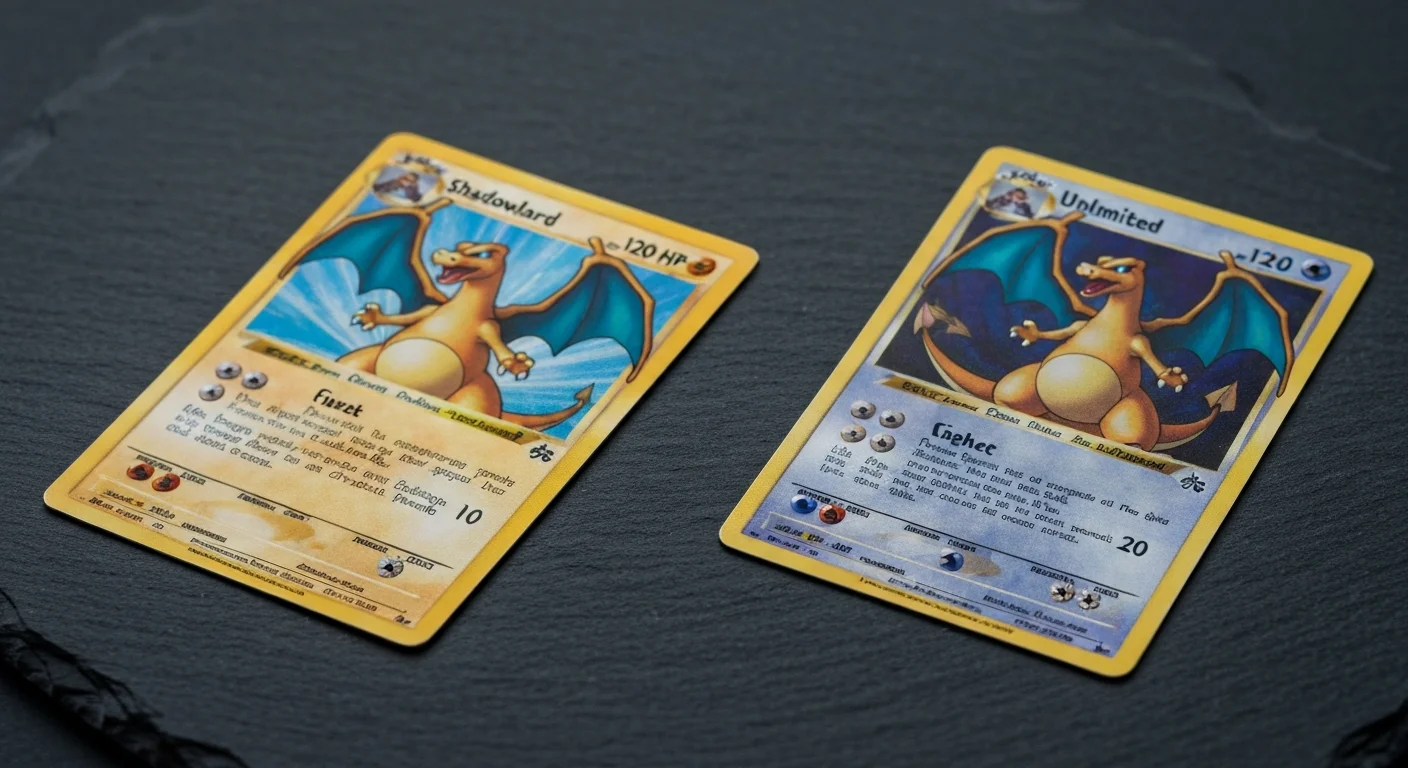
The distinction between shadow vs shadowless Pokémon cards goes beyond a simple printing quirk. These differences represent entirely separate eras of early trading card production. The transition to shadowed artwork was not just cosmetic. It marked a major shift toward automated mass production to meet unprecedented global demand.
During the shadowless run, Wizards of the Coast utilized a thinner cardstock that felt slightly more flexible. When they transitioned to the Unlimited run, they updated the cardstock slightly and adjusted the ink distribution. The Unlimited run has a darker, more saturated ink profile to make the characters stand out on retail shelves. The shadowless run retains a pastel-like quality that many purists prefer.
To help you quickly differentiate between these versions, review this comprehensive comparison table detailing the three main variants of the 1999 Base Set:
| Card Attribute | First Edition Base Set | Shadowless Base Set | Unlimited Base Set |
|---|---|---|---|
| “Edition 1” Stamp | Yes (Bottom Left of Art) | No | No |
| Drop Shadow on Art Window | No | No | Yes (Grey/Drop Shadow) |
| Copyright Line Text | Includes “99” (1995, 96, 98, 99) | Includes “99” (1995, 96, 98, 99) | Omits “99” (1995, 96, 98) |
| HP Font Style | Thin and Light Red | Thin and Light Red | Bold and Dark Red |
| Production Scarcity | Extremely High | High | Low (Mass Produced) |
This physical structural change helps professional grading organizations verify the authenticity of raw submissions. To understand how professional companies look at these physical details under magnification, you can explore the complete guide to CGC card grading. Using these visual criteria keeps you from making pricing errors when trading.
The Historical Sequence of the 1999 Wizards of the Coast Print Runs
To fully grasp the rarity of these collectible items, one must examine the chaotic landscape of early trading card manufacturing. In 1999, Wizards of the Coast faced the monumental task of distributing the Japanese phenomenon to the English-speaking world. They underestimated the initial demand, leading to a rapid succession of printing modifications over a very short period.
The first print run was exceptionally small and sold out almost instantly. Collectors who purchased booster boxes in early January 1999 received the legendary First Edition cards. Once these initial sheets sold out, the factory began printing sheets without the First Edition stamp on the printing plates. This produced the shadowless run. However, within weeks, distributors noticed that the cards looked flat compared to newer gaming cards. This prompted the addition of the drop shadow design to enhance the 3D depth of the artwork.
Because the shadowless phase lasted only a few weeks, the total volume of printed shadowless sheets remains incredibly low. According to data tracking from the Professional Sports Authenticator (PSA) database, shadowless cards represent only a small fraction of total vintage submissions compared to the millions of Unlimited cards graded. If you are new to the hobby, learning how to start collecting Pokemon cards correctly means prioritizing these early print runs over more common modern variants.
Real-World Market Value and Pricing Trends
The financial value of shadowless variants scales dramatically based on condition and the specific character depicted. While common cards like Weedle or Rattata might only fetch a small premium, holographic cards like Charizard, Blastoise, and Venusaur represent high-end investment assets. The differences in auction performance between these variants highlight why precise identification is so important.
A prime example of this value disparity is the iconic Base Set Charizard. According to historical transaction records on the trading card index PriceCharting, a standard Unlimited Charizard in a professional PSA 9 grade typically sells for around $1,000 to $1,500. However, a shadowless Charizard in the exact same PSA 9 grade routinely commands between $4,500 and $6,500. If you are lucky enough to own a pristine PSA 10 gem mint copy, the price can climb to over $35,000, as documented in sales data by eBay auction trackers.
Condition is the ultimate driver of value for these older prints. Because these cards were produced on thinner cardstock, they are exceptionally prone to edge wear, silvering on the holographic foil, and surface scratching. To protect your investment and maintain these high values, choosing the right preservation methods is essential. Read our guides on card storage and organization to ensure your vintage collection does not lose its market value over time.
Common Professional Mistakes to Avoid in Identification
Inexperienced collectors and even some shop owners routinely make critical mistakes when analyzing these vintage cards. One of the most common errors is assuming that all non-English cards can be shadowless. In reality, the shadowless variant is strictly an English-language phenomenon. Spanish, French, German, and Italian First Edition cards actually feature drop shadows because their print runs occurred much later in the production cycle. If you buy a German First Edition card expecting it to be shadowless, you will be disappointed.
Another major trap involves confusing shadowless cards with foreign “unlimited” printings that feature different layout formats. Additionally, counterfeiters often scratch off or chemically alter the drop shadow on Unlimited cards to pass them off as authentic shadowless items. Under 10x magnification, these altered cards show clear signs of scratch marks and ink loss. Always check the weight of the HP font and verify the copyright year to confirm authenticity before purchasing high-end cards.
Finally, never assume a card is a common print just because it is a Trainer or Energy card. Many hobbyists discard or ignore shadowless Trainer cards, not realizing that complete shadowless sets are highly sought after by master-set collectors. A shadowless Super Energy Removal or Computer Search can easily sell for $20 to $50 in top condition, compared to pennies for the Unlimited version. Take your time to inspect every single card in your binder.
How to Safely Clean and Store Your Vintage Collection
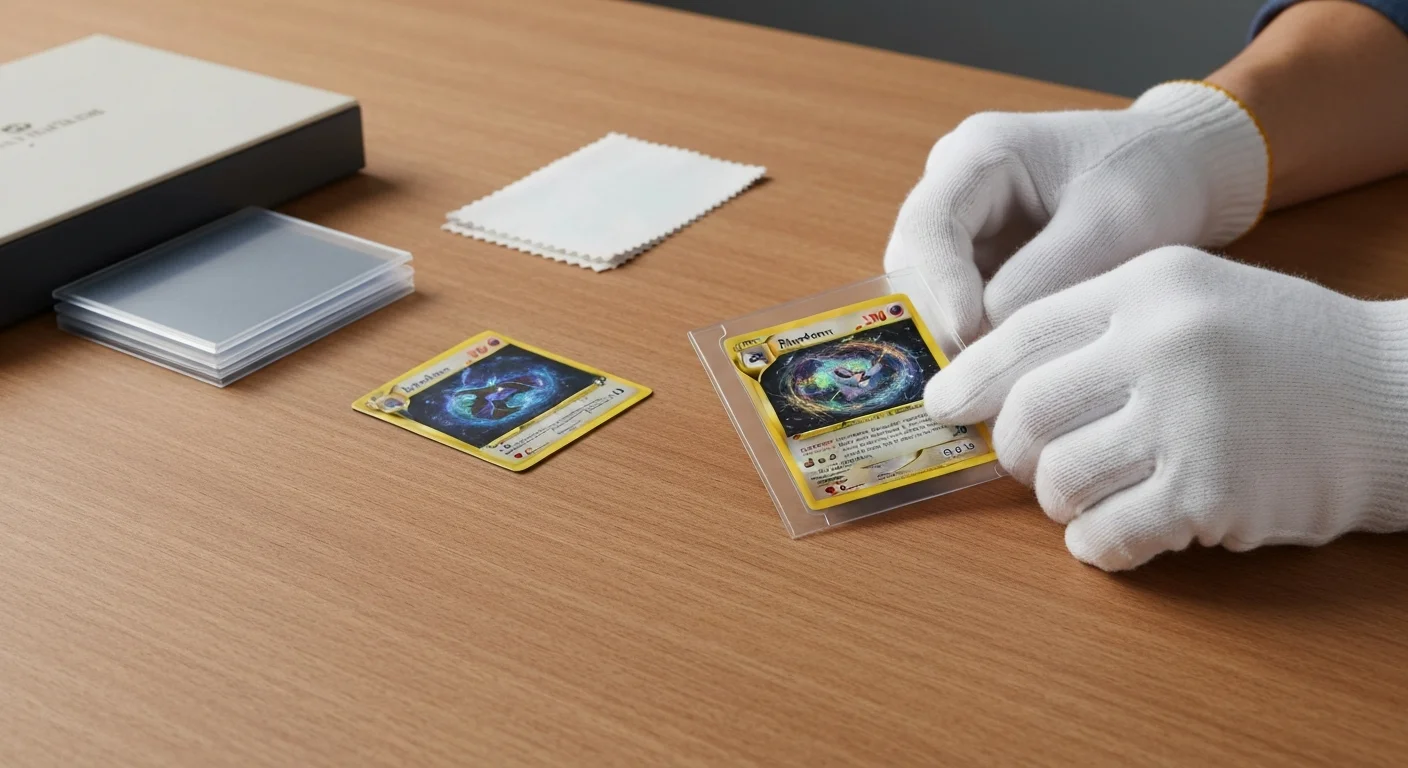
Preserving the pristine physical condition of your shadowless assets is the most effective way to guarantee their long-term growth. Because these cards are over twenty-five years old, they are highly sensitive to environmental factors such as humidity, ultraviolet light, and poor handling. Implementing a professional storage system is mandatory for any serious collector.
Always handle your cards by the edges and wear clean, powder-free nitrile gloves when performing close inspections. Never use harsh household chemicals or wet wipes to clean dirt off the surface. Instead, use a dry, ultra-soft microfiber cloth to gently wipe away dust or fingerprints. When storing the cards, use a multi-layered protection strategy. Place the card into a soft penny sleeve first, then insert it into a rigid top loader or a semi-rigid grading sleeve.
Avoid storing your binders or card boxes in damp basements or hot attics. Rapid temperature fluctuations cause cardstock to warp, creating a curved “foil curl” that hurts professional grading scores. Store your collection in a climate-controlled room away from direct sunlight. Taking these simple steps keeps your cards looking fresh and ready for professional appraisal when you decide to sell.
FAQ
What does shadowless mean on a Pokémon card?
Shadowless means a 1999 Base Set card printed without the drop shadow along the right and bottom edges of the illustration frame. This design makes the picture sit flat against the yellow border, representing the scarce second print run of the original set.
How do you tell if a Pokémon card is shadowless?
Look at the right side of the character illustration frame. If there is no dark grey shadow and the copyright line at the bottom ends with the year “99”, the card is shadowless. You can also verify this by checking for a thinner, lighter red “HP” text font in the top-right corner.
Are all First Edition Pokémon cards shadowless?
Yes, all English First Edition Base Set cards are shadowless because they were printed before the drop shadow was added to the template design. However, the reverse is not true, as a shadowless card is only First Edition if it also displays the “Edition 1” stamp on the left side.
Which Pokémon sets have shadowless cards?
Only the 1999 English Base Set contains true shadowless cards. Later vintage sets, such as Jungle, Fossil, and Team Rocket, were printed with the drop shadow from the very beginning of their runs.
Are shadowless Pokémon cards worth more?
Yes, shadowless cards are significantly scarcer and more valuable than the common Unlimited versions, sometimes selling for several times more. While they do not reach the extreme price levels of First Edition stamped cards, they represent a highly profitable premium tier for collectors.
Is there a shadowless Trainer card?
Yes, Trainer and Energy cards have shadowless versions, but they do not have illustration boxes with drop shadows. To identify them, you must look at the copyright line at the bottom, which must contain the year “99” (1995, 96, 98, 99 Nintendo).