

For collectors holding vintage Magic: The Gathering cards, the MTG Reserved List acts as the ultimate safeguard of value. For players looking to acquire powerhouses like Black Lotus or original Dual Lands, it represents an ever-climbing financial barrier. The Reserved List is a legally binding guarantee established by Wizards of the Coast in 1996, declaring that 572 specific cards will never be reprinted in tournament-legal physical form. If you are a collector looking to maximize your returns, your best path is to preserve these cards in high-grade condition and seek expert appraisals from professional buyers. If you are an active player, you must rely on digital platforms or casual proxy-friendly formats to experience these iconic pieces of gaming history. Understanding this list is crucial because it divides the game’s secondary market into volatile modern printings and highly stable, appreciating legacy assets. It shapes the entire financial ecosystem of the world’s oldest trading card game.
Key Takeaways
- The MTG Reserved List contains 572 vintage cards that Wizards of the Coast has promised to never reprint in physical, tournament-legal form.
- Established in 1996 after the release of Chronicles crashed card prices, the list protects the financial investments of collectors.
- The list includes legendary cards like the Power Nine and original Dual Lands, making these some of the most expensive collectibles in the world.
- Wizards of the Coast closed a premium reprint loophole in 2010, ensuring no promotional or foil versions of these cards will ever be produced.
- Verifying authenticity and condition is critical, as high-grade Reserved List cards command massive premiums on the secondary market.
What is the Reserved List MTG and Why Was It Created?
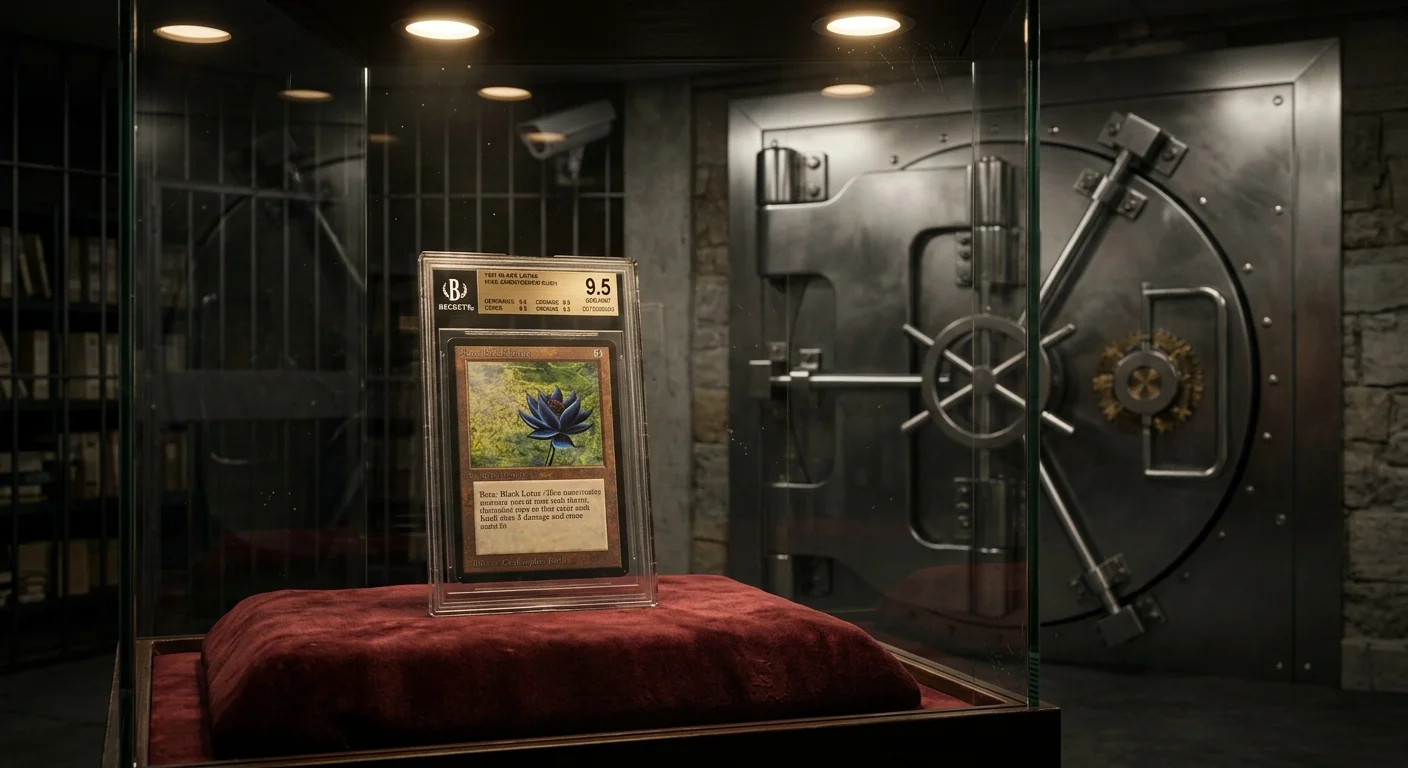
The Reserved List MTG is a collection of 572 early Magic cards that the game’s publisher promised never to reprint to preserve their secondary market value. To understand why this policy exists, one must look back to the early mid-1990s. When Magic: The Gathering debuted, players fell in love with the game’s strategic depth and collectibility. However, as demand surged, Wizards of the Coast faced a dilemma. Early expansion sets like Arabian Nights, Antiquities, and Legends had extremely limited print runs. This scarcity drove prices skyward on the secondary market.
In 1995, Wizards of the Coast attempted to make these hard-to-find cards accessible to everyday players. They released two massive reprint sets: Fourth Edition and Chronicles. These sets flooded the market with white-bordered versions of rare cards. While casual players rejoiced, the sudden influx of supply caused a catastrophic collapse in the financial value of the original black-bordered printings. Collectors and game store owners felt betrayed. They saw their valuable assets lose up to 90% of their market value overnight.
To restore confidence in the collectible nature of the game, Wizards of the Coast published the official Card Reprint Policy on March 4, 1996. This policy created the Reserved List, guaranteeing that the rarest cards from early sets would remain exclusive. It rebuilt trust with the community, establishing the foundation of Magic’s high-end collectible market that still thrives in 2026. If you want to identify which early cards in your possession might fall under this category, you can learn how to tell if your Magic cards are worth money through our detailed verification guide.
The Evolution of the Magic the Gathering Reserve List
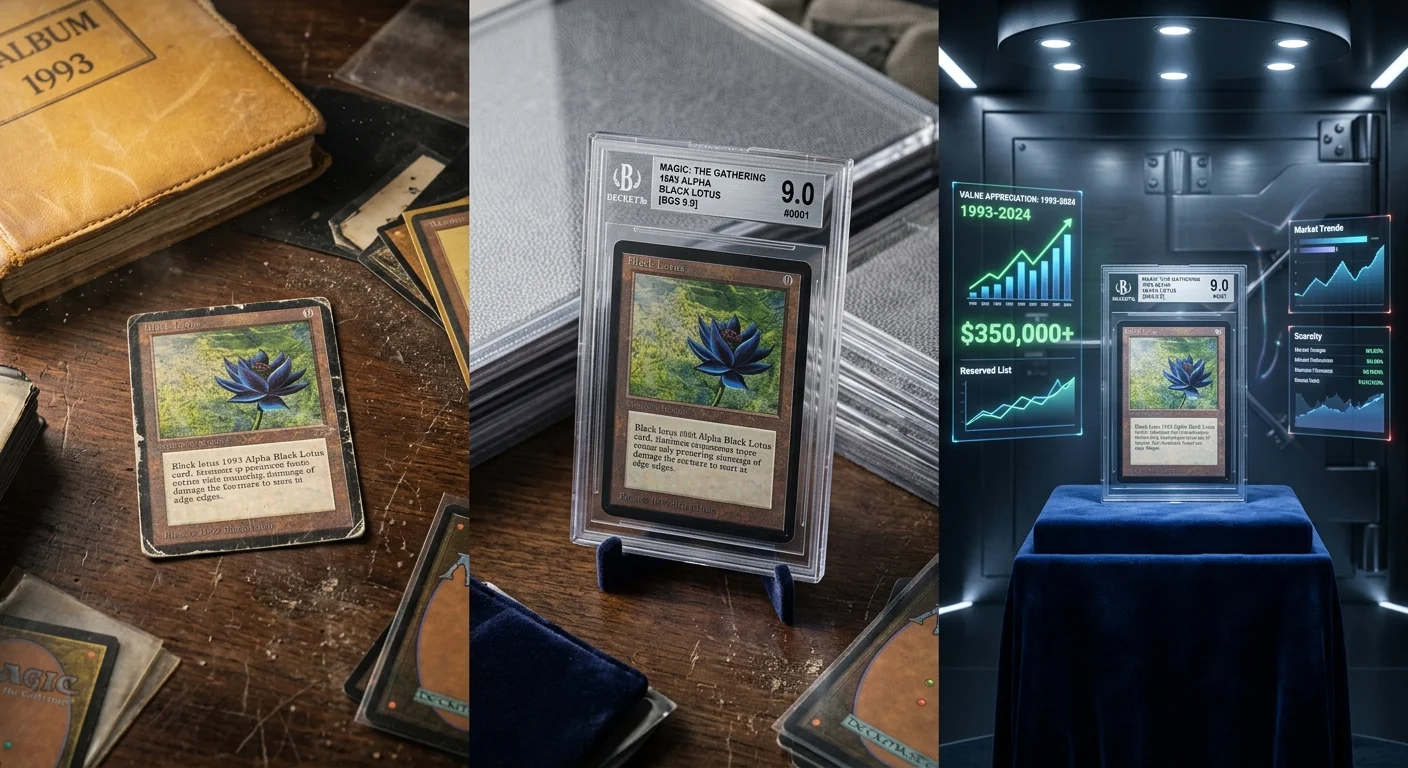
The Magic the Gathering reserve list has undergone several critical policy revisions since its 1996 inception, progressively tightening the reprint restrictions. Initially, the list was designed to be dynamic. It reserved most rare and uncommon cards from early expansions while allowing a portion of future sets to be reprinted. Under the original 1996 rules, up to 25% of the highest-rarity cards from new sets could be reprinted, with the remaining 75% entering the Reserved List. This policy applied to sets through Urza’s Destiny, which was released in June 1999.
In September 1999, Wizards of the Coast simplified the policy. They announced that no cards from Mercadian Masques or any subsequent set would ever be added to the Reserved List. This change capped the list permanently. It made Urza’s Destiny the final set to contribute cards to the pool.
A major turning point occurred in July 2002. Wizards of the Coast conducted its first and only cleanup of the list. They removed all common and uncommon cards from Limited Edition (Alpha and Beta) to improve game accessibility. Since that 2002 update, no cards have been added to or removed from the list.
The last major policy shift happened in 2010. For years, a loophole allowed Wizards to print premium foil versions of Reserved List cards as promotional items, such as Judge Rewards. However, when the premium-product releases of Duel Decks: Phyrexia vs. The Coalition and From the Vault: Relics sparked community outrage, Wizards of the Coast officially closed this loophole. Since 2010, the policy strictly prohibits any tournament-legal physical reprints of these 572 cards, regardless of whether they are foil or non-foil.
High-Value Targets on the MTG Reserved List

The most valuable cards on the MTG Reserved List are the legendary Power Nine and the original ten Dual Lands, which command astronomical prices from serious collectors. The Power Nine represents the pinnacle of Magic: The Gathering collectibility, consisting of Black Lotus, Ancestral Recall, Time Walk, Timetwister, and the five Mox gems (Pearl, Sapphire, Jet, Ruby, and Emerald). Among these, Black Lotus reigns supreme. In pristine condition, a Black Lotus can easily command prices ranging from $100,000 to over $500,000, depending on the specific printing (Alpha, Beta, or Unlimited).
Aside from the Power Nine, the original ten Dual Lands are the most highly sought-after utility cards on the list. These lands—including Underground Sea, Volcanic Island, Tropical Island, and Tundra—provide perfect mana fixing with no gameplay drawbacks. Because they are essential for competitive play in vintage formats like Commander, Legacy, and Vintage, their demand remains incredibly high. Price ranges for these dual lands typically sit between $200 and $1,500 for played copies, while pristine, black-bordered Alpha or Beta versions can soar past $10,000.
Other notable high-value cards on the list include Gaea’s Cradle from Urza’s Saga, Bazaar of Baghdad from Arabian Nights, and Mox Diamond from Stronghold. These cards combine extreme scarcity with immense gameplay power, making them highly resilient to market downturns. The long-term appreciation of these vintage gaming assets is well-documented. For instance, financial reports from the TCGplayer Marketplace show that high-grade Reserved List cards have consistently outperformed traditional luxury collectibles over multi-year periods.
Comparing Key Reserved List Eras and Card Types
Comparing the different eras of Reserved List cards reveals distinct variations in print runs, scarcity, and overall market demand. The oldest sets, such as Alpha, Beta, and Arabian Nights, feature incredibly small print runs, which translates to high collector premiums even for weaker cards. In contrast, late-era sets like Tempest, Stronghold, and Urza’s Saga had much larger print runs, meaning their Reserved List cards rely heavily on gameplay utility to maintain their high values.
To help collectors understand these differences, we have compiled a comparison of the key eras represented on the Magic the Gathering reserve list:
| Era & Key Sets | Est. Scarcity Level | Primary Value Driver | Typical Price Range (2026) |
|---|---|---|---|
| Early Core (Alpha, Beta, Unlimited) | Extremely High | Historical Significance & Rarity | $500 to $500,000+ |
| Early Expansion (Arabian Nights, Antiquities, Legends) | High | Collector Nostalgia & Scarcity | $100 to $25,000+ |
| Middle Expansion (The Dark, Fallen Empires, Homelands) | Moderate to High | Niche Collectibility (Lower Utility) | $5 to $200 |
| Late Expansion (Mirage Block, Tempest Block, Urza Block) | Moderate | Competitive Gameplay Utility (EDH/Legacy) | $20 to $1,500+ |
As the table demonstrates, the age of the card is not the only factor. Gameplay utility in popular formats like Commander dictates whether a late-era card like Gaea’s Cradle can surpass the value of an early-era rare with no competitive viability.
Essential Identification and Value Strategies for Collectors
Identifying authentic cards on the reserve list mtg requires a combination of precise physical testing, condition assessment, and professional grading resources. Because of the immense financial value of these vintage cards, the market suffers from a high volume of sophisticated counterfeits. Many of these fakes are printed using modern high-resolution equipment, which can easily deceive casual buyers.
To protect your investment and ensure you are dealing with genuine items, professional collectors recommend a systematic verification process:
- The Loupe Test: Use a 10x or 30x jeweler’s loupe to inspect the green dot on the back of the card. A genuine Magic card features a distinct cluster of four red dots in an “L” shape inside the green symbol.
- The Light Test: Shine a strong light through the card. Magic cards are printed on a specific blue-core paper stock that allows a consistent, diffused light to pass through. Counterfeits often use black-core paper, which blocks the light entirely, or cheap white cardstock that lets too much light through.
- The Weight and Thickness Test: Genuine vintage cards weigh between 1.7 and 1.8 grams and measure approximately 0.3 millimeters in thickness. Even slight deviations can indicate a counterfeit.
- Surface and Edge Inspection: Examine the card’s rosette pattern. Genuine cards have crisp, clear text printed on top of the ink rosette pattern, rather than integrated into it.
A common professional mistake to avoid is attempting the infamous “bend test” on vintage cards. This test involves bending the card corner-to-corner to see if it creases. On old paper stocks from when Magic: The Gathering came out in 1993, this test can easily cause permanent structural damage, instantly destroying thousands of dollars in value. Instead, rely on non-destructive optical tests or submit your high-value cards to professional grading services. If you want to know which company to trust with your valuable collection, check our comprehensive comparison of PSA vs CGC vs Beckett vs TAG to find the best fit for your needs.
Selling Your Magic Cards Safely and for Fair Prices
Selling your vintage Magic cards safely requires choosing a reputable, expert buyer who understands the nuances of the MTG Reserved List and offers fair, transparent pricing. While selling cards individually on online marketplaces can sometimes net a high price, it also exposes you to significant risks, including mail fraud, platform fees, and payment disputes. For high-value transactions involving Reserved List items, working with a trusted local showroom is the most secure path.
At Comic Buying Center, we specialize in evaluating and purchasing high-end trading cards, comic books, and vintage collectibles. Our experienced team in Libertyville, Illinois, provides professional, in-person appraisals that take into account the exact condition, printing, and current market demand of your cards. If you are ready to cash in on your collection, we make it easy to sell Magic cards through a stress-free process that guarantees immediate, competitive payouts without the hassle of online auction sites.
The Future of the Reserved List MTG in 2026 and Beyond
The future of the reserved list mtg remains a highly debated topic among players and investors, with Wizards of the Coast maintaining a firm stance on upholding the policy. Over the years, many players have called for the list to be abolished, arguing that it restricts access to popular formats like Legacy and Commander. Despite this pressure, the publisher has repeatedly stated that they have no intention of breaking their promise, citing the risk of legal challenges and the loss of consumer trust.
According to market data published by the Cardmarket Insights Portal, the prices of key Reserved List cards have shown remarkable stability, cementing their status as blue-chip alternative assets. While modern sets suffer from rapid reprint cycles that depreciate card values, Reserved List items act as a safe haven for capital within the hobby.
In late 2022, Wizards of the Coast tested the boundaries of the policy by releasing the 30th Anniversary Edition. This product contained non-tournament-legal, gold-bordered reprints of early cards, packaged in booster packs priced at $999. While this release did not technically violate the literal text of the reprint policy, it drew intense criticism from the community. In 2026, prominent figures like head designer Mark Rosewater have continued to emphasize that while the company respects the tournament-legal reprint ban, they will continue to explore creative ways to celebrate Magic’s rich history without damaging the core promise made to collectors, as reported in the official Wizards of the Coast corporate announcements.
FAQ
What is the MTG Reserved List?
The MTG Reserved List is a selection of 572 early Magic: The Gathering cards that Wizards of the Coast has promised never to reprint in a tournament-legal, physical format. Created in 1996, the list serves to protect the secondary market value of vintage collectibles for players and collectors alike.
Why was the Reserved List created?
Wizards of the Coast created the list in response to a massive collector backlash following the release of the Chronicles and Fourth Edition sets in 1995. These sets heavily reprinted scarce, valuable cards, causing their market prices to crash and damaging consumer trust in the game’s collectibility.
Can cards be removed from the Reserved List?
No, cards cannot be removed from the list under the current policy guidelines. While a small number of common and uncommon cards were successfully removed during a policy update in July 2002, Wizards of the Coast has since closed all avenues for further removals or additions.
Are Reserved List cards legal in Commander?
Yes, Reserved List cards are fully legal in the Commander format, provided they are not on the format’s specific ban list. Highly powerful cards like Gaea’s Cradle and the original Dual Lands are staple pieces in competitive Commander decks.
How can you tell if a Magic card is on the Reserved List?
You can identify if a card is on the Reserved List by checking its name against official databases like Scryfall or Gatherer, which flag reserved status. Generally, the list includes select rare cards printed between Limited Edition Alpha (1993) and Urza’s Destiny (1999).
Does the Reserved List apply to digital games like MTG Arena?
No, the Reprint Policy explicitly states that the Reserved List only applies to physical, printed cards. Wizards of the Coast is free to program, distribute, and reprint any of these cards digitally in games like Magic: The Gathering Arena and Magic Online.