

Magic: The Gathering, the pioneering collectible card game (CCG), was initially released in August 1993 with its “Limited Edition Alpha” set. This landmark creation by mathematician and game designer Richard Garfield, published by Wizards of the Coast, not only introduced a revolutionary gameplay experience but also established an entirely new genre within the gaming industry. Understanding this inaugural launch is essential for both seasoned collectors and new enthusiasts, as the foundational elements and specific cards from this period hold significant historical importance and considerable market value. The rapid sell-out of the Alpha print run underscored an immediate demand, setting the stage for a game that would evolve into a cultural phenomenon played by tens of millions worldwide, with its earliest editions remaining highly sought-after artifacts for their rarity and impact.
Key Takeaways
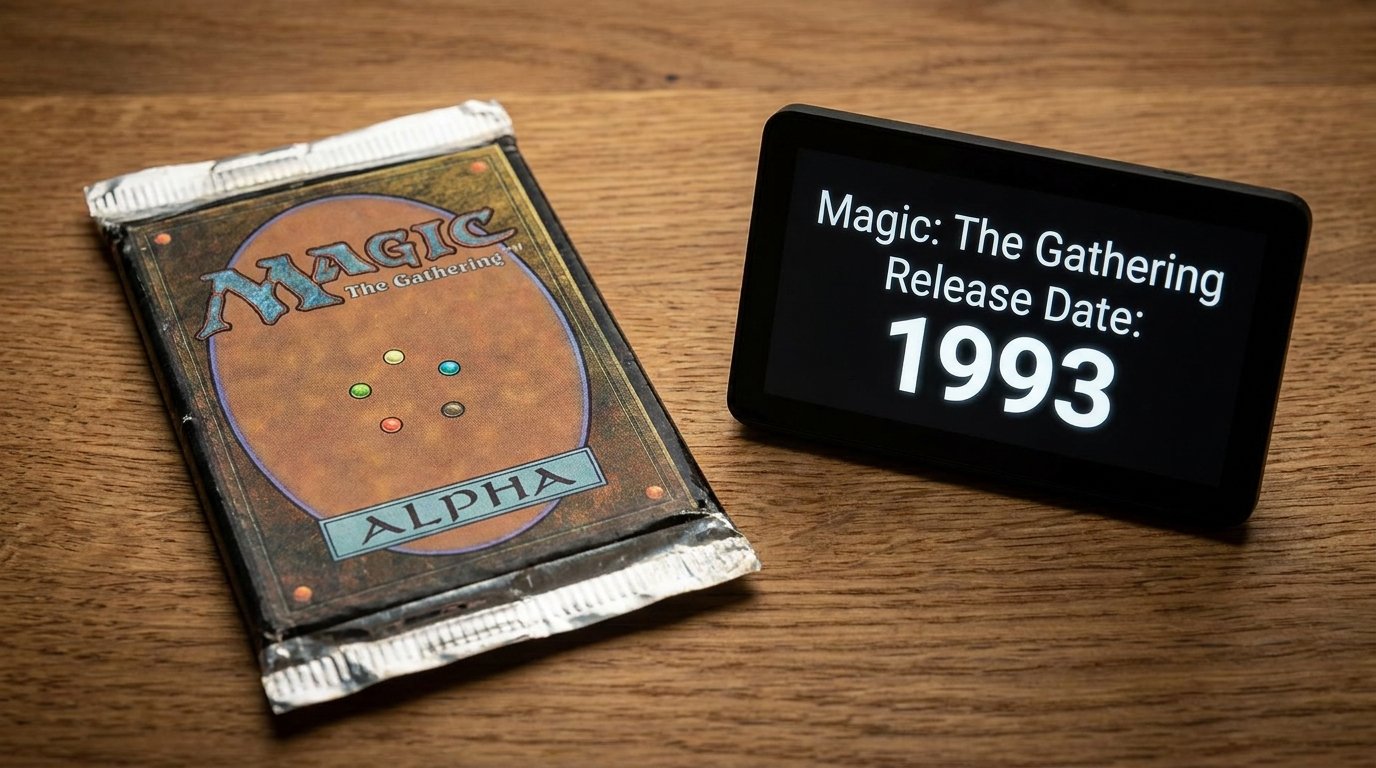
- Magic: The Gathering debuted in August 1993 as the “Limited Edition Alpha” set, marking the birth of the modern collectible card game.
- The game was designed by Richard Garfield, combining elements of traditional card games, board games, and role-playing games into a unique, customizable experience.
- Early sets like Alpha, Beta, Unlimited, and Revised have distinct characteristics and varying print runs, which significantly influence their rarity and market value.
- Specific cards from Magic’s initial releases, particularly the “Power Nine,” command exceptionally high prices due to their scarcity, historical significance, and powerful gameplay effects.
- Professional appraisal and grading are crucial for accurately assessing the condition and authenticity of vintage Magic cards, maximizing their potential value for sellers.
The Genesis of a Global Phenomenon: Magic’s Initial Release
Magic: The Gathering officially launched in August 1993, introducing a new paradigm in tabletop gaming. Conceived by Richard Garfield, a Ph.D. in combinatorial mathematics, the game was initially developed as a quick, portable diversion that could be played between longer gaming sessions. Wizards of the Coast, a then-fledgling publisher, recognized the potential in Garfield’s design and decided to release it, forever changing the landscape of collectible entertainment. The first edition, known as “Limited Edition Alpha,” was a modest print run designed primarily to test the market, yet its innovative gameplay and strategic depth immediately captivated players.
The Alpha set consisted of 295 unique cards, divided into rare, uncommon, common, and basic land categories. Each card featured original artwork and a rules text that, while sometimes ambiguous by today’s standards, laid the groundwork for complex strategic interactions. The initial production run of Alpha was estimated to be around 2.6 million cards, distributed in starter decks and booster packs. This quantity was quickly exhausted, selling out within weeks of its release, signalling an unprecedented demand that caught even Wizards of the Coast by surprise. This rapid success necessitated subsequent printings and expansions, solidifying Magic’s position as a burgeoning cultural force.
Evolution Through Editions: Understanding Early Magic Sets
Following the immediate success of Alpha, Wizards of the Coast quickly moved to print additional core sets, each with distinct characteristics and release timelines. These early editions are critical for collectors, as their differences dictate rarity, legality in various formats, and ultimately, market value.
Alpha (Limited Edition Alpha)
Released in August 1993, Alpha is distinguished by its unique rounded corners, a slight color difference on the back compared to later printings, and a card list that included all the original 295 cards. The print run was the smallest of the early sets, making Alpha cards the most valuable for collectors who prioritize scarcity and historical significance. Identifying Magic card rarities and specific edition markers is crucial for authentication and valuation.
Beta (Limited Edition Beta)
Just months after Alpha, in October 1993, Beta was released. It corrected several errata present in Alpha, added 7 new cards to the set, and most notably, featured standard square corners. The print run for Beta was significantly larger, approximately 7.3 million cards, making it more available than Alpha but still highly sought after. Many iconic cards, including the “Power Nine,” appear in both Alpha and Beta, with Alpha versions typically fetching higher prices due to their extreme scarcity.
Unlimited Edition
Introduced in December 1993, Unlimited was a slightly larger print run (around 35 million cards) that reprinted the entire Beta card list. Its key distinguishing feature is the white border around the card face, which became a standard for future core sets for many years. Unlimited cards were widely distributed and helped solidify Magic’s presence in the market, making the game accessible to a broader audience. While less rare than Alpha or Beta, high-condition Unlimited cards, especially powerful staples, still retain substantial value.
Revised Edition (Fourth Edition)
Released in April 1994, Revised served as the baseline core set for several years. It again featured a white border and included a significant number of card changes, removing some of the most powerful and unbalanced cards (like the Power Nine) and adding others. With an estimated print run of 500 million cards, Revised is far more common than its predecessors. It’s often the entry point for collectors seeking older cards at more accessible price points, though specific high-demand cards within Revised can still command respectable sums.
The differences in print runs, card lists, and physical attributes across these early editions create a rich tapestry for collectors to explore. For instance, a pristine Black Lotus from Alpha can sell for hundreds of thousands of dollars, whereas a similar card from Unlimited would fetch a lower, though still significant, amount. According to industry reports, the market for vintage Magic cards has seen consistent growth, with record-breaking sales of iconic cards often making headlines.
| Edition Name | Release Date | Key Distinguishing Feature | Estimated Print Run |
|---|---|---|---|
| Limited Edition Alpha | August 1993 | Rounded corners, unique back color | 2.6 million cards |
| Limited Edition Beta | October 1993 | Standard square corners, minor errata fixes | 7.3 million cards |
| Unlimited Edition | December 1993 | White borders, full Beta card list | 35 million cards |
| Revised Edition | April 1994 | White borders, significant card list changes | 500 million cards |
The Pioneering Vision: Richard Garfield’s Game Design
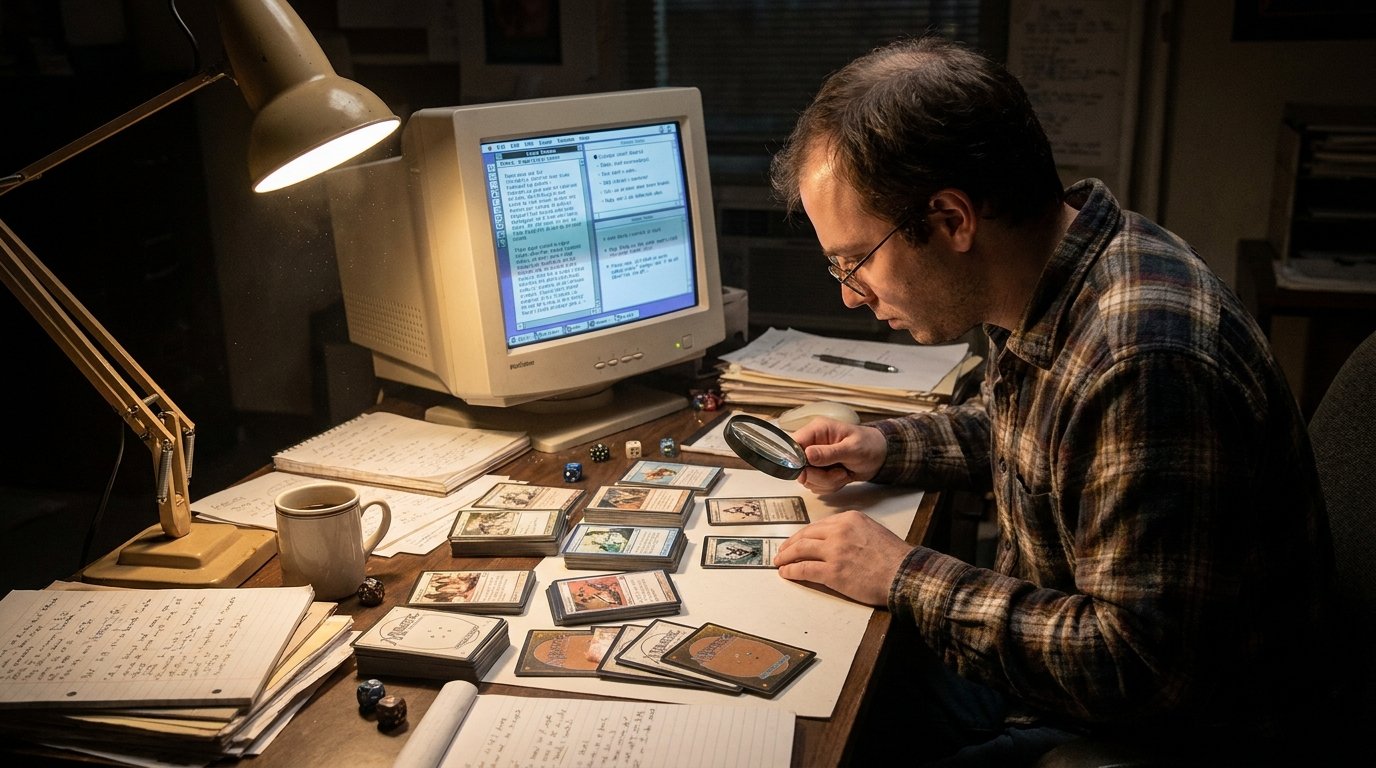
Richard Garfield’s design for Magic: The Gathering was revolutionary because it masterfully blended familiar gaming elements into an entirely new format. Garfield’s background in mathematics and his passion for games, particularly role-playing games like Dungeons & Dragons, heavily influenced Magic’s core mechanics. He sought to create a game with the depth and variability of an RPG but playable within a short timeframe, making it ideal for conventions or casual meetups.
The game’s innovation lay in several key areas:
- Mana System: Unlike traditional card games that rely on drawing specific resources or a simple turn count, Magic introduced a land-based mana system. Players tap land cards to generate mana, which is then spent to cast spells. This system introduced a layer of strategic resource management and mitigated the “luck of the draw” that often dictates outcomes in other card games.
- Customizable Decks: Magic was pioneering in allowing players to construct their own decks from a vast pool of available cards. This “deckbuilding” aspect became a cornerstone of the CCG genre, offering immense strategic depth and replayability. Players could tailor their decks to specific playstyles, combining creatures, spells, and enchantments in countless ways.
- Trading Component: The “collectible” aspect was not merely an afterthought; it was integral to the game’s identity. Players were encouraged to trade cards with each other to complete sets, acquire powerful cards, or simply personalize their collections. This fostered a vibrant community and secondary market, adding another dimension to the game’s appeal.
- Continuous Expansion: Garfield and Wizards of the Coast understood that the game’s longevity would depend on continuous evolution. The planned release of expansion sets, introducing new cards, mechanics, and lore, ensured that Magic remained fresh and exciting for players over decades.
The success of Magic inspired a wave of other collectible card games, including Pokémon TCG (released in 1996) and Yu-Gi-Oh! (1999), both of which adopted many of Magic’s fundamental principles. An expert recommendation for new collectors delving into vintage Magic is to always consider the card’s history and playability. Cards that were powerful in their era often retain significant value, but condition is paramount. Many early cards were played without protective sleeves, leading to wear and tear that can drastically reduce their worth. Always seek professional appraisal for high-value items, as condition grading from reputable services like PSA or Beckett can exponentially increase a card’s market appeal.
Market Value and Collectibility of Early Magic Cards
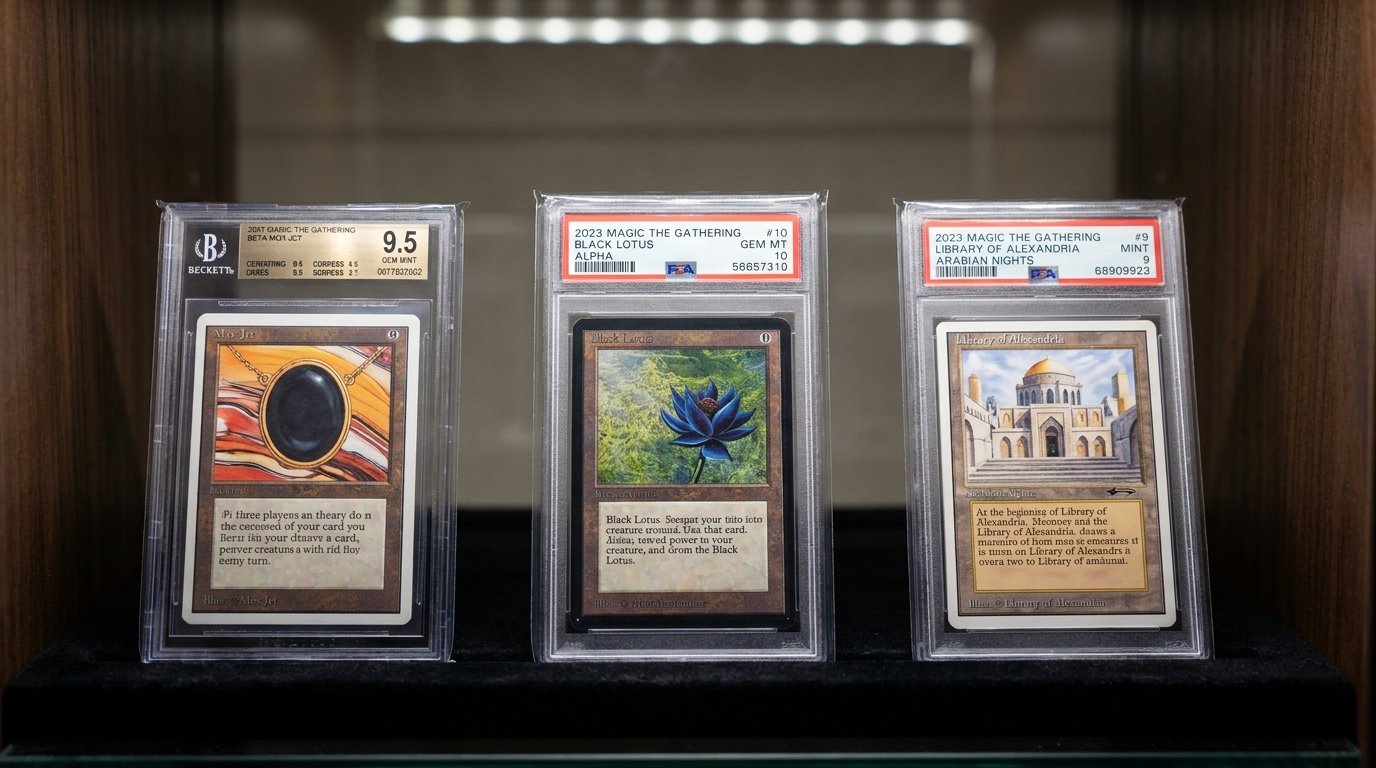
The collectibility of early Magic: The Gathering cards is driven by a confluence of factors: extreme rarity, historical significance, powerful gameplay mechanics, and pristine condition. Among the most revered and valuable cards are those known as the “Power Nine,” a group of nine cards from the Alpha, Beta, and Unlimited sets that are famously overpowered and subsequently restricted or banned in most competitive formats. These include Black Lotus, Mox Pearl, Mox Sapphire, Mox Jet, Mox Ruby, Mox Emerald, Ancestral Recall, Time Walk, and Timetwister.
A shining example of market value is the Black Lotus. Known for its ability to generate three mana of any single color for zero cost, it is arguably the most iconic and powerful card in the game’s history. A Gem Mint 10 Black Lotus from the Alpha set can command prices upwards of $500,000, with an authenticated copy setting a record in 2021 by selling for $540,000. Even lower-graded examples from Alpha or Beta can still sell for tens of thousands of dollars. Moxen, the cycle of five artifact cards that act as zero-cost mana sources, also fetch significant prices, typically ranging from $5,000 to $50,000 per card depending on the set and condition. Ancestral Recall and Time Walk, powerful draw and extra-turn spells respectively, routinely sell for $10,000 to $30,000 in high grades.
Beyond the Power Nine, other highly sought-after cards from early sets include dual lands (e.g., Underground Sea, Volcanic Island), which provide two types of mana without drawback, and iconic creatures like Shivan Dragon or Crusade. The value of these cards can range from a few hundred dollars to several thousand, depending on rarity, set, and condition. The investment potential of vintage Magic cards has proven substantial, with many cards appreciating significantly over the past decade. For context, the entire Magic: The Gathering franchise generated over $1 billion in revenue for Wizards of the Coast in 2022, according to Hasbro’s annual reports, demonstrating the enduring financial vitality of the game and its secondary market. For insights into which cards command the highest prices, a dedicated resource on the most expensive MTG cards offers further details.
The Enduring Legacy: Magic’s Impact and Growth
From its humble beginnings in 1993, Magic: The Gathering has grown into a global entertainment powerhouse, fundamentally shaping the gaming industry. Its continuous evolution and adaptation have allowed it to maintain relevance and attract new generations of players for over three decades.
The rapid expansion of Magic began almost immediately after its initial release. Wizards of the Coast quickly followed up with additional expansion sets like “Arabian Nights” (December 1993) and “Antiquities” (March 1994), which introduced new themes, mechanics, and cards, constantly enriching the game’s strategic depth and lore. This model of frequent, thematic expansions became a hallmark of the CCG genre.
The establishment of organized play, including the professional Magic Pro Tour in 1996, elevated the game to a competitive sport. This fostered a dedicated player base, created professional players, and generated significant interest through high-stakes tournaments. The Pro Tour not only showcased top-tier gameplay but also influenced card values and play trends within the community.
In the 21st century, Magic successfully transitioned to digital platforms, significantly broadening its reach. Magic Online, launched in 2002, allowed players to collect and play virtual cards against opponents worldwide. More recently, MTG Arena, released in 2018, brought a polished, free-to-play digital experience that attracted millions of new players. This digital presence has been crucial for the game’s continued growth, especially during periods when in-person play was challenging.
Today, Magic: The Gathering boasts an estimated player base of over 50 million worldwide, solidifying its status as the world’s most popular collectible card game. This longevity is a testament to its robust design, the continuous introduction of fresh content, and a vibrant, engaged community. The game has transcended its original format to become a cultural touchstone, influencing video games, literature, and even broader entertainment properties. Its impact is visible not only in the consistent release of new sets and products but also in the thriving secondary market for its most coveted cards, which continues to draw in collectors and investors alike.
FAQ
What is the exact release date of Magic: The Gathering?
Magic: The Gathering was first released in August 1993. This initial release was known as “Limited Edition Alpha,” and it marked the debut of the collectible card game genre.
Who created Magic: The Gathering?
Magic: The Gathering was created by Richard Garfield, a mathematician and game designer. He developed the game for Wizards of the Coast, which published the first edition.
Which was the first expansion set for Magic: The Gathering?
The first expansion set for Magic: The Gathering was “Arabian Nights,” released in December 1993. It introduced new cards and lore, building upon the core game mechanics established by the Alpha set.
How many cards were in the original Magic: The Gathering Alpha set?
The original “Limited Edition Alpha” set contained 295 unique cards. This included a mix of common, uncommon, rare, and basic land cards, which laid the foundation for all future Magic releases.
Is it possible to still buy original Magic: The Gathering Alpha packs?
While extremely rare, it is theoretically possible to find unopened booster packs from the “Limited Edition Alpha” set, though they would command extremely high prices from specialized dealers or auctions. Most collectors acquire individual cards rather than sealed product from this era.
When did Magic: The Gathering become popular?
Magic: The Gathering achieved immediate popularity upon its August 1993 release, with its initial print run selling out rapidly. Its widespread appeal continued to grow throughout the 1990s as new sets and organized play opportunities were introduced.