
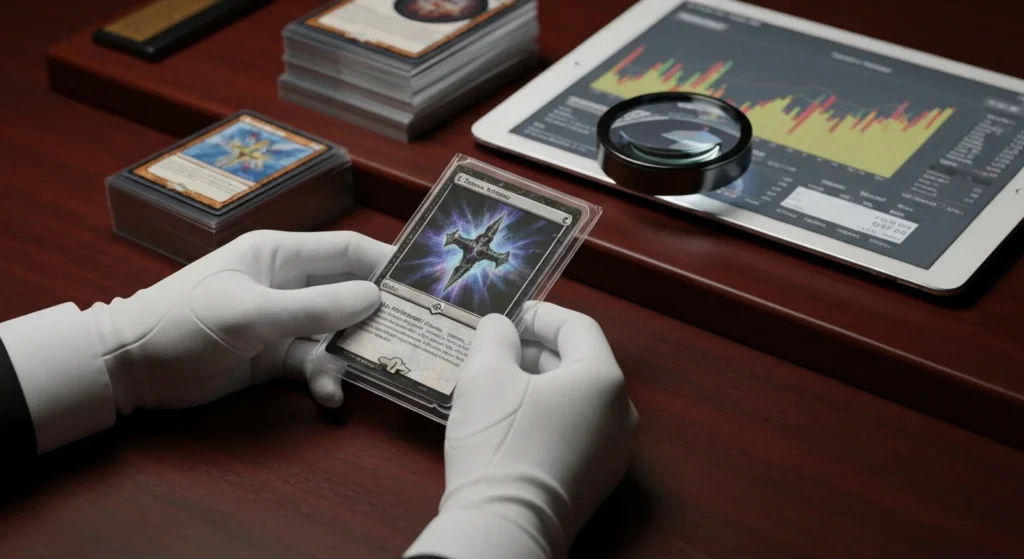
For older vintage collections printed in the 1990s, choose manual visual verification of borders, dates, and set symbols to identify rare Reserved List items. For modern card assortments printed after 2000, utilize digital scanning apps to quickly sort through high-volume bulk. While mobile scanning apps work well for sorting common bulk, securing a professional in-person appraisal is the absolute best choice for turning high-value cards into immediate, guaranteed cash. Self-evaluation often leads to missed variations, unrecognized rare printings, or costly grading mistakes. Professional buyers possess specialized tools to instantly spot rare printing errors, promotional stamps, and minor condition shifts that dramatically swing a card’s final price. Knowing exactly which magic cards are worth money requires a balance of checking online market trends and relying on certified experts who understand current collector demands in 2026. This approach protects you from underpricing your rarest assets while streamlining the entire selling process.
Key Takeaways
- Expansion Symbol Colors: Gold (Rare) and Orange-Red (Mythic Rare) symbols are the easiest indicators of modern card value.
- The Reserved List: A group of 571 vintage cards that Wizards of the Coast promised never to reprint, keeping their values exceptionally high.
- Condition Dictates Value: Even minor scratches, edge wear, or clouding can decrease a card’s market price by 50% to 90%.
- Look for Set Codes: Vintage cards from Alpha, Beta, and Unlimited have distinct borders, rounded corners, and lack copyright dates.
- Get Professional Appraisals: Certified physical inspections prevent costly mistakes and secure the highest payouts for high-end collections.
Identifying Which MTG Cards Are Worth Money by Rarity and Edition
Finding which Magic cards are worth money begins with analyzing the expansion symbol located on the right side of the card, just below the artwork. Over the game’s long history, this small icon has served as the universal indicator of scarcity and set origin. In modern sets, the color of this symbol tells you the exact rarity. Black indicates common cards, silver represents uncommons, gold denotes rares, and a shimmering orange-red signifies mythic rares. While most commons and uncommons are worth only pennies, mythic rares and specific utility rares frequently command prices ranging from $5 to $100 or more, depending on their performance in competitive tournaments.
To dive deeper into identifying these marks, check out our comprehensive MTG Rarity Guide, which outlines how to spot rare symbols and identify counterfeits. Beyond the rarity symbol, the specific edition of the card plays a massive role in its pricing. For example, a card like Birds of Paradise has been printed dozens of times. A standard modern printing might only cost $5, whereas an original 1993 Alpha printing can easily fetch over $3,000 in excellent condition. This price disparity is why understanding set editions is so critical. Experienced collectors look at the very bottom edge of the card to find the copyright line, artist credit, and year. Modern cards printed after 2015 feature a three-letter set code and a collector number in the bottom-left corner, making identification straightforward. For older cards, the absence of dates or set symbols altogether is actually a sign of extreme age and potential high value.
How to Tell If Your Magic Cards Are Worth Money from the Vintage Era
Determining if vintage Magic cards are highly valuable requires evaluating their border color, copyright dates, and inclusion on the legendary Reserved List. The early years of Magic: The Gathering, specifically from its debut in 1993 through 1999, contain the most sought-after cardboard on earth. The most famous group of cards is known as the “Power Nine,” which includes Black Lotus, Ancestral Recall, Time Walk, and five Mox gems. These cards were only printed in the Limited Edition Alpha, Limited Edition Beta, and Unlimited editions. An Alpha Black Lotus represents the absolute peak of the hobby, with high-grade copies commanding hundreds of thousands of dollars. You can read more about these historic grails in our guide on the most expensive MTG card of all time.
A major driver of vintage value is the Reserved List, established by Wizards of the Coast in 1996. According to historical marketplace data tracked by TCGplayer, the Reserved List guarantees that 571 specific cards will never be reprinted in their original form. This policy creates artificial scarcity. Vintage “Dual Lands” like Underground Sea, Volcanic Island, and Tropical Island are highly prized because they are the best resource cards ever printed and cannot be replicated. A single Revised Edition Dual Land can range from $200 to $800, while their black-bordered Alpha and Beta counterparts easily transcend $5,000 to $10,000. When sorting older cards, look for white or black borders with no copyright dates and distinct hand-painted art styles. If you find cards with a 1993, 1994, or 1995 date at the bottom, keep them separate from your bulk, as they require professional inspection.
The Impact of Card Condition and Grading on Market Value
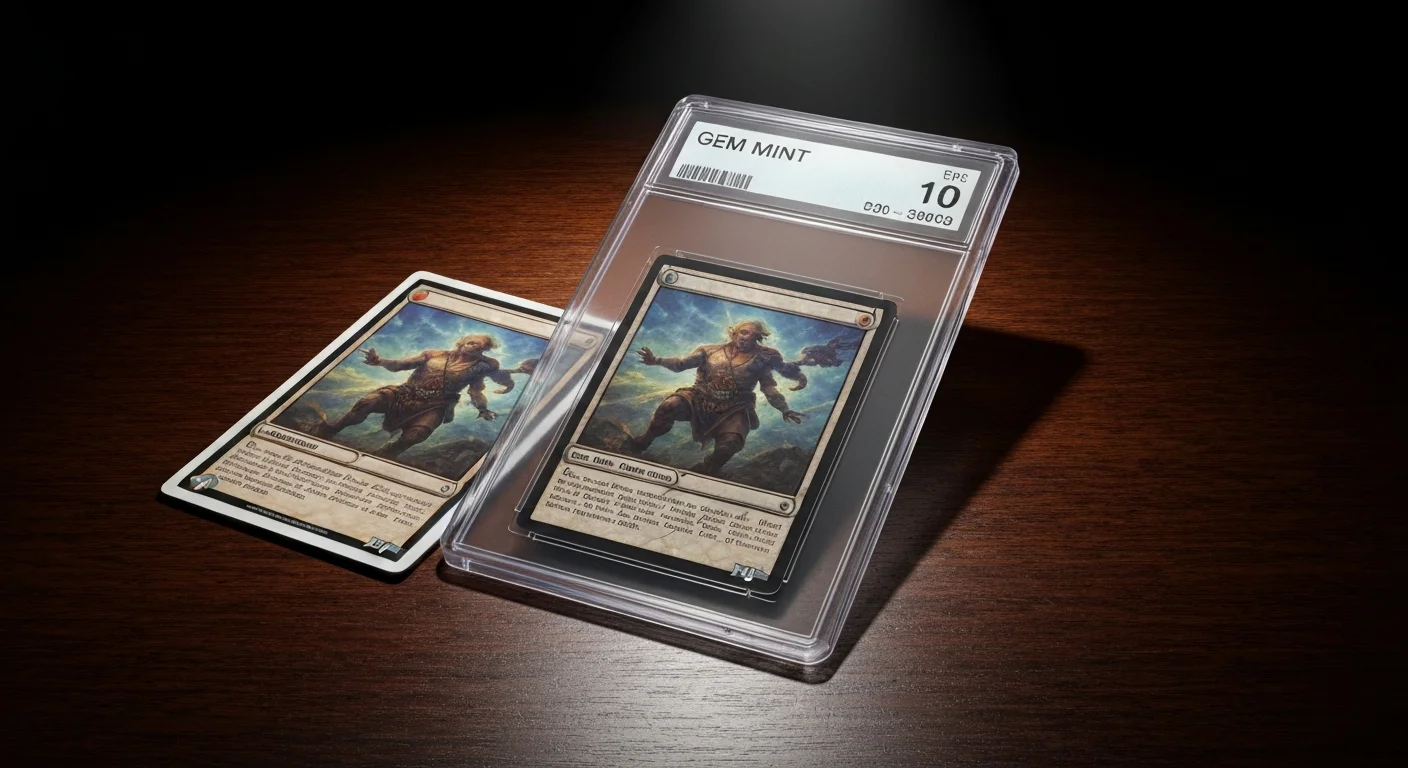
Card condition is the single most critical factor in deciding whether a rare Magic card commands a premium price or loses most of its market appeal. Even the rarest vintage cards can lose massive amounts of value if they show signs of heavy play, moisture damage, or edge chipping. The gaming industry utilizes a standardized grading scale to categorize card conditions, ranging from Mint (M) and Near Mint (NM) down to Moderately Played (MP), Heavily Played (HP), and Damaged (DM). A card in Near Mint condition retains 100% of its market value, while a Heavily Played copy of the exact same card might only command 30% to 50% of that price.
For high-value cards, professional grading by third-party companies can authenticate the card and lock in a certified condition grade. Organizations like PSA Card and CGC Cards inspect cards under magnification to check for surface scratches, centering, corner wear, and edge chipping. The difference in price based on these grades is astronomical. For instance, a vintage card graded as a PSA 10 (Gem Mint) can sell for ten times more than a PSA 7 (Near Mint) copy. To understand how this works, you can explore our CGC card grading insights to see how professional graders evaluate card condition. For amateur collectors, handling raw cards with bare hands, storing them in dusty boxes, or rubber-banding them together are common mistakes that ruin condition and destroy thousands of dollars in potential value. Always use protective sleeves and rigid toploaders for any card you suspect is valuable.
How to Tell What Magic Cards Are Worth Money in the Modern Era
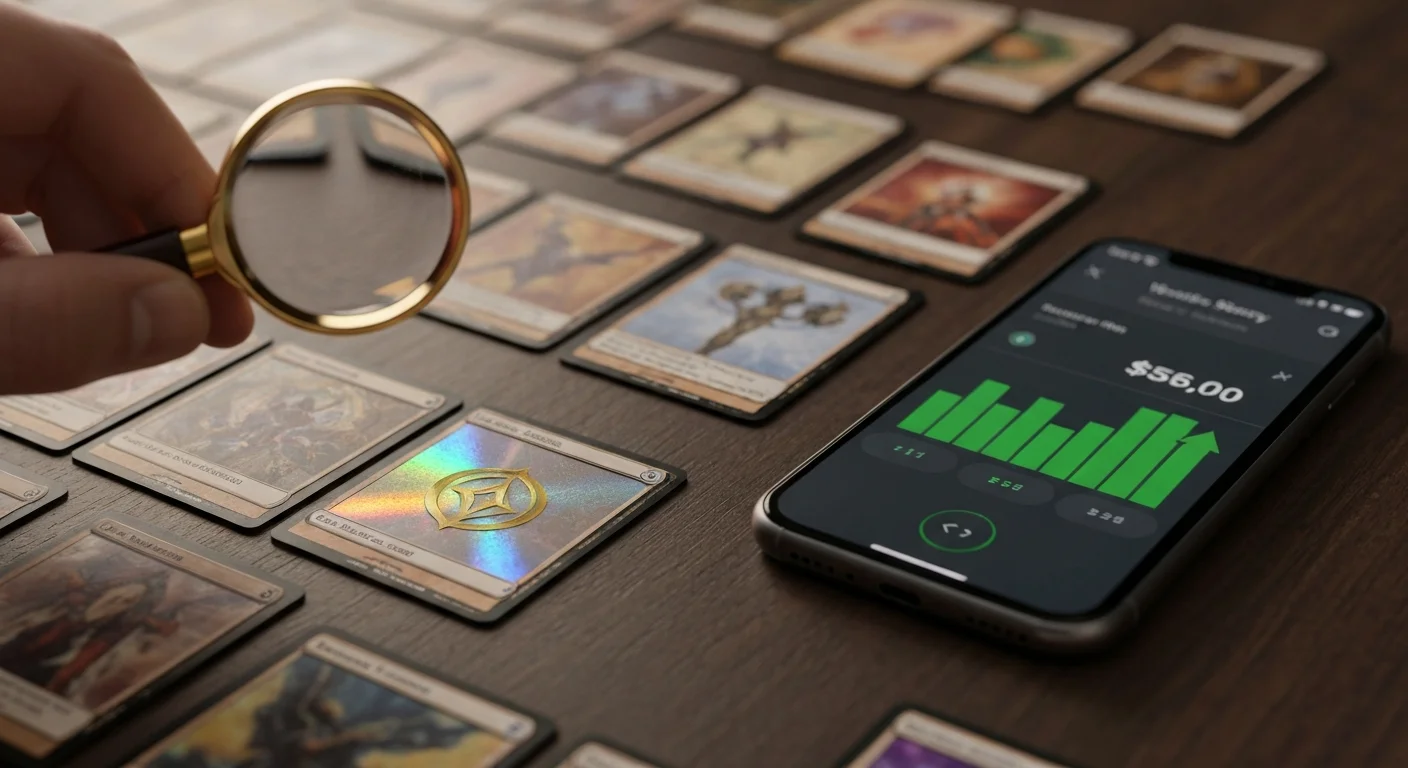
Spotting high-value modern Magic cards involves identifying special frame treatments, unique foil patterns, and serialized numbers stamped directly onto the cardboard. Unlike vintage cards where value is driven purely by age and scarcity, modern card value is heavily tied to aesthetic variants and competitive tournament play. In the modern era of Magic, Wizards of the Coast prints multiple versions of the same card within a single booster pack. These variations include borderless art, extended art, retro frames, and showcase styles that match the thematic element of the specific set.
Furthermore, serialized cards have introduced a new tier of rarity to the modern game. These cards feature a stamped number, such as “001 of 500,” directly on the card face. According to corporate growth statistics published by Hasbro, the introduction of ultra-rare collector variants has successfully driven massive engagement among modern collectors, with serialized cards routinely fetching between $500 and $10,000 depending on the card and serial number. Foil cards, which feature a shiny, metallic sheen, also command a premium, especially “textured foils,” “neon ink foils,” and “galaxy foils.” However, modern foil cards are highly susceptible to curling due to humidity changes. A curled foil is often classified as damaged or played, which severely impacts its resale value. Knowing how to store these modern treasures in climate-controlled environments is essential for maintaining their worth.
Evaluating MTG Collections: A Comparison of Valuation Methods
Selecting the right valuation method for your Magic collection prevents costly grading mistakes and saves hours of tedious manual research. Many collectors make the mistake of relying entirely on automated scanning apps, which can struggle to differentiate between a $5 reprint and a $500 original printing. On the other hand, attempting to manually research thousands of cards on auction sites can quickly become overwhelming.
To help you decide the best approach for your specific collection, we have compared the four most common appraisal and valuation methods below. This table outlines the strengths and limitations of each method so you can choose the path that matches your goals, whether you want a quick estimate or a certified cash buyout.
| Valuation Method | Best Used For | Pros | Cons | Price Accuracy |
|---|---|---|---|---|
| Mobile Scanning Apps | Sorting modern common and uncommon bulk quickly | Fast, free, and cataloging is fully digital | Frequently misidentifies vintage sets and specific foil variants | Moderate (highly variable) |
| Online Price Guides | Checking individual rare cards and historic price trends | Up-to-date market averages and historical charts | Requires manual entry and deep knowledge of card editions | High (for raw cards) |
| Professional Local Showrooms | Securing immediate cash payouts and certified evaluations | Instant appraisal, high safety, expert eyes, no shipping risks | Requires physical travel to a verified storefront | Extremely High |
| Mail-In Buylists | Selling mid-range cards in bulk to major online stores | Convenient if you live far from a physical store | Risk of shipping damage, long wait times, store-credit bias | High (but subject to deductions) |
Step-by-Step Guide to Organizing and Sorting Your Cards for Appraisal
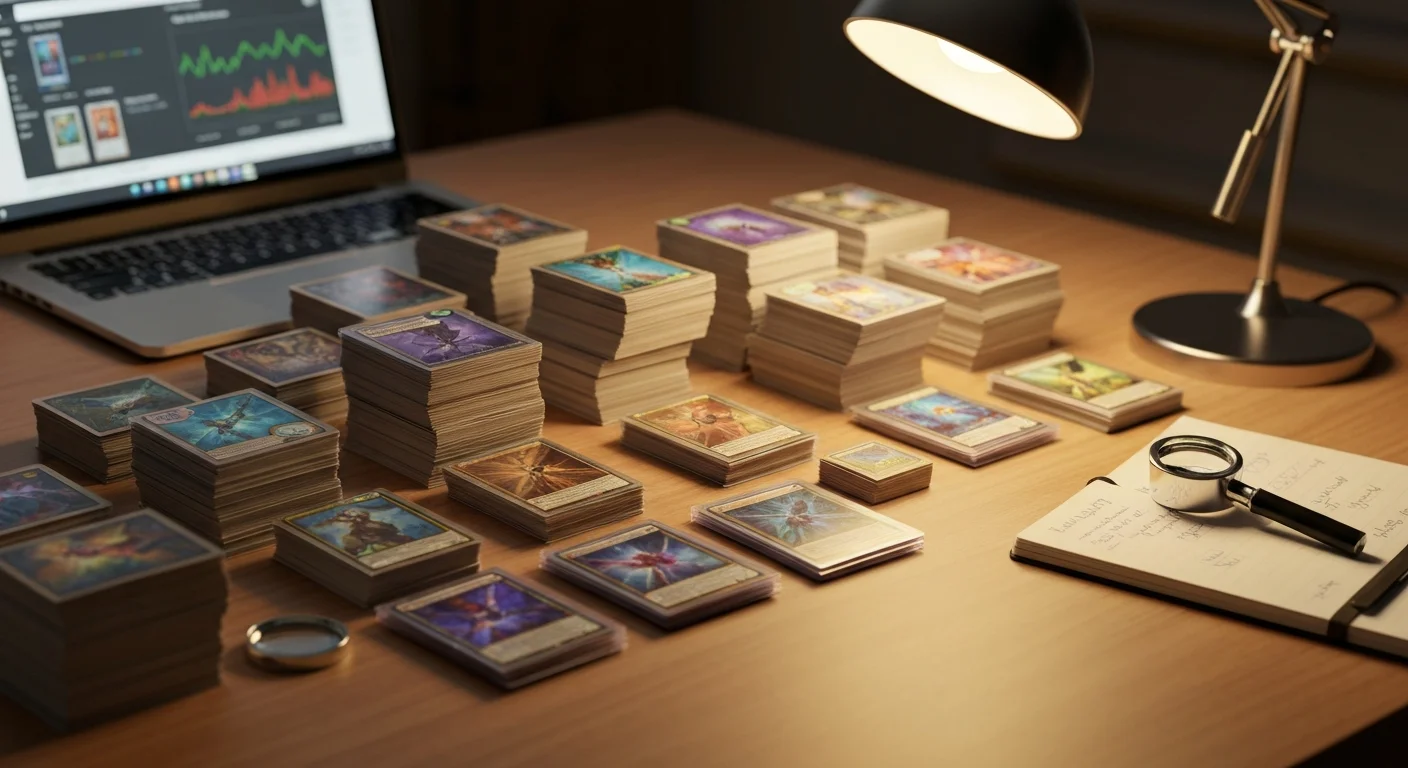
Organizing your collection before an appraisal maximizes its perceived value and ensures no hidden gems are overlooked. When a professional appraiser receives a neatly sorted collection, they can evaluate it far more efficiently, which often translates to a more precise and favorable offer. Conversely, handing over a messy shoebox of unsorted cards increases the likelihood that a rare variant is missed or damaged during the review. Follow these five essential steps to prepare your Magic collection for appraisal:
- Separate by Color and Card Type: Group your cards into white, blue, black, red, green, multicolored, colorless, and land cards to make systematic scanning much faster.
- Isolate by Rarity and Foil Finish: Pull out all gold-symbol rares, orange-symbol mythics, and shiny foil cards. Place these in a dedicated box or binder for closer inspection.
- Identify Vintage Cards (Pre-2000): Look for cards with no set symbols or copyright dates from the early 1990s. Keep these separate and protected, as they are the most likely candidates for high-end value.
- Protect Your Best Assets: Place any card you suspect is worth more than $10 into a soft penny sleeve, and then into a rigid toploader plastic sleeve to prevent surface scratching or edge bending.
- Document Your Inventory: Create a simple spreadsheet listing the card name, set name, and estimated condition. This sheet serves as your reference guide during the appraisal process.
If you are ready to turn your sorted collection into cash, we invite you to sell Magic cards directly to our professional team. Our physical showroom offers a safe, professional environment where experienced appraisers walk you through the valuation of every single card, ensuring you receive a competitive and fair price immediately.
FAQ
What makes certain Magic cards so expensive?
Magic cards derive their value from a combination of scarce supply and active demand. Vintage cards are expensive because of limited historical print runs and the Reserved List reprint policy, while modern cards are valuable due to their strength in competitive tournament play or their rare, aesthetic collector treatments.
How do I know if my old Magic card is from Alpha or Beta?
Alpha and Beta cards both feature black borders and were printed in 1993 without any copyright dates. You can distinguish them by looking at the corners; Alpha cards have heavily rounded corners, whereas Beta cards have standard corners that match all modern Magic cards.
Which Magic cards are on the Reserved List?
The Reserved List contains 571 vintage cards from sets printed between 1993 and 1996, including the Power Nine and all ten original Dual Lands. Wizards of the Coast officially committed to never reprinting these specific cards to preserve their collectible value for long-term hobbyists.
Can I sell my Magic cards without grading them first?
Yes, you can absolutely sell ungraded (raw) Magic cards to reputable hobby shops and collectors. Professional buyers are fully trained to assess card conditions on-site, allowing you to bypass the long wait times and high fees associated with third-party grading companies.
Is a foil Magic card always worth more than a regular one?
While foil cards generally carry a price premium over their non-foil counterparts, this is not always the case. Some modern foils are printed in high quantities, and foils that have curled or warped due to humidity can actually lose significant value compared to flat, non-foil copies.
How can I safely sell a large Magic card collection?
The safest way to sell a large collection is to visit an established brick-and-mortar showroom for an in-person appraisal. This method eliminates shipping risks, prevents online marketplace scamming, and ensures you receive a clear explanation of your collection’s true market value before any transaction occurs.