
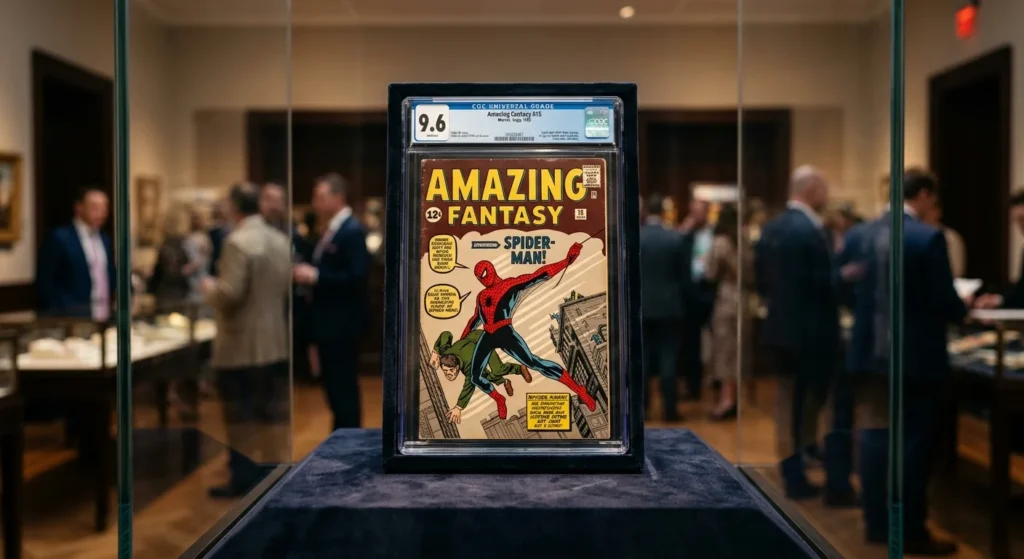
The single most expensive Marvel comic book ever sold is Amazing Fantasy #15, which reached a record-breaking price of $3.6 million in a public auction. For collectors holding top-tier Golden Age grails, Captain America Comics #1 ranks as the second-most valuable at $3.12 million, closely followed by the historic Marvel Comics #1 “Pay Copy” at $2.43 million. If you own high-grade Silver Age classics, your best strategy is seeking professional third-party grading to secure maximum value. Conversely, if you possess raw, ungraded vintage books, consulting with an experienced physical buyer ensures safe appraisal without risking damage during shipping. These critical decisions depend entirely on grading certification, market timing, and physical preservation. Outstanding condition elevates these vintage paper collectibles into high-performing alternative assets. Knowing exactly how to handle these legendary books prevents costly mistakes and ensures you capture their true market potential.
Key Takeaways
- Condition Dictates Value: A single grade point difference on the professional CGC scale can swing a book’s value by hundreds of thousands of dollars.
- Spider-Man Remains King: The 1962 debut of Spider-Man in Amazing Fantasy #15 holds the ultimate crown as the most expensive Marvel comic ever sold.
- Golden Age Scarcity Drives Millions: Pre-World War II books like Captain America Comics #1 are practically impossible to find in grades above 9.0, leading to intense bidding wars.
- Professional Certification is Mandatory: Unrestored, third-party graded copies command astronomical premiums compared to raw, uncertified copies of the same issue.
- Historical Significance Outperforms Hype: First appearances, major character origins, and publisher debuts hold their high valuations far better than temporary modern keys during market shifts.
Why Amazing Fantasy #15 Remains the Most Expensive Marvel Comic
Amazing Fantasy #15 remains the most expensive Marvel comic because it features the historic first appearance and origin of Spider-Man. Published in 1962 during the height of the Silver Age, this book introduced Peter Parker to a world that desperately needed a highly relatable teenage hero. Standard superheroes of the era typically acted as adult flawless champions. Stan Lee and Steve Ditko broke this mold by creating a flawed, anxious teenager who dealt with real-world financial issues and social isolation. This emotional connection resonated with readers, catapulting Spider-Man into the global spotlight.
In September 2021, a pristine copy graded at 9.6 by the Certified Guaranty Company shattered previous records by selling for $3.6 million. This specific comic represents one of only four known copies in such near-mint condition, with absolutely none graded higher on the census. The extreme rarity of high-grade copies explains why the price gap between grades is so massive. For example, while a 9.6 copy commands millions, mid-grade copies in the 3.0 to 5.0 range typically sell between $30,000 and $80,000. These lower-grade prices still represent a life-changing sum of money for average collectors.
The cultural footprint of Spider-Man continues to grow across movies, video games, and merchandise in 2026. This ongoing exposure fuels a constant stream of new investors seeking the ultimate trophy asset. Because original owners read these books repeatedly in the 1960s, finding copies without creases, spine splits, or cover stains is incredibly difficult. When an elite copy does surface, the bidding wars among high-net-worth individuals instantly drive prices to record heights.
Rare Marvel Comic Books of the Golden Age
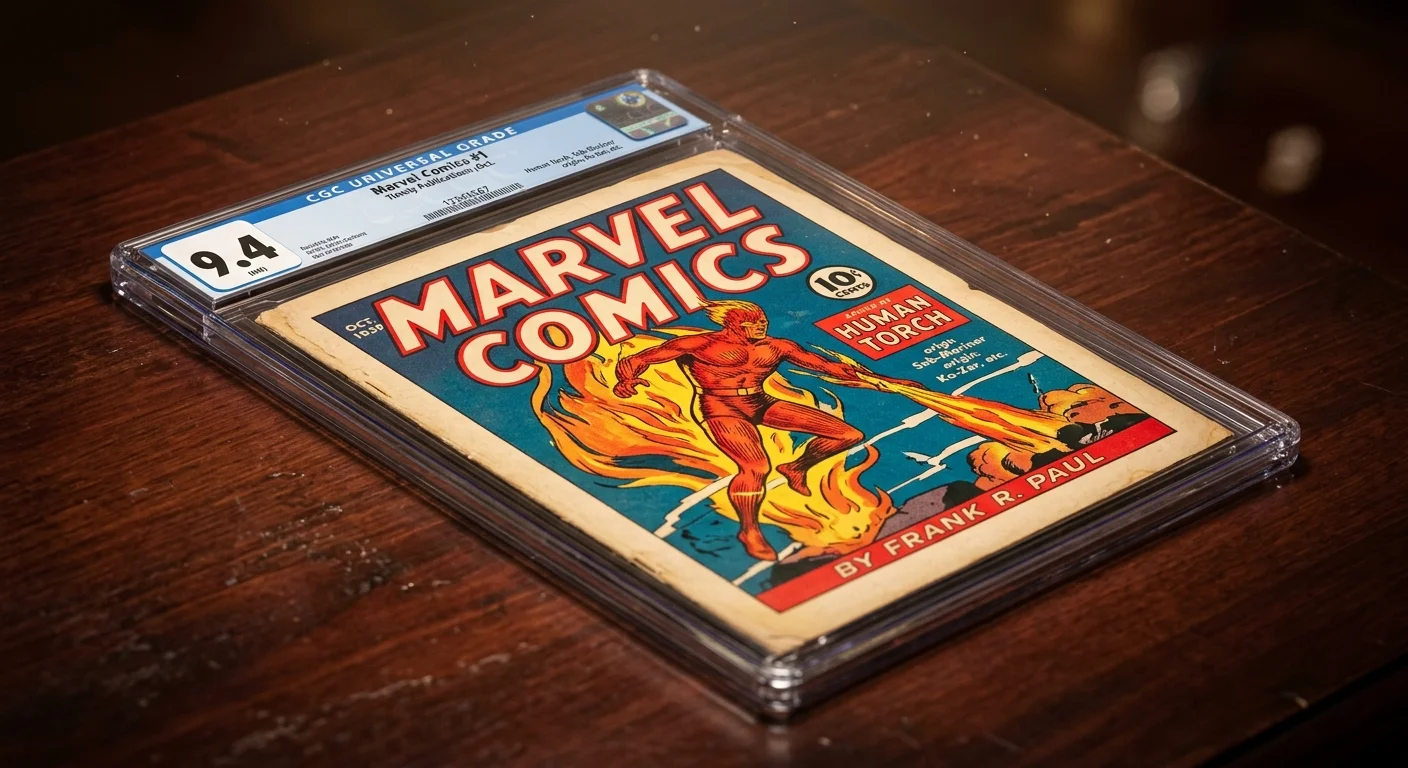
The most valuable rare Marvel comic books of the Golden Age include Captain America Comics #1 and Marvel Comics #1. These historical items were printed long before the publisher officially adopted the name Marvel, operating under the banner of Timely Comics. During this pre-World War II era, print runs were much smaller. In addition, wartime paper drives resulted in the destruction of millions of early comic books. As a result, finding any surviving copy from this period in decent condition is a major victory for collectors.
In 2026, a jaw-dropping CGC 9.4 copy of Captain America Comics #1 sold for $3.12 million through Heritage Auctions. This book is highly famous for its legendary cover art by Joe Simon and Jack Kirby. The cover depicts Captain America delivering a hard punch to Adolf Hitler. This bold imagery hit newsstands a full year before the United States formally entered World War II. The issue also marks the first appearances of Steve Rogers, Bucky Barnes, and the villainous Red Skull. Because of its political, cultural, and historical importance, this book remains a masterwork of Golden Age history.
Another monumental Golden Age treasure is Marvel Comics #1, published in 1939. A unique “Pay Copy” of this issue sold for $2.43 million in 2026 through ComicConnect. This specific copy is famous because it contains handwritten editorial notes showing how much money was paid to each artist and writer. It acts as a physical receipt for the birth of the entire Marvel publishing empire. The issue introduced early powerhouse characters like Namor the Sub-Mariner and the original Human Torch. Owning a piece of this foundation is the ultimate goal for serious comic historians.
Valuable Marvel Comics That Launched the Modern Era
Valuable Marvel comics from the early 1960s launched the modern Silver Age of superhero storytelling and established the interconnected Marvel Universe we know today. During this period, creative giants Stan Lee, Jack Kirby, and Steve Ditko introduced a wave of complex, humanized characters. These new heroes quickly replaced the older, more simplistic archetypes of the golden era. The market value of these Silver Age key issues has climbed steadily as collectors recognize their status as modern myths.
Fantastic Four #1, published in 1961, serves as the true starting gun for the Silver Age Marvel universe. A beautiful CGC 9.2 copy of this historic book crossed the million-dollar milestone in 2026, selling for $1.5 million. This issue introduced Reed Richards, Sue Storm, Johnny Storm, and Ben Grimm as a dysfunctional family. They fought monsters and argued with each other, reflecting the social anxieties of the Cold War era. To understand how these Silver Age books hold up against modern equivalents, collectors often learn how to value a comic book collection using historical sales data and condition assessments.
Similarly, The Amazing Spider-Man #1 from 1963 holds an elite spot in the collector community. In January 2024, a highly preserved CGC 9.8 copy sold for an astounding $1.38 million. This issue represents Spider-Man’s very first solo ongoing series, following his debut in Amazing Fantasy #15. The comic features the first appearance of the Chameleon and Spidey’s first historic crossover with the Fantastic Four. Ultra-high-grade copies of this book are incredibly scarce, making any 9.8 grade a legendary event when it hits the open market.
Key Factors That Propel Vintage Comics to Multi-Million Dollar Sales
Specific variables like physical condition, historical firsts, pedigree status, and character popularity dictate the ultimate sale price of vintage comics. A collector cannot simply look at a title and assume it is worth millions of dollars. Two identical copies of the same comic can have a price difference of millions of dollars based entirely on microscopic flaws. Understanding these factors helps sellers set realistic expectations and negotiate confidently.
- Physical Condition and Grading: Third-party grading companies use a strict 10-point scale to rate comics. A comic graded 9.6 or 9.8 is considered near-mint and commands a massive premium. A copy with a 2.0 grade is heavily worn and sells for a small fraction of that price.
- Pedigree Status: High-value comics that originate from famous, well-documented historic collections are known as pedigree books. Examples include the San Francisco, Mile High, and Promise collections. These books carry an extra layer of prestige and historical provenance.
- First Appearances and Origins: The debut of a major hero or villain is always the most valuable issue in a series. First appearances establish the foundation for characters who eventually become multi-billion dollar movie franchises.
- Unrestored Original State: Collectors value books that are completely original. Professional restoration, such as color touch-ups, spine repair, or cleaning, can actually decrease the market value of a comic by up to 90% in some cases.
Comparing the Blue-Chip Giants of Marvel Comic Investing
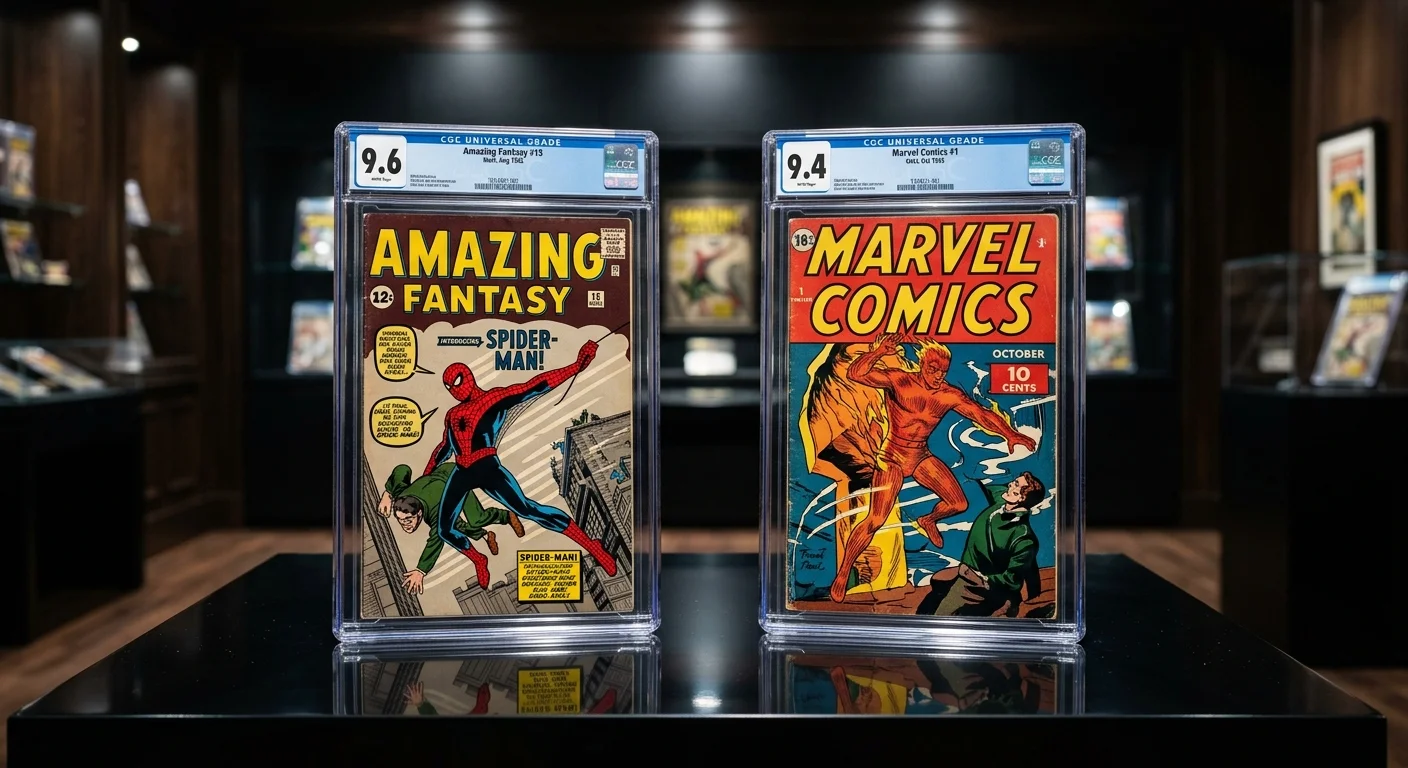
Comparing transaction records for elite Marvel comics reveals clear trends in market demand across different publishing eras. While Golden Age books excel due to extreme historical scarcity, Silver Age books command massive prices due to the immense popularity of their characters. Investors balance their portfolios by acquiring books from both eras. The table below outlines the top-tier books that define the absolute peak of the comic book market.
| Comic Book Title & Issue | Publication Year | Record Sale Price | Key Historical Significance |
|---|---|---|---|
| Amazing Fantasy #15 | 1962 | $3,600,000 | First appearance and origin of Spider-Man (Peter Parker) |
| Captain America Comics #1 | 1941 | $3,120,000 | First appearance of Captain America, Bucky, and Red Skull |
| Marvel Comics #1 | 1939 | $2,430,000 | First Timely/Marvel publication; debuts Human Torch & Namor |
| Fantastic Four #1 | 1961 | $1,500,000 | First appearance of the Fantastic Four; starts the Silver Age |
| The Amazing Spider-Man #1 | 1963 | $1,380,000 | Launch of Spider-Man’s solo series; first Chameleon appearance |
| X-Men #1 | 1963 | $871,999 | First appearance of the X-Men team and Magneto |
| Tales of Suspense #39 | 1963 | $840,000 | First appearance and origin of Iron Man (Tony Stark) |
Professional Pitfalls to Avoid When Assessing High-Value Collections
Avoiding common professional mistakes during the appraisal process prevents collectors from losing significant sums of money when selling vintage books. Many amateur collectors make assumptions about their collections without performing proper due diligence. This can lead to selling books far below their true value, or accidentally damaging irreplaceable pieces of comic history through improper handling.
One major pitfall is attempting to clean or press a comic at home without professional experience. Professional pressing can safely flatten minor bends and improve a comic’s visual appeal. However, amateur pressing often burns the cover, splits the spine, or destroys fragile paper fibers. This irreversible damage can instantly wipe out thousands of dollars in potential value. Always trust certified professionals for any conservation work.
Another frequent mistake is failing to recognize reprint editions. Many valuable silver and golden age books were reprinted in later decades with identical cover art. Amateur collectors often mistake a 1970s or 1990s reprint for a multi-million dollar 1960s original. Before celebrating a major find, check the copyright page, cover price, and indicia details very carefully. Consulting a comprehensive comic book price guide is a reliable way to cross-reference your book’s physical markers with historical records.
Step-by-Step Guide to Identifying a Seven-Figure Marvel Holy Grail
Identifying a highly valuable Marvel comic book requires a structured examination of several physical and textual markers. You must move systematically through the book to verify its authenticity, print edition, and overall condition. Follow this professional step-by-step process to evaluate your vintage finds safely:
- Check the Cover Price: Golden Age books generally feature a 10-cent cover price. Silver Age books transition from 12 cents to 15 cents. If your book lists a higher price like 30 cents, 40 cents, or $1.00, it is likely a modern reprint or a later edition.
- Locate the Indicia Page: Open the front cover and look at the bottom of the first page or the inside cover. Find the tiny print containing the publisher name, publication date, and issue number. This text must match the original release year exactly.
- Inspect the Creative Credits: Look for the names of legendary creators like Stan Lee, Jack Kirby, Steve Ditko, or Joe Simon. Original publications from the 1930s to 1960s will feature these names prominently in the story introduction.
- Examine the Centerfold: Carefully open the comic to the exact middle page. Ensure the original metal staples are intact, clean, and free of rust. If you see modern thread, glue, or extra staples, the book has been modified.
- Analyze Page Coloration: Hold the pages up to a neutral light source. Pristine white pages command the highest premiums. Slightly yellowed or off-white pages are common, but brittle, brown pages require extremely delicate handling to prevent tearing.
- Acquire Professional Verification: If your book passes all these initial checks, store it immediately in a protective mylar sleeve with an acid-free backing board. Contact an established physical buyer or a third-party grading service to obtain an official certified evaluation.
Frequently Asked Questions About Valuable Marvel Comics
What is the single most expensive Marvel comic book ever sold?
The single most expensive Marvel comic book ever sold is a CGC 9.6 graded copy of Amazing Fantasy #15, which sold for $3.6 million in September 2021. This legendary issue features the historic first appearance and origin story of Spider-Man, written by Stan Lee and illustrated by Steve Ditko.
How does professional grading affect the price of rare Marvel comic books?
Professional grading by companies like CGC or CBCS provides an objective, universally accepted assessment of a comic’s condition and authenticity. A certified grade removes any guesswork, allowing buyers and sellers to trade high-value books confidently at premium market rates.
Can I sell my vintage Marvel comics to local buyers safely?
Yes, selling to reputable local buyers with physical showrooms is one of the safest and fastest ways to liquidate a collection. Professional local buyers provide immediate cash offers, expert appraisals, and eliminate the high shipping risks and seller fees associated with online auction platforms.
Why is Marvel Comics #1 so historically significant to collectors?
Marvel Comics #1 is highly significant because it was the first comic book ever published by Timely Comics, the predecessor of Marvel, in 1939. This historic issue introduced major characters like Namor the Sub-Mariner and the Human Torch, laying the foundation for the entire Marvel Universe.
Where can I find a reliable comic book price guide online?
You can find reliable, up-to-date pricing data by using a comprehensive comic book price guide that aggregates real-time sales from major auction houses. Comparing physical grades against these completed transactions helps you determine a realistic market value for your items.
How can I tell if my old Marvel comic book is a first printing?
To verify a first printing, inspect the indicia text at the bottom of the first page for the original publication date and copyright notice. Additionally, look for specific cover details, such as the original cover price, and cross-reference these physical attributes with an official collector database.