
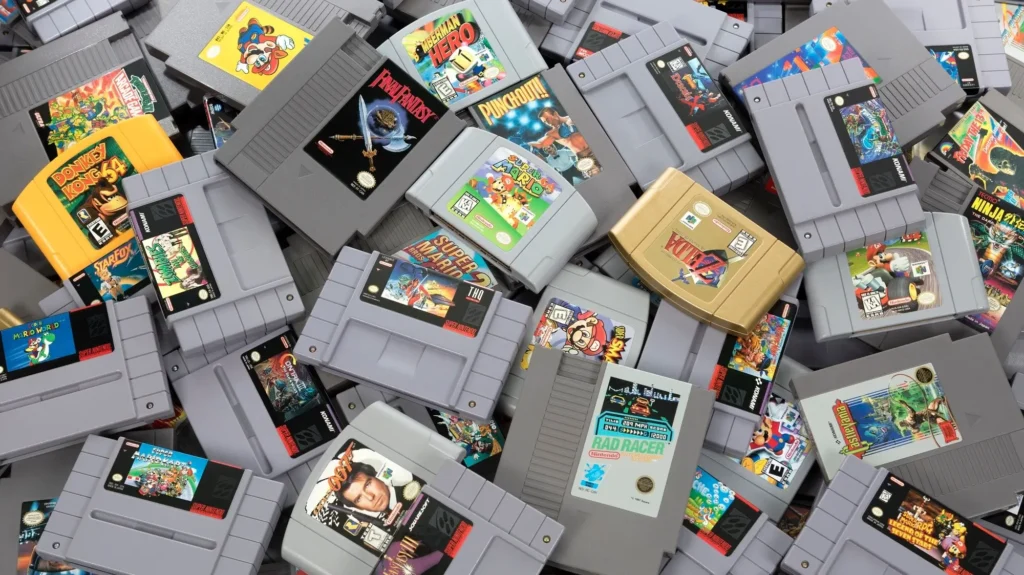
If you have a shelf full of games you no longer play, an old console in the closet, or a collection inherited from a family member, you have more options than simply taking everything to the nearest store. In 2026, you can sell through a local game buyer, a national trade-in program, an online marketplace, or directly to collectors.
So, where can i sell video games and still get a fair deal?
The right option depends on what you are selling. A stack of common recent games may be easy to trade in. Older Nintendo cartridges, complete GameCube titles, rare Sega releases, and larger collections are different. With collectible games, condition, completeness, rarity, demand, and current market prices can all affect the offer.
What Your Games Are Worth First
Before deciding where to sell, figure out what you actually have. Two copies of the same game can have very different values depending on condition, region, edition, completeness, and whether the original case, manual, box, or accessories are included.
For older games, do not assume that age automatically means value. Some common titles are worth only a few dollars, while less common releases can be much more desirable to collectors. Systems such as NES, Super Nintendo, Nintendo 64, GameCube, and Sega also have games with very different collector demand.
Start by identifying:
- The exact game and console
- Whether it is loose or complete
- The condition of the cartridge, disc, case, and manual
- Special editions, variants, or limited releases
- Whether the console or accessories are included
- Any unusual or rare titles in the collection
If you are not sure what you have, use our guide: How Do I Know If My Video Games Are Worth Anything?
The important point is that an online price guide is a starting point, not necessarily the amount a buyer will pay you. A retail listing, an auction result, and a direct cash offer are three different numbers.
GameStop Trade-In: What They Actually Pay
GameStop is one of the easiest options when convenience matters. You can check eligible items, bring them to a participating store, and choose between cash and trade credit when available.
But there is an important distinction between a game’s resale value and its trade-in value.
GameStop’s current trade system shows separate values for regular and Pro members, as well as different amounts for store credit and cash. The difference can be significant. Offers also change, and the final value depends on the specific item, condition, components, and current promotion.
For example, a game that sells for considerably more on the secondary market may still have a relatively small trade-in value. That does not necessarily mean the game is worthless. It means a trade-in program is paying for convenience and resale potential within its own business model.
GameStop can make sense when:
- You want a quick and simple transaction
- You are selling mostly common modern games
- You prefer store credit
- You do not want to photograph, list, pack, and ship individual items
It may make less sense when you have a large collection or potentially collectible retro games. In those cases, it is worth comparing the offer with a specialist buyer and recent market data before accepting it.

Selling to a Retro Specialist
If your collection includes older systems, a specialist buyer can be a very different experience from a general trade-in counter.
A retro-focused buyer is more likely to understand why one cartridge is significantly more desirable than another, why a complete copy can be worth more than a loose one, and why the condition of boxes, manuals, controllers, and original accessories matters.
Comic Buying Center buys video games and systems in addition to its core collectible categories. The team offers free appraisals and evaluates collections based on factors such as condition, rarity, demand, and current market value.
For Nintendo collectors, you can find dedicated information for NES games, Super Nintendo games, Nintendo 64 games, and GameCube games. There is also a dedicated page for Sega games.
This can be especially useful if you have more than a handful of games. Instead of creating dozens of individual listings, answering messages, negotiating with buyers, calculating shipping, and dealing with returns, you can have a collection evaluated together.
A specialist can also help separate the ordinary games from the titles that deserve more attention.
That matters because a collection is rarely worth simply multiplying an average price by the number of games. Ten common games and one rare game should not be treated the same way.
eBay, PriceCharting, and Local Groups
Online marketplaces give sellers more control, but they also require more work.
eBay
eBay gives you access to a large pool of buyers and can be useful for rare or highly desirable games. If you are willing to research each item, create accurate listings, take photos, package everything carefully, and handle shipping and customer service, you may be able to achieve a higher gross selling price.
The tradeoff is time.
You also need to account for selling fees, shipping materials, postage, returns, and the possibility that an item sits unsold for weeks or months.
PriceCharting
PriceCharting is useful for research rather than as a guaranteed buying price. Its database tracks video game prices and historical sales, with values separated by conditions such as loose, complete, and new.
That makes it a helpful tool for answering questions such as:
- Is this game common or collectible?
- Does the complete version command a premium?
- Has the price been moving recently?
- Is this title worth researching further before I sell it?
Use that information as a benchmark. A PriceCharting figure does not mean a local buyer owes you that exact amount, because a buyer still needs room for operating costs, inventory, risk, and resale.
Facebook Marketplace and Local Groups
Local groups can be attractive because there are no complicated shipping steps and you can arrange a direct sale. They can work particularly well for consoles, large mixed collections, and bundles.
The downside is inconsistency. You may receive low offers, no-shows, repeated negotiation, or requests to split the collection into individual items. Safety and payment also become your responsibility.
For a seller who values maximum control and is willing to invest the time, online selling can work. For someone who wants a straightforward transaction, a reputable local buyer can be much easier.
Comparison Table
| Selling Option | Convenience | Potential Selling Price | Seller Work | Best For |
|---|---|---|---|---|
| Local specialist buyer | High | Competitive | Low | Retro games, collections, consoles |
| GameStop trade-in | Very high | Usually trade-in value | Very low | Common games and quick trades |
| eBay | Medium | Potentially higher gross price | High | Rare games and individual titles |
| PriceCharting | Research tool | Not a buying service | Low | Checking market values |
| Facebook Marketplace | Medium | Variable | Medium to high | Local bundles and consoles |
| Collector/local groups | Medium | Variable | Medium | Niche or desirable games |
There is no single answer to the best place to sell used video games. If convenience is your priority, a trade-in program may be enough. If you have rare titles, retro systems, or a substantial collection, getting a specialist appraisal before selling can help you make a more informed decision.
Ready to Sell Your Video Games?
If you have old games taking up space, do not assume they are only worth whatever a trade-in calculator says. Your collection may contain titles, consoles, or accessories that deserve a closer look.
Comic Buying Center offers free appraisals and buys video games, consoles, and other collectibles. You can bring your collection to the showroom, contact the team to discuss what you have, or arrange an evaluation for a larger collection.
Ready to find out what your games are worth? Visit our Sell Video Games page and get started.
And if your collection includes more than games, you can also ask about other collectibles, including the option to sell comic books.
FAQ
What is the best place to sell retro video games?
For collectible or vintage games, start by checking current market values and then compare the options available to you. A specialist buyer can be particularly convenient because the collection can be evaluated as a whole rather than listed game by game.
Where to sell used video games for cash?
You can sell used games to local game buyers, trade-in stores, through online marketplaces, or directly to collectors. A local buyer is often the simplest option when you want a direct transaction without creating individual listings.
Is GameStop good for selling old video games?
GameStop can be convenient, especially for common games and newer systems. However, trade-in value is not the same as a game’s potential resale value. If you have older or collectible titles, compare the trade offer with current market data and specialist buyers.
Should I sell my games individually or as a collection?
It depends on what you own. Selling rare games individually may produce more money but requires more time. A collection sale is usually faster and simpler, particularly when you have dozens or hundreds of games.
Do loose video games have value?
Yes. A game does not have to be complete to have value. However, missing cases, manuals, boxes, or accessories can affect what collectors and buyers are willing to pay.
Can I sell games along with consoles and accessories?
Yes. Selling a collection together can make sense when you have consoles, controllers, games, cables, and other accessories. Make a list of everything before the appraisal so the buyer can evaluate the collection accurately.