
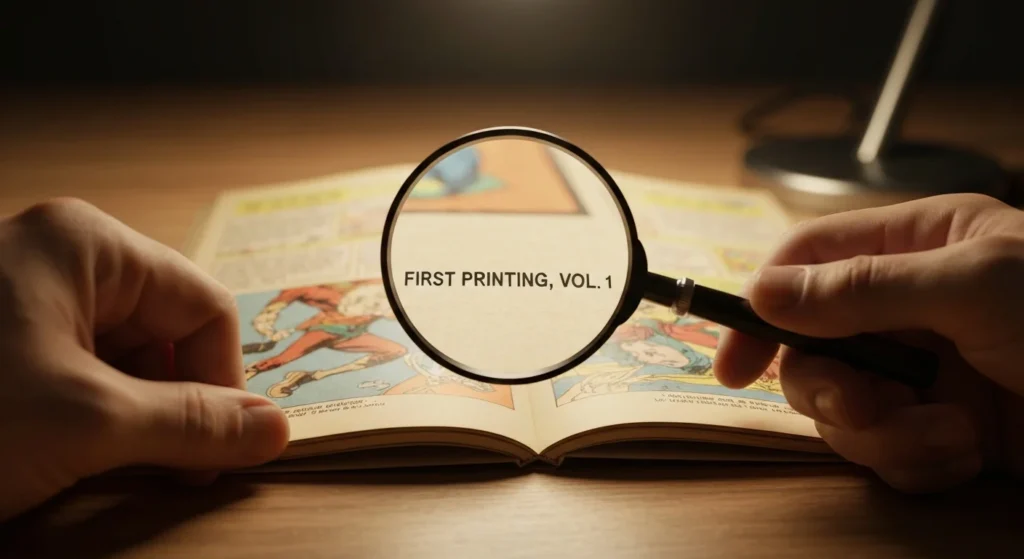
Identifying a first printing of a comic book requires inspecting the barcode on modern issues or reading the fine-print indicia on vintage issues. For modern comics, check the barcode box. The last digit of the five-digit supplement code indicates the printing. A final number of “1” indicates a first print. A “2” or higher denotes a reprint. For older or classic comic books, you must read the indicia. This fine print usually sits at the bottom of the first page. It explicitly names reprints or later editions. If you are dealing with a direct market variant, physical markers like modified cover art will distinguish the printing. Distinct price boxes or altered background colors also separate subsequent printings from first edition comic books. This guide breaks down these verification methods in detail. You will learn to confidently identify first edition comics. Professional appraisers use these exact steps to determine market value.
Key Takeaways for Identifying First Edition Comics
- Check the Barcode: Modern comic books use a 5-digit extension where the final digit indicates the printing number (1 is first print).
- Read the Indicia: Vintage comics list printing details, publisher information, and copyright dates in the fine print at the bottom of the first page.
- Spot Cover Variants: Publishers often alter background colors, logos, or cover art to quickly distinguish a second print run from the original.
- Understand “Direct Edition” vs. “Newsstand”: Knowing how distribution works prevents you from misidentifying rare newsstand copies as reprints.
- Avoid Common Appraising Mistakes: Issue #1 does not automatically mean a first printing; many later printings of issue #1 exist.
Decoding the Barcode to Identify First Edition Comic Books
Modern publishers make identification easy through standardized barcodes. This system began in the late 1990s. Look closely at the UPC box on the front cover. You will see a main barcode and a smaller, five-digit add-on barcode. This supplemental code acts as a decoder ring for collectors.
The first three digits correspond to the issue number. The fourth digit represents the cover variant. Cover A uses “1”, cover B uses “2”, and so on. The fifth and final digit explicitly details the printing number.
If the code reads “00111,” you are holding issue #1, cover variant A, first printing. If it reads “00112,” you have a second printing. This standard system provides an instant answer for modern issues.
However, many older issues lack barcodes entirely. Newsstand issues from the 1970s and 1980s display a standard UPC without the special comic-specific five-digit code. In those cases, you must rely on other physical indicators. To see how editions affect market demand, explore our guide on how to identify key issue comic books.
Furthermore, indie publishers do not always adhere to the same coding guidelines as Marvel and DC. Image Comics, Boom! Studios, and IDW Publishing have modified their barcode structures occasionally. If you encounter an unusual series of digits, check the official creator website. This step helps verify if they used custom retail codes for exclusive print runs.
Using the Indicia to Verify First Edition Comics

Vintage comic books require a different approach. They lack modern barcodes. The most reliable tool for older collectibles is the indicia. This block of tiny text resides at the bottom of the first story page. Occasionally, you will find it on the inside front cover or the inside back cover.
The indicia serves as the official legal registry of the book. It displays the publication title, volume number, issue number, date, and copyright holder. Publishers like Marvel, DC, and Image use this space to declare subsequent printings.
If a comic is a reprint, the indicia will state “Second Printing” or “Reprinted in [Year].” If the text only lists the original publication year without mentioning later print runs, you are likely holding a first edition.
Always use a magnifying glass to inspect this area. The font size is intentionally small. Professional graders at the Certified Guaranty Company (CGC) rely heavily on this legal text. They verify authenticity before certifying a comic book.
Many vintage reprints were produced for regional markets or department store packs. These are often called “Whitman reprints.” They are easily identified by reading the copyright line. If the indicia mentions “Western Publishing” or “Whitman,” it is not a first print.
Visual Redesigns: How to Spot Reprints vs. How to Tell if a Comic Is First Print
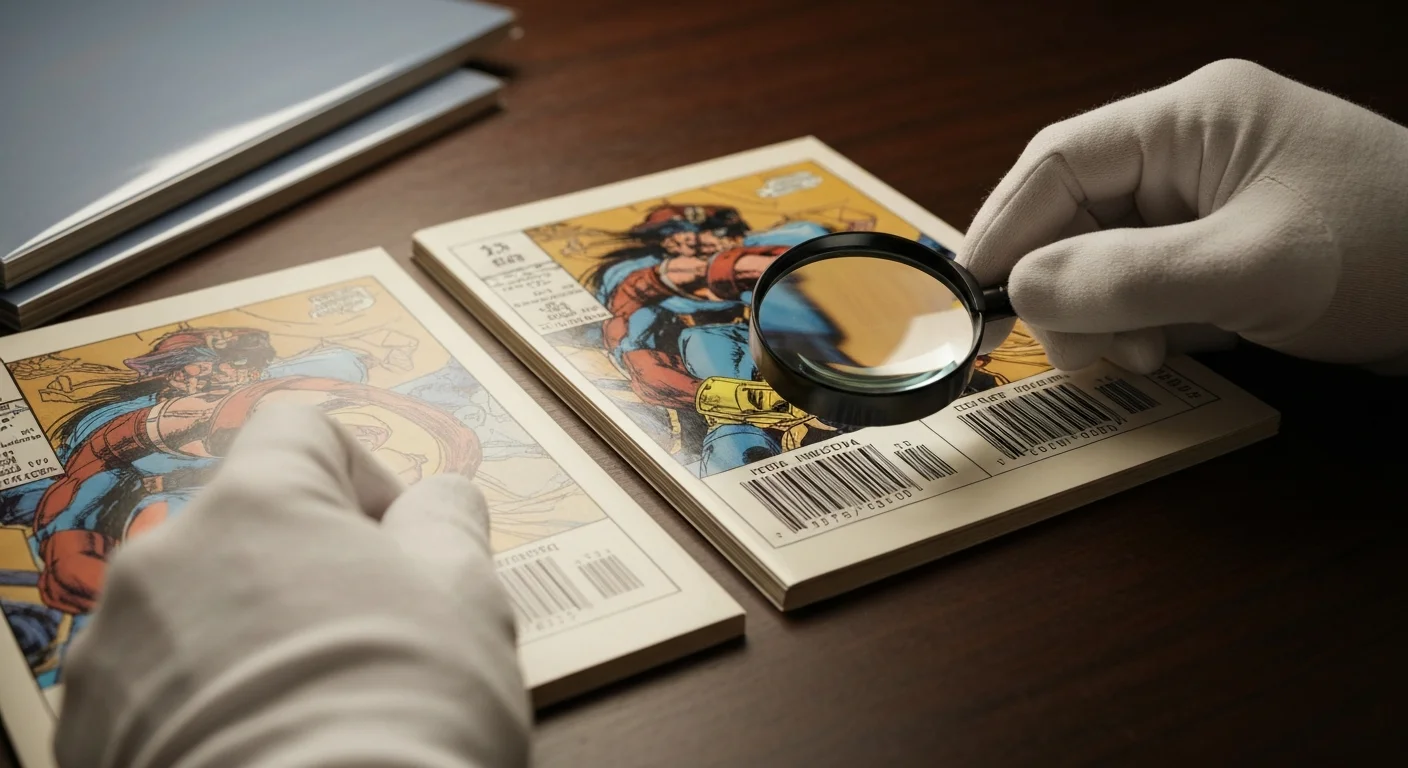
Publishers often change the cover design of subsequent printings. This prevents retail confusion. These visual differences make it easy to separate first edition comic books from later counterparts at a glance.
For example, secondary print runs frequently feature completely different cover art. If the original cover had a trade dress with a blue background, the second printing might use a red background. Some publishers strip away the color entirely. They release the second print as a “black and white” variant.
Another common visual indicator is the price box. Vintage Marvel reprints from the late 1970s often replaced the standard price box with a blank box or a Whitman logo. Similarly, the “direct market” diamond symbol in the price area was introduced to distinguish direct comic shop sales from newsstand distribution.
Understanding these design shifts prevents costly mistakes. Some collectors assume any variation is a rare printing error. However, it is usually a sign of a later print run. If you want to know what your verified first prints are worth, you can consult a professional comic book price guide to check current market valuations.
Keep in mind that certain promotional variants were distributed in cereal boxes or with toys. These often lack a cover price entirely. Instead of a price, you might see “Free” or a blank white space. These are distinct from standard first printings and hold separate collectible values.
Key Differences in Vintage and Modern Comic Printing Runs
Historically, the comic book industry operated on a newsstand-only model. Unsold copies were returned to the publisher for a refund. Retailers often stripped the top cover off the book to prove it was unsold. In this environment, publishers rarely ordered a second print run. If a comic sold out, it was simply gone.
This changed with the rise of the direct market in the late 1970s and 1980s. Specialty comic shops bought books on a non-returnable basis. This created a highly predictable supply chain. However, it also introduced the need for reprints when a hot issue caught fire.
According to historical market tracking by Comichron, modern publishers routinely order multiple printings. They do this to capitalize on viral story arcs or media adaptations. For example, some popular modern titles have seen up to ten distinct printings.
In modern collecting, the first print run is almost always the most valuable. It represents the historic debut of a character or storyline. However, rare exceptions exist. Sometimes a later print run had an extremely small print volume. This makes the reprint scarcer than the original.
Step-by-Step Guide to Verifying Your Comic Book Printing

Follow these step-by-step instructions to systematically verify if your comic book is a genuine first printing:
- Examine the Cover: Look at the bottom corner for a barcode. If present, read the 5-digit extension.
- Check the Price Box: Note any unusual price markings, reprint logos, or non-standard artwork.
- Find the Indicia: Open the comic. Locate the fine-print block at the bottom of the first page or the inside front cover.
- Read the Printing History: Look closely for words like “Second Edition” or “Second Printing.” Check for a string of numbers indicating the print run. A sequence ending in “1” usually denotes a first printing.
- Verify with a Database: Cross-reference your comic’s physical attributes with online databases. Tools like the Grand Comics Database ensure no hidden variants match your copy.
Using this method ensures you do not mistake a modern facsimile for a vintage original. Always handle older issues with clean, dry hands. Avoid touching the ink directly to prevent oils from damaging the paper.
Comparing First Prints, Reprints, and Facsimile Editions
Distinguishing between original issues, standard reprints, and modern facsimile editions is crucial for accurate valuation. Each category appeals to different collectors. They command vastly different prices in today’s market.
Standard reprints often serve to keep a popular story in circulation for readers. These are usually clearly marked. They feature modern ad placements and lower-grade paper.
Facsimile editions are modern, high-quality replicas. They are designed to look identical to the original first printing. They copy the vintage paper feel, ads, and cover price. However, they always include a modern UPC code and a modern copyright date. These are hidden in the indicia to prevent counterfeiting.
We have compiled a table comparing these main options to help you distinguish them.
| Edition Type | Key Visual Identifier | Typical Market Value Range |
|---|---|---|
| First Printing | Original cover price, vintage paper, original indicia, standard or no barcode | $10 to $100,000+ (highly dependent on key issues) |
| Later Printing (Reprint) | Altered cover colors, modified UPC code, explicit reprint text in indicia | $2 to $50 (rarely exceeds original value) |
| Facsimile Edition | Identical front cover but includes modern barcode, modern copyright date in indicia | $4 to $10 (sold at standard modern cover prices) |
| Toy / Promo Reprint | Blank price boxes, packaged with action figures, specific promo logos | $1 to $20 (mostly collected as novelties) |
Understanding these categories helps you avoid paying first-print prices for later editions.
Common Pitfalls to Avoid When Assessing Comic Editions
One of the most frequent mistakes amateur collectors make is assuming that “Issue #1” equates to a first printing. Publishers routinely reissue famous first issues decades after their original release. For example, a vintage Action Comics #1 first printing from 1938 is worth millions. However, a 1970s reprint might only be worth a few dollars.
Another critical error is overlooking the differences in distribution channels. During the 1980s, Marvel and DC distributed both newsstand and direct market editions. While these are different distributions of the same first printing, their values can diverge dramatically. Today, high-grade newsstand editions from certain eras command massive premiums due to their lower survival rate in pristine condition.
Always check the physical paper condition and scent. Vintage comics printed before the mid-1990s use newsprint paper. This paper yellows over time. It also has a distinct, aged smell. If a “vintage” comic feels glossy and heavy, you are likely holding a modern reprint.
If you are looking to liquidate your collection safely, check out our comprehensive guide on how to sell a comic book collection. Professional dealers can spot a reprint in seconds. They understand paper stock, ink types, and production history. This ensures you get an accurate assessment of your comic’s true market position.
FAQ
How does a modern comic barcode reveal the printing number?
A modern comic barcode features a smaller, five-digit supplemental code next to the main barcode. The last digit of this five-digit sequence represents the printing number. A number “1” indicates a first print, while any higher number shows a later reprint.
Is a second print comic worth less than a first print?
Typically, second print comics are worth less than first prints because collectors prioritize the original release. However, if the second print run was extremely small or featured popular variant art, it can occasionally command a higher price. Most standard reprints sell for a fraction of the first print value.
Can a reprint comic ever be more valuable than a first printing?
Yes, reprint comics can be more valuable under specific conditions. If the original first printing was massive and the second printing was highly limited, scarcity drives up the reprint’s value. Additionally, some reprints correct a rare error or feature sought-after cover art that collectors prefer.
What is a facsimile edition in comic collecting?
A facsimile edition is a modern, high-quality reproduction of a classic comic book. It mimics the original first printing exactly, including the vintage ads and original cover price. You can identify them by checking the indicia for a modern copyright date or looking for a modern UPC barcode.
How do I identify a first edition comic book from the 1960s?
To identify a 1960s first edition, you must inspect the indicia text at the bottom of the first page. Look for any explicit mentions of later printings, foreign editions, or reprint dates. Since 1960s comics lacked barcodes, the indicia is the most accurate legal record of the printing history.
Which publishers use indicia to list reprint details?
Major publishers like Marvel, DC, Image, and Dark Horse use the indicia to list reprint details. Independent publishers also follow this legal convention to track their distribution history. Always check this fine print first when evaluating vintage or indie comic books.