
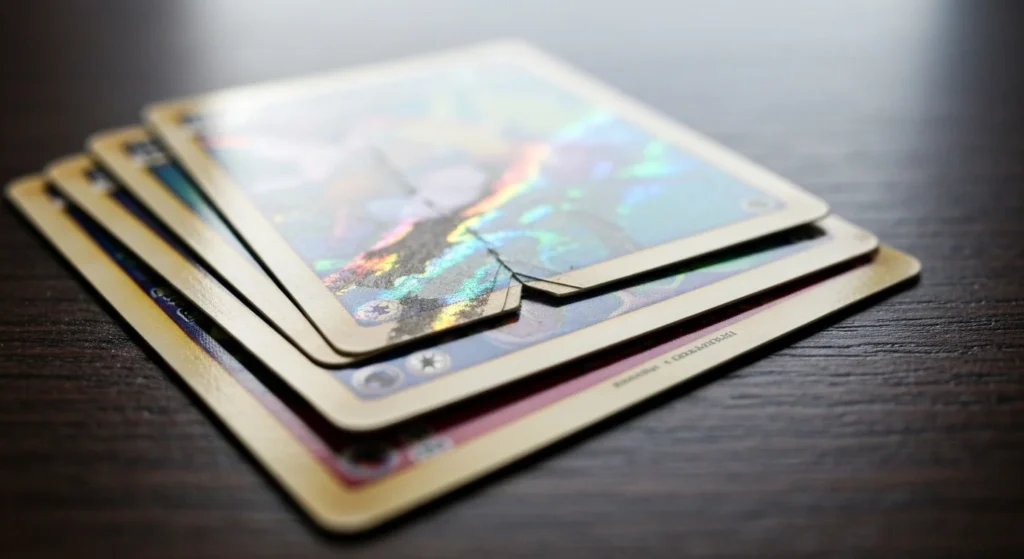
For collectors holding unusual Pokémon cards with printing blemishes, ink spills, or crooked cuts, the single best path is to prioritize immediate verification through specialized grading services or professional buyers. While minor factory off-centering barely impacts pricing, major manufacturing anomalies can transform a standard dollar card into a highly sought-after collectible worth hundreds or thousands of dollars. The general rule of thumb is simple: human design errors that are quickly corrected by the factory command the highest premiums, whereas minor ink-smudge variations often yield negligible increases. To capitalize on these unique collectibles in 2026, you must know how to tell a genuine printing anomaly from aftermarket damage, secure professional authentication, and target the niche market of error enthusiasts. If you are looking to maximize your returns without the risk of online auctions, selling directly to an established physical venue is your best approach. Here is exactly how to navigate this lucrative, complex corner of the trading card game hobby.
Key Takeaways
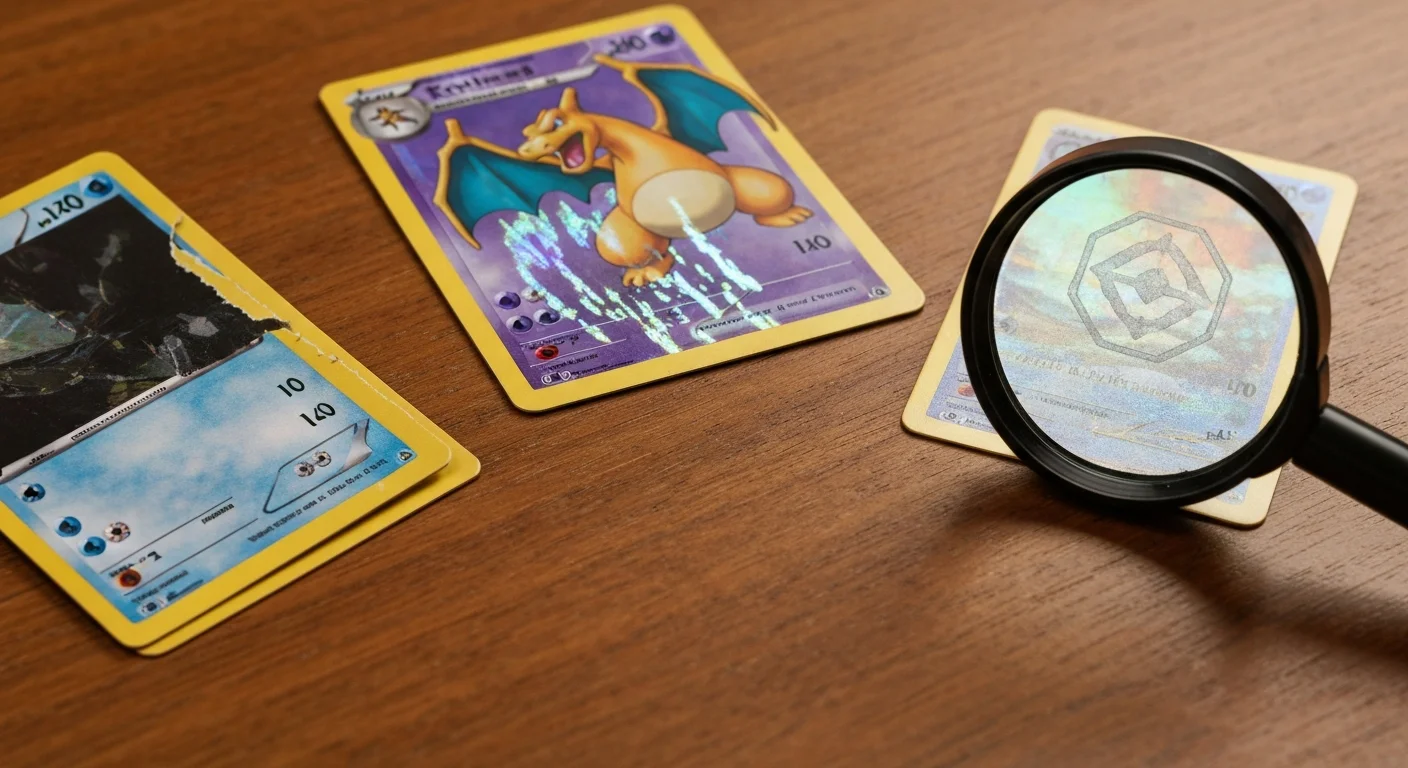
- Factory Errors vs. Damage: Authentic errors occur during official production, whereas alterations made post-packaging destroy a card’s market value.
- The Value Hierarchy: Corrected human errors and severe physical miscuts fetch significantly higher prices than minor alignment shifts or ink hickeys.
- Grading is Essential: Third-party authentication from specialized services is vital to prove legitimacy and protect your asset’s condition.
- Spot the Alignment Dot: The presence of a small black or white dot on the corner border proves a card is a true major miscut.
- Sell Locally for Safety: Working with a trusted specialty dealer eliminates the high transaction fees, shipping risks, and chargeback scams common on online marketplaces.
What Are Pokémon Error Cards?
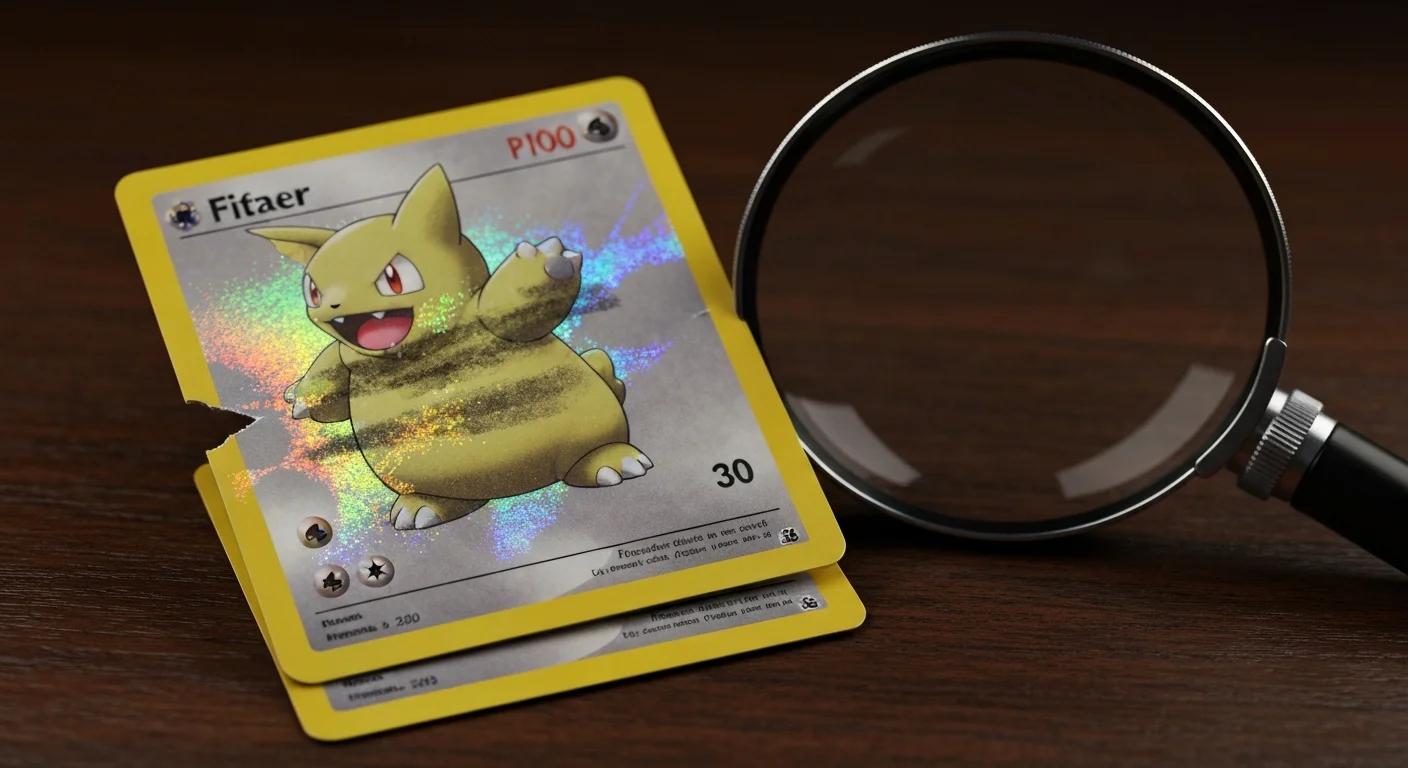
Authentic error Pokémon cards are cards that depart from the standard printing specifications set by The Pokémon Company. These anomalies occur during the complex, multi-stage industrial printing process where sheets of high-grade cardstock receive layers of ink, foil, texturing, and protective coatings before being sliced into individual cards. If any piece of machinery misaligns, runs low on ink, or experiences a software hiccup, a batch of unique cards is produced. Sometimes, human designers also make mistakes on the digital plates, such as misspelling attacks, printing incorrect weakness symbols, or miscalculating a Pokémon’s health points. When these flawed cards escape quality control and end up inside booster packs, they instantly become scarce collectibles. Unlike damaged cards that have suffered wear and tear, factory errors are born unique, representing a snapshot of a mechanical or design failure during production.
The history of these printing mistakes goes back to the very beginning of the English trading card game in 1999. In those early days, Wizards of the Coast printed the cards under license, leading to several famous printing discrepancies. As production scaled up globally, the variety of mechanical hiccups expanded. In 2026, collectors divide these into two main classes: design errors and printing/cutting errors. Design errors occur when the digital artwork or text files sent to the printing press contain a mistake. Because these affect entire early print runs before they are caught and corrected, they can be highly documented. Printing and cutting errors, on the other hand, are random physical mistakes that occur during a specific shift at the printing facility. These random mishaps are often entirely unique, meaning you might hold the only card in existence with a specific defect.
The Most Common Types of Error Pokémon Cards
The sheer variety of printing mistakes means that error cards can range from subtle text changes to bizarre physical abnormalities. One of the most famous examples is the “Red Cheeks Pikachu” from the original Base Set of 1999, where the iconic mouse had red cheeks printed over its yellow cheeks, a mistake the original artist Mitsuhiro Arita had not intended. Another highly sought-after category is the “holo bleed” error, where the metallic holographic foil pattern shines through the entire front face of the card instead of remaining confined solely to the artwork window. This happens when the opaque ink layer applied over the foil is too thin or fails to bond correctly. Additionally, “blank back” or “filler” cards, which completely lack the traditional blue Pokémon card back art, occasionally slip through the cutting lines.
Another popular category involves ink hickeys and obstruction errors. Ink hickeys occur when a piece of dust, paper fiber, or dried ink settles onto the printing plate, preventing the correct color ink from transferring to the paper. This creates a small circular blemish, often surrounded by a white halo, which collectors sometimes refer to as “doughnut errors.” Obstruction errors are more dramatic, happening when a foreign object, such as a scrap of paper or tape, falls onto the card sheet before the ink is applied. When the object falls off later, it leaves behind a stark, unprinted white silhouette of the obstruction. Foil errors also occur, such as “double-stamped” cards where the foil logo or rarity symbol is pressed twice, creating a ghosting effect that collectors find incredibly appealing.
Understanding Miscut Pokémon Cards and Off-Center Prints
Miscut pokemon cards are among the most visually striking and easily recognizable errors in the entire hobby. Standard Pokémon cards feature perfectly rounded corners and even borders on all four sides. When the automated cutting blades drift or the uncut sheet of cards misaligns during the final slicing stage, the resulting card borders become highly uneven. Minor alignment shifts are incredibly common and usually result in an “off-center” designation, which typically hurts the card’s grade rather than increasing its value. However, a true miscut occurs when the cut is so severe that it cuts into the actual artwork or reveals a portion of a neighboring card from the uncut sheet.
For collectors, the definitive proof of a major miscut is the “alignment dot,” which is a small, printer-placed dot used to calibrate the cutting machinery. If this dot is visible on the corner of your card, it proves the cut was severely off-axis, instantly elevating its market desirability. Another severe cutting anomaly is the “square cut” card. Standard cards are die-cut with rounded corners, but occasionally, sheets bypass this rounding process entirely, leaving sharp, ninety-degree square corners. Because square-cut cards can be easily faked by hand-cutting official uncut sheets that are sometimes sold to the public, the community treats raw square-cut cards with extreme caution. Professional grading is required to verify if the square corners were truly cut at the factory.
Deciphering Pokémon Error Cards Value and Rarity
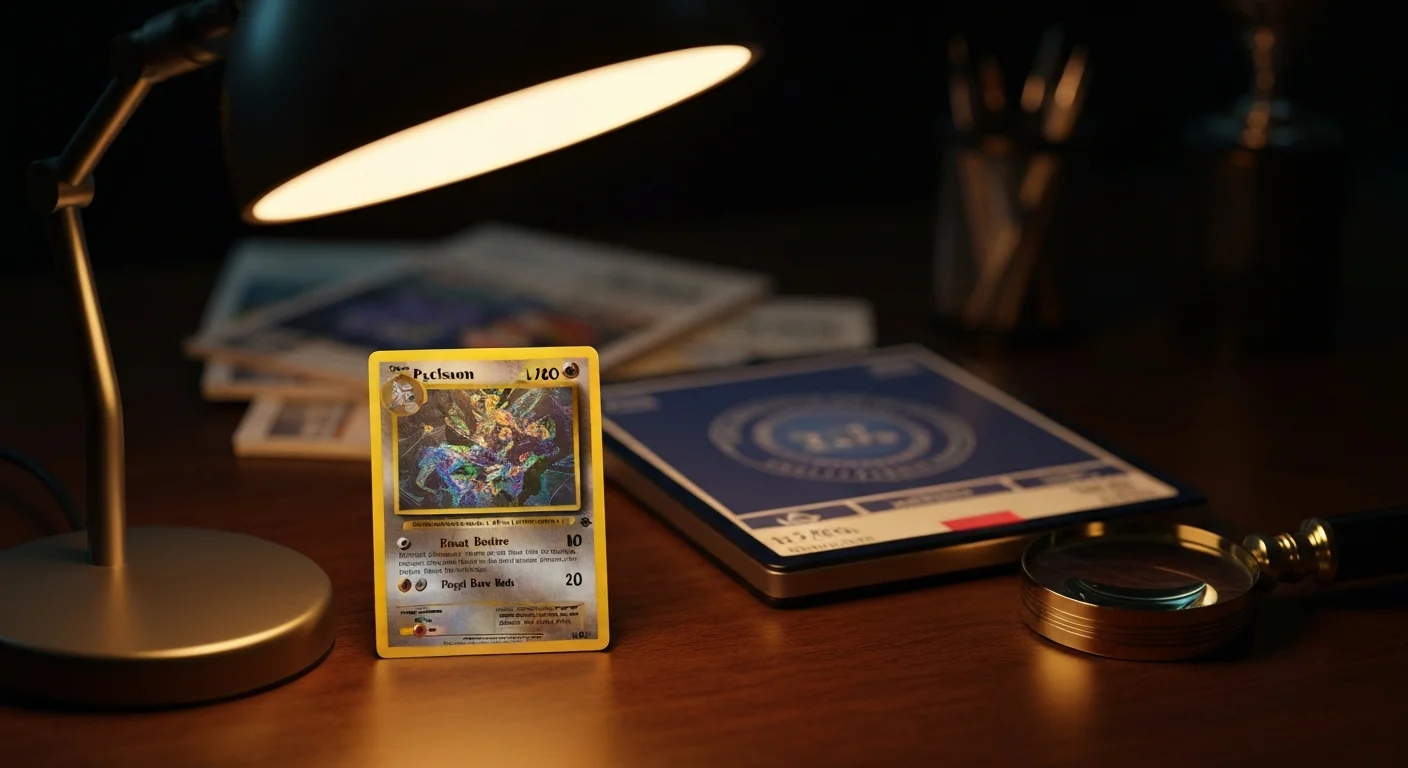
Determining the precise pokemon error cards value requires looking beyond standard pricing charts to evaluate rarity, demand, and visual impact. While a common card with a tiny ink speck might only command a small $5 to $20 premium, a highly sought-after holo card with a dramatic miscut can easily fetch $100 to $500 or more. According to sales data tracked by eBay, major misprints on popular vintage characters like Charizard, Lugia, or Mewtwo routinely command thousands of dollars from dedicated error collectors. The concept of “corrected versus uncorrected” errors plays a massive role in this valuation process. If a publisher notices a typo early in a print run and corrects it, the early, uncorrected “error” version will have a tiny population, sending its value skyrocketing. Conversely, if the publisher never bothers to fix the mistake, the uncorrected error remains the standard version of the card, meaning it will carry no extra premium.
To accurately gauge what your collection might be worth, you can learn how to assess condition using our complete guide to checking Pokémon card value. Visual appeal is another huge factor in determining value. An error that is ugly or looks like simple wear and tear will not generate high demand. An error that is clean, clear, and dramatic—such as a card printed upside down or one showing two different Pokémon merged together—will always command a massive premium. The identity of the Pokémon itself is also crucial. A miscut Pikachu, Charizard, or Umbreon will always attract far more bidding wars than a miscut common card like Rattata or Caterpie, simply due to the massive global fan base of those top-tier characters.
Comparing Popular Pokémon Error Types
Evaluating which errors are worth the most can be difficult for beginners. The table below breaks down the most common factory anomalies, their visual characteristics, and their typical market value premium in 2026.
| Error Type | Visual Identification Key | Estimated Value Premium Range |
|---|---|---|
| Minor Off-Center (OC) | Uneven borders, but no artwork is cut off; no alignment dots visible. | None to negative (reduces standard grade value) |
| Major Miscut | Artwork is sliced; alignment dots or portions of adjacent cards are visible. | $30 to $500+ (highly dependent on character) |
| Holo Bleed | Holographic sheen covers the entire front of the card, not just the art box. | $5 to $50 above standard card value |
| Text / Typo (Uncorrected) | Spelling mistakes, wrong HP, or incorrect energy symbols on the card face. | $10 to $100+ (set by historical collector demand) |
| Blank Back / Filler | The front is printed normally, but the reverse side is completely blank white. | $50 to $300+ depending on the set of origin |
| Square Cut (Factory) | Sharp 90-degree corners on all four sides from skipping the rounding die. | $100 to $1,000+ (requires professional authentication) |
As shown in the table, the value premium varies wildly. Collectors who stumble upon a major miscut or a blank back card should handle the card with care. Even a minor scuff on the edges can ruin the premium that a buyer is willing to pay. Keep these cards housed in high-quality protective sleeves to preserve their condition.
How to Grade and Verify Error Cards Safely
Authenticating your error cards through professional grading services is the absolute best way to protect your investment and prove legitimacy. Because bad actors sometimes attempt to manually cut sheets or alter cards to mimic factory errors, buyers are highly skeptical of raw, uncertified misprints. According to a study on collectible card market trends by Professional Sports Authenticator (PSA), third-party certification instantly eliminates authenticity disputes, raising the average closing price of rare cards. When choosing a grading company, it is vital to know that different firms have distinct policies regarding error designation. For example, some grading scales prioritize structural perfection, which is detailed in our guide to CGC card grading.
While PSA accepts certain errors under strict guidelines, CGC Cards is widely considered the industry leader for specialized error labels. They utilize advanced imaging technology to confirm that the error happened at the factory. An expert recommendation to keep in mind is to never attempt to trim or alter a miscut card yourself to make it look “more even.” This immediately flags the card as altered and renders it worthless to any reputable grader or buyer. To avoid a common professional mistake, always double-check the exact submission instructions for errors. Some grading companies require you to select a specific “Error Tier” and pay an additional fee to have the mistake officially designated on the label. Failing to do this may result in your card being returned ungraded, or graded normally with a low score because they treated the factory error as simple damage.
Step-by-Step Guide to Selling Your Error Pokémon Cards
If you have discovered a misprint in your collection, selling it safely requires a careful approach to avoid being scammed. Follow this professional process to turn your printing anomalies into cash:
- Analyze the Error under Bright Light: Use a magnifying glass or a jeweler’s loupe to inspect the anomaly. Check for signs of aftermarket tampering, such as hand-cut edges or chemically removed ink. Genuine factory cuts should have clean, textured edges, not the smooth, compressed edges left by a personal paper trimmer.
- Keep the Card Protected: Place the card immediately into a soft penny sleeve, followed by a rigid top loader or card saver. Never use cheap binders with tight pockets that can bend the corners, and refer to our guide on selecting the best binder for Pokémon cards to ensure you are storing your items safely.
- Research Market History: Search online databases and completed sales on trusted auction sites. Do not look at active listings, as sellers can list items for any price they want. Look only at “Sold” listings to see what buyers have actually paid for similar errors.
- Decide on Professional Grading: For high-value errors featuring famous characters, submit the card to CGC or PSA. The official error designation on the holder will significantly expand your pool of potential buyers and maximize your final payout.
- Choose a Trusted Specialty Buyer: Selling unique errors on public auction sites can be highly risky. Fraudulent buyers often claim they received a different card and initiate chargebacks, leaving you without your card or your money. If you want to skip the risk of online chargeback scams and shipping damage, visit Comic Buying Center to sell Pokémon cards to a team of experienced professionals who understand the nuances of misprints and error cards.
Spotting Counterfeit and Manually Altered Errors
The rising popularity of misprints has unfortunately led to a surge in counterfeit error cards. Fraudulent sellers often take authentic, cheap cards and modify them at home to mimic high-value factory errors. The most common form of this scam is the fake square-cut card. Scammers purchase cheap, uncut sheets of Pokémon cards—which are occasionally distributed as promotional items or stolen from factories—and use industrial paper cutters to slice them into individual cards with square corners. To spot these “sheet-cut” fakes, experts look at the alignment. Factory-cut cards are cut using precise, high-speed automated dies that align perfectly with the card’s dimensions. Hand-cut sheets almost always show slight tilt, uneven borders, or dimensions that do not match standard card sizes.
Another common aftermarket alteration is the “fake blank back.” Scammers use fine-grit sandpaper or chemical solvents like acetone to carefully strip the blue ink off the back of a card, leaving behind a blank white surface. These altered cards can easily be detected because the chemical treatment alters the thickness and weight of the cardstock. It also strips away the natural gloss of the paper, leaving a rough, matte texture that smells strongly of chemicals. Additionally, under a magnifying glass, you can often see tiny traces of the original blue ink trapped in the fibers of the paper. Authentic errors will have a completely smooth, natural factory coating on both sides, with no chemical odors or abrasive scratches.
FAQ
What makes a Pokémon card an error card?
An error card is any official Pokémon card that was printed with mistakes in its text, layout, colors, or cutting from the factory. These anomalies occur during the industrial manufacturing process or due to digital file errors before the print run begins. Authentic errors are highly distinct from cards that have suffered normal wear and tear or aftermarket damage.
How do I know if my miscut Pokémon card is real?
A genuine major miscut can be verified by looking for a small printer-calibration dot, known as an alignment dot, near the corners of the card borders. Additionally, the edges of a factory-cut card will have a clean, micro-textured feel under magnification, unlike the compressed, smooth edges left by home paper cutters. Getting the card authenticated by a grading service like CGC is the safest way to prove legitimacy.
Is a Pokémon card with holo bleed worth more?
Yes, a card with a holo bleed error generally commands a premium, though the extra value depends on the specific card and character. If the holo bleed is dramatic and covers a highly popular character like Charizard, the price can increase by $50 or more. Minor holo bleed on common modern cards is fairly frequent and may only add a few dollars to the value.
Can I get my Pokémon error cards graded by PSA?
Yes, PSA does grade select error cards, but their criteria for what they recognize on the label are much stricter than other companies. If the error is not a widely documented or officially recognized catalog misprint, they may grade the card based on standard criteria and lower the grade due to the defect. For random mechanical errors, many collectors prefer submitting to CGC Cards due to their specialized error designation service.
Which Pokémon error cards are the most valuable?
The most valuable error cards are vintage, corrected errors that have incredibly low populations, such as the Base Set No-Damage Ninetales or the Red Cheeks Pikachu. Severe physical errors, such as a double-printed card or a major miscut that shows two half-cards of popular vintage characters, also fetch thousands of dollars. The value is always determined by the rarity of the error combined with the popularity of the character.
How do I sell my Pokémon error cards safely?
Selling your error cards to an established, professional collectibles buyer like Comic Buying Center is the safest and most efficient method. This path protects you from the shipping losses, platform fees, and fraudulent chargeback scams that plague public auction websites. A professional dealer can provide an immediate appraisal and a fair cash offer on the spot.