
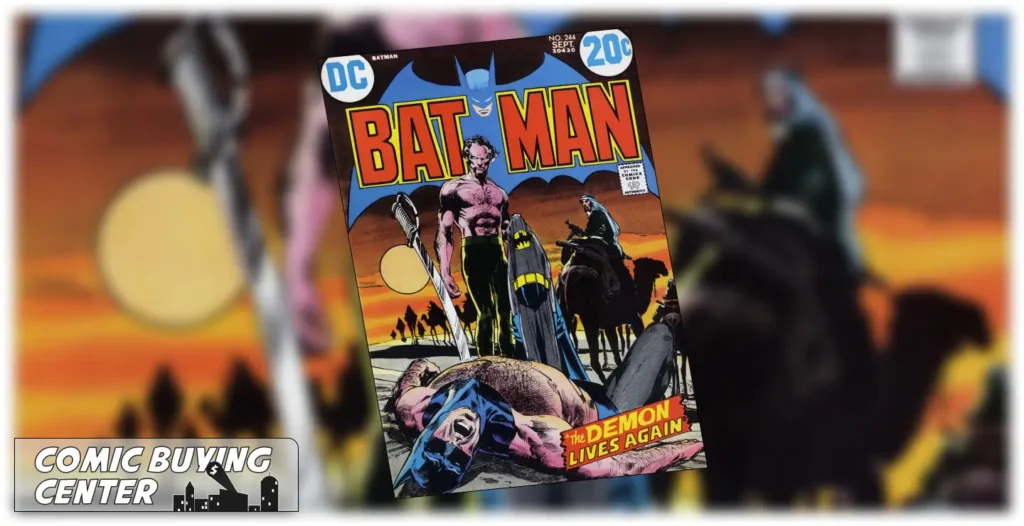
Batman #244 (September 1972), the Neal Adams classic in which Batman duels Ra's al Ghul, sells for about $130–190 in CGC 4.5 and $220–255 in 7.5, based on 2026 sales. A CGC 9.6 brought $1,016 at Landry's in August 2025.
Below you'll find prices by grade, recent sales, how to tell an original from the facsimile edition, and what to do if you have a copy. We buy comic books in Chicago and the suburbs and see Bronze Age Batman books every week. If you'd rather sell comic books than research them, we can make you an offer.
Batman #244 Value by Grade (2026)
Prices are for CGC-graded copies with a blue (Universal) label.
| CGC grade | Typical 2026 price | Most recent verified sale |
|---|---|---|
| 4.5 (VG+) | $130–190 | $189 · eBay · Jun 2026 |
| 7.5 (VF-) | $220–255 | $255 · eBay · Jul 2026 |
| 8.5 (VF+) | $300–450 (estimate) | No verified 2026 sale |
| 9.2 (NM-) | $400–500 (estimate) | No verified 2026 sale |
| 9.6 (NM+) | $1,000–1,250 | $1,016 · Landry's · Aug 26, 2025 |
| 9.8 (NM/MT) | About $4,900 (estimate) | No recent public sale |
High-grade copies of this run are scarce, so the price jumps sharply above 9.2.
Recent Batman #244 Sales (2025–2026)
| Date | Grade | Venue | Price |
|---|---|---|---|
| Jul 2026 | CGC 7.5 (white pages) | eBay | $255 |
| Jul 2026 | CGC 7.5 | eBay | $220 |
| Jun 2026 | CGC 4.5 | eBay | $189 |
| Aug 26, 2025 | CGC 9.6 | Landry's | $1,016 |
Why Batman #244 Is Valuable
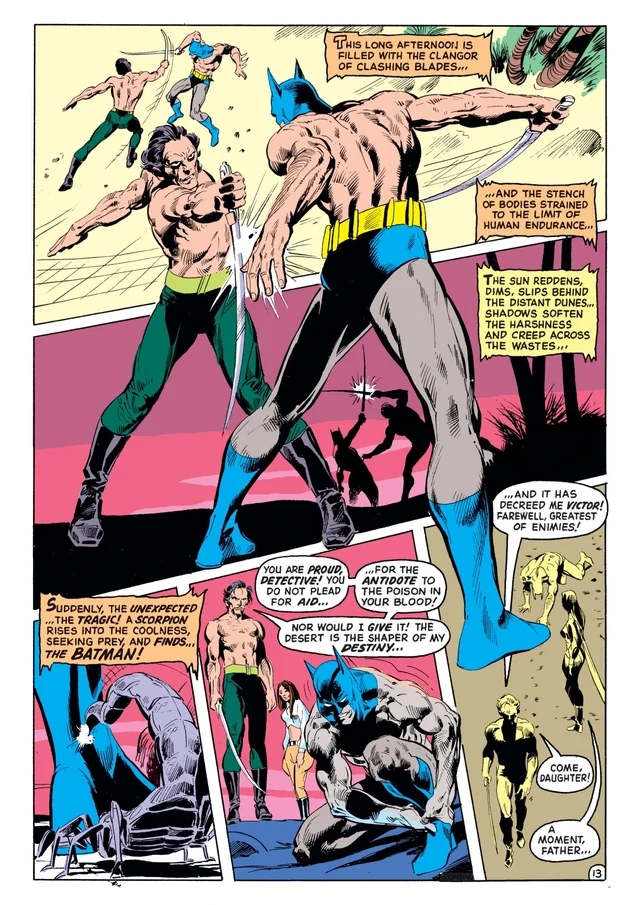
Batman #244, "The Demon Lives Again!", was written by Denny O'Neil and drawn by Neal Adams with inks by Dick Giordano. It finishes the first Ra's al Ghul saga: Batman tracks Ra's and Talia to the desert and fights Ra's in a bare-chested sword duel, one of the most famous scenes in Batman history. The issue cost 20 cents.
The story helped bring Batman back to darker, detective-driven stories after the 1960s TV era. For the first appearance of Ra's al Ghul, see our Batman #232 value guide, and for other keys, our Batman price guide.
Original or Facsimile?
- Cover price. The original says 20¢.
- Facsimile edition. DC reprinted Batman #244 as a facsimile edition with the same cover. It has a modern price, a barcode and the word "facsimile," and sells for cover price.
- Paper. Originals are on off-white newsprint. Bright white paper means a modern printing.
Not sure what you have? Send us a few photos through our free comic book appraisal.
What Affects the Value of Your Copy
Most copies sell for a few hundred dollars, so only a very clean copy is worth grading. A 9.6 is worth about four times a 7.5. Learn more in how condition affects comic book value, raw vs graded comics and CGC vs CBCS, or see our comic book grading guide.
Own a Copy? Get a Free Appraisal
If you're searching for this value, there's a good chance the comic is in your hands. Comic Buying Center buys Bronze Age keys, single books and whole collections, and we pay on the spot. Our appraisal is free and there's no obligation to sell.
- Send photos of the front cover, back cover and first page
- Get an honest estimate based on current sales, not guide prices
- Visit us in Libertyville or sell comic books in Chicago and the suburbs without shipping anything
Related Value Guides
- Batman #232 value: first Ra's al Ghul
- Batman #251 value: Neal Adams Joker classic
- Batman #227 value
- Batman #181 value: first Poison Ivy
- Batman price guide
- Bronze Age comics
- Comic book price guide
Batman #244 FAQ
How much is Batman #244 worth?
In 2026 a CGC 4.5 Batman #244 sells for about $130–190 and a 7.5 for $220–255. A CGC 9.6 brought $1,016 in 2025, and a 9.8 is estimated at around $4,900.
What happens in Batman #244?
Batman tracks Ra's al Ghul to the desert and defeats him in a bare-chested sword duel. The story is by Denny O'Neil and Neal Adams.
Is the Batman #244 facsimile worth anything?
The facsimile edition is a modern reprint and usually sells for about cover price. Only the 1972 original with a 20¢ price is collectible.
Is Batman #244 a key issue?
It is a classic rather than a first appearance. Ra's al Ghul first appeared in Batman #232, but #244's sword duel makes it one of the most wanted Neal Adams Batman issues.