
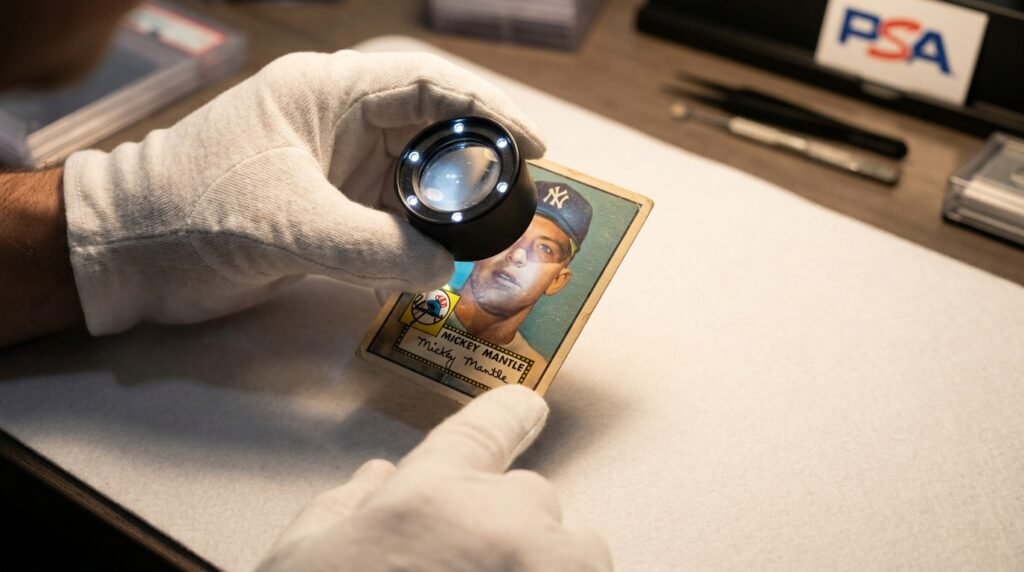
Submitting a collectible card for professional authentication and grading by Professional Sports Authenticator (PSA) is a crucial step for many collectors seeking to maximize value and ensure long-term preservation. The PSA grading process rigorously evaluates a card’s condition against a standardized 10-point scale, culminating in encapsulation within a tamper-evident holder and assignment of a numerical grade. This service benefits those looking to sell high-value cards, preserve rare finds, or simply establish verifiable authenticity and condition for their prized possessions. For cards with significant market potential, professional grading can unlock substantial value, turning a raw card into a certified asset. However, understanding the meticulous steps, strict standards, and varying turnaround times is essential to a successful submission experience. Collectors aiming for top grades must prioritize card preparation and correctly assess their item’s condition to align expectations with PSA’s professional evaluation. Comic Buying Center provides expert guidance on navigating this process, helping collectors understand the nuances of submitting Pokemon cards, sports cards, and more to achieve optimal results.
Key Takeaways
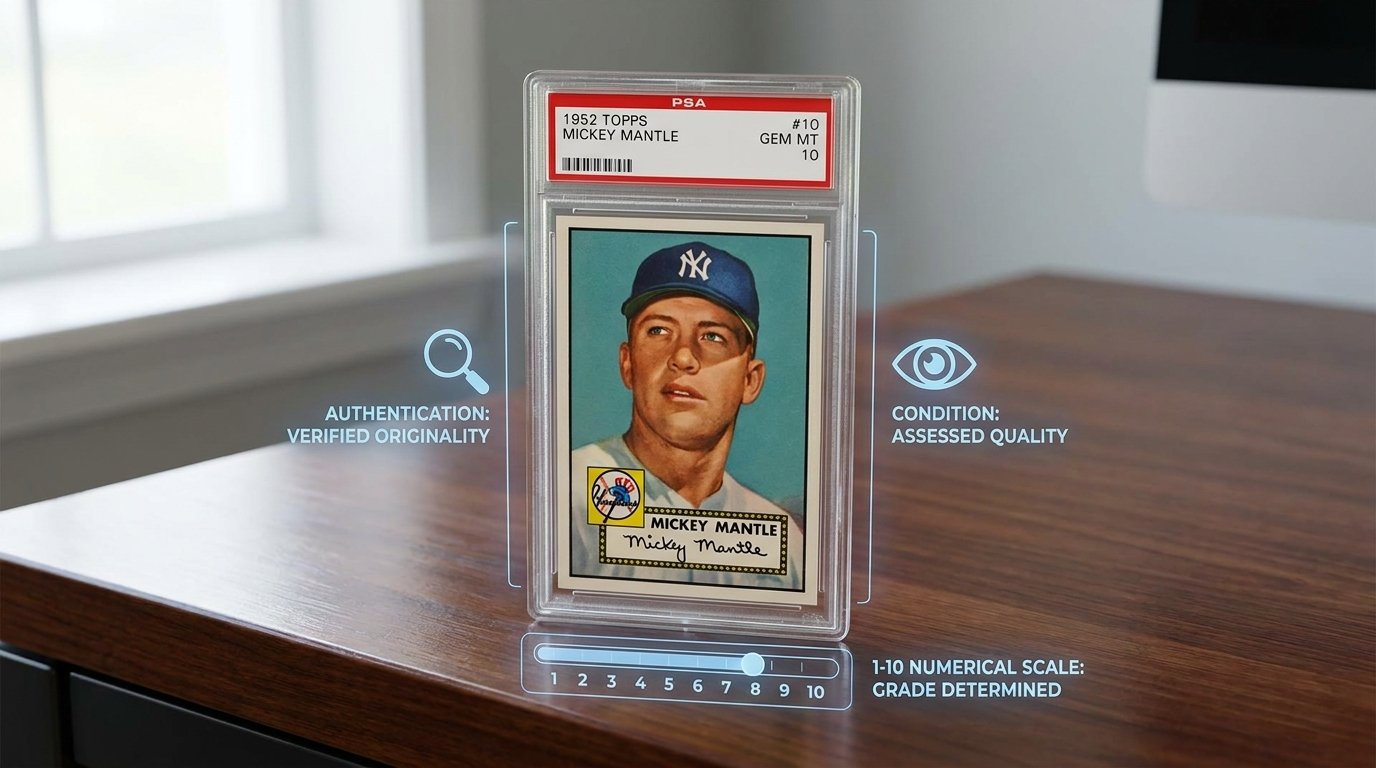
- PSA assigns a numerical grade from 1 to 10 based on criteria like centering, corners, edges, and surface.
- The grading process involves multiple stages: submission, authentication, grading, encapsulation, and quality control.
- Accurate pre-submission evaluation and meticulous card preparation significantly impact the final grade.
- Turnaround times and costs vary widely based on the declared value and chosen service level.
- A higher PSA grade typically correlates with a substantial increase in a card’s market value and liquidity.
Understanding PSA Card Grading
PSA (Professional Sports Authenticator) serves as the industry benchmark for third-party authentication and grading of sports cards, non-sports cards, and other collectibles. Established in 1991, PSA’s mission is to provide an objective, consistent assessment of a card’s condition, assigning it a numerical grade from 1 (Poor) to 10 (Gem Mint). This standardized approach removes subjectivity from private transactions, offering a universally recognized measure of quality. Collectors rely on PSA grading to verify authenticity, protect investments, and enhance market liquidity, as PSA-graded items often command premium prices in the secondary market. The encapsulation of graded cards in sonically sealed, tamper-evident holders also provides crucial long-term physical protection, preserving the card’s condition against environmental damage and handling.
The credibility of PSA’s grading system stems from its extensive experience and consistent application of grading standards. Each year, PSA processes millions of submissions, handling items ranging from common cards to incredibly rare and high-value pieces. For instance, a 1952 Topps Mickey Mantle card in PSA 9 condition can easily fetch seven figures, a valuation heavily dependent on its certified grade. This level of market impact underscores why understanding PSA’s methodology is invaluable for serious collectors and sellers alike. The process ensures that buyers have confidence in what they are purchasing, and sellers can accurately represent the condition of their items, fostering a transparent and trustworthy marketplace for collectibles.
The Comprehensive PSA Grading Process: From Submission to Slab
The journey a card takes through PSA’s grading facility is a multi-stage, highly controlled procedure designed to ensure accuracy, security, and consistency. Understanding each step helps demystify the process and sets proper expectations for submitters. From the moment a package arrives until the graded cards are returned, strict protocols are followed to maintain the integrity of each submission.
- Receiving and Initial Processing: Upon arrival at PSA, submitted packages are meticulously logged into their system. Each order is assigned a unique identification number, and the contents are cross-referenced with the submitted paperwork. This initial step confirms the order details and ensures that all submitted cards are accounted for before proceeding to the next stage.
- Authentication and Research: The first substantive evaluation involves authenticating the card. Experienced researchers examine each card for legitimacy, identifying any signs of counterfeiting, alteration, or misrepresentation. They also verify card details such as manufacturer, year, set, and any specific variants. This phase is critical, especially with the prevalence of sophisticated fakes in the market. According to PSA’s own data, their authentication team handles tens of thousands of suspected altered or counterfeit items annually.
- Grading (First Pass): Authenticated cards then move to the grading department. Professional graders, often specialists in specific card types or eras, scrutinize each card under controlled lighting and magnification. They assess the card against PSA’s established criteria: centering, corners, edges, and surface. Each grader assigns an initial grade based on these factors. Graders do not have access to customer information, ensuring impartiality.
- Quality Assurance and Second Pass Grading: After the initial grading, cards enter a stringent quality assurance phase. This typically involves a second, independent grader reviewing the initial assessment. For high-value or highly sought-after cards, multiple senior graders may review the item to ensure absolute consistency and accuracy. This multi-tiered review process helps to minimize discrepancies and uphold PSA’s reputation for reliable grading. It is estimated that a typical card receives approximately 60-90 seconds of direct grading attention across these stages.
- Final Grade Assignment: Once all graders and quality assurance personnel concur, the final numerical grade is assigned. If there are any discrepancies or questions regarding authenticity or alteration, the card may be flagged for further examination by a specialized team, potentially leading to an “Authentic” designation without a numerical grade or even rejection.
- Encapsulation and Labeling: With the final grade determined, the card is carefully placed into a protective, sonically sealed, tamper-evident holder. A custom label is generated, detailing the card’s identification (e.g., player, year, set), its unique certification number, and its assigned PSA grade. This label is permanently affixed within the slab, providing clear and irrefutable documentation.
- Imaging and Return Shipping: High-resolution images of the encapsulated card are taken for PSA’s online database, accessible via the certification number. Finally, the graded cards are securely packaged and prepared for return shipment to the submitter, with tracking and insurance as specified in the original submission.
Demystifying the PSA Grading Scale
The PSA grading scale is a universally recognized 10-point system, where each numerical grade signifies a specific level of condition. Understanding what each grade represents is fundamental to anticipating outcomes and valuing graded cards. The scale ranges from PSA 1 (Poor) to PSA 10 (Gem Mint), with half-point increments for grades 1.5 through 9.5, reflecting subtle distinctions in condition.
- PSA 10 (Gem Mint): A card graded Gem Mint 10 is considered virtually perfect. It must exhibit all four primary grading characteristics – centering, corners, edges, and surface – with exceptional quality. This means 50/50 centering, razor-sharp corners, flawless edges, and a pristine surface free of any print defects, scratches, or other imperfections. Fewer than 5% of all submitted cards typically achieve this elite status, making it highly desirable and valuable.
- PSA 9 (Mint): A Mint 9 card is outstanding but falls just shy of Gem Mint perfection. It may have one minor flaw, such as very slight off-centering (up to 60/40), a tiny print imperfection, or minuscule wear on a corner that is not visible to the naked eye. Despite these minute imperfections, a PSA 9 card presents beautifully and is highly sought after by collectors.
- PSA 8 (Near Mint-Mint): A card graded Near Mint-Mint 8 shows very minor wear. Centering may be up to 65/35. It might have a few slightly frayed corners or a minor print defect that doesn’t detract significantly from its visual appeal. These cards are still considered excellent examples for most collectors.
- PSA 7 (Near Mint): A Near Mint 7 card exhibits some light wear. Centering can be up to 70/30. There might be minor corner wear, a small print spot, or light surface scratching visible upon close inspection. It remains a very presentable card, often representing a solid “collector grade.”
- PSA 6 (Excellent-Mint): Excellent-Mint 6 cards show moderate wear. Corners may be noticeably soft, and edges could have some fraying. The surface might exhibit light scratches or small creases that do not break the card’s surface.
- PSA 5 (Excellent): An Excellent 5 card has more pronounced wear. It may feature a combination of soft corners, edge chipping, surface scratches, or a minor crease. Despite these flaws, the card is still attractive and intact.
- PSA 4 (Very Good-Excellent): Very Good-Excellent 4 cards show significant wear and tear. Multiple soft corners, noticeable edge wear, and potentially a heavier crease or multiple lighter creases are common. The card’s eye appeal is diminished, but it remains a complete collectible.
- PSA 3 (Very Good): A Very Good 3 card displays substantial wear, including rounded corners, heavier creasing, surface damage, and possibly some discoloration.
- PSA 2 (Good): Good 2 cards are heavily worn, with significant damage like large creases, scuffs, and extensive corner and edge wear.
- PSA 1 (Poor): A Poor 1 card exhibits severe damage, such as missing pieces, extensive creasing, major staining, or tape repair. It is still identifiable as the card, but its condition is heavily compromised.
Key Factors in PSA Card Grading Standards
PSA’s grading standards are meticulously applied across four primary attributes, each playing a critical role in the final numerical grade assigned to a card. A deficiency in even one of these areas can prevent a card from achieving a higher grade, regardless of how perfect the other attributes may be. Understanding these factors allows submitters to pre-screen their cards more effectively and adjust their expectations.
Centering
Centering refers to the placement of the image within the card’s borders. Ideal centering means the borders are of equal width on all four sides – top to bottom, and left to right. PSA uses a percentage ratio to describe centering, such as 50/50 for perfect centering (meaning the image is exactly in the middle) and 60/40 for a slight lean. Even high-grade cards may have some minor off-centering. For a PSA 10, centering must be near-perfect, typically 50/50 to 55/45. A card with heavily skewed centering, even if otherwise flawless, will be significantly downgraded, often preventing it from reaching a PSA 9 or 10.
Corners
The condition of a card’s corners is a highly scrutinized aspect of grading. Pristine corners are sharp, pointed, and free from any fraying, rounding, or wear. Even the slightest touch of white showing on the tips of corners can indicate wear. Graders examine corners under magnification to detect subtle imperfections. A PSA 10 requires all four corners to be razor-sharp. As the grade decreases, corners show increasing levels of wear, from very slight softening in a PSA 9 to significant rounding, creasing, or even material loss in lower grades. Collectors often mistakenly overlook minor corner flaws that graders will catch.
Edges
Edges refer to the four perimeter lines of the card, connecting the corners. Like corners, edges should be sharp, smooth, and free from any chipping, fraying, or indentations. The condition of edges often reflects how a card has been handled or stored over time. Issues like “dinged” edges from bumping against other cards or surfaces, or rough cuts from manufacturing, will impact the grade. A PSA 10 requires flawless edges. Minor edge wear or slight chipping may be acceptable at lower grades, but any significant damage will result in a considerable downgrade. Consistent handling and proper storage, such as in penny sleeves and top loaders, are critical for preserving edge integrity.
Surface
The surface of a card encompasses both the front and back, and it must be free from imperfections such as scratches, indentations, creases, print defects, stains, and scuffing. Even microscopic print lines or minor factory defects can prevent a card from achieving a Gem Mint grade. Graders inspect the surface carefully under various lighting conditions to identify subtle flaws. For instance, a common mistake collectors make is cleaning a card aggressively, which can leave hairline scratches that are imperceptible until magnified. Any evidence of alteration, such as coloring or trimming, will result in a rejection or an “Authentic Altered” designation rather than a numerical grade. Ensuring the card’s surface is clean and untouched is paramount before submission.
How Long Does PSA Grading Take? Navigating Turnaround Times
The duration for PSA grading varies significantly based on several factors, primarily the service level chosen, the declared value of the card(s), and PSA’s current submission volume. Collectors should anticipate these timelines when planning their submissions, as turnaround estimates can range from a few days to over a year. The most common question among submitters is “How long does PSA grading take?” and the answer is rarely straightforward.
PSA offers various service levels, each with different price points and estimated turnaround times:
- Express/Walk-Through: Reserved for high-value cards, these services offer the fastest turnaround, often within a few business days to a few weeks. The cost per card is significantly higher, typically ranging from $200 to $600+, depending on the declared value.
- Regular: This mid-tier service usually targets cards with a declared value up to a certain threshold (e.g., $499 or $999). Turnaround times for regular submissions can fluctuate from 30 days to several months, depending on PSA’s operational capacity. Costs generally fall between $50 and $100 per card.
- Economy/Bulk: These are the most cost-effective options, designed for larger submissions of lower-value cards. Turnaround times are the longest, potentially extending from 6 months to over a year during periods of high demand. Prices per card can range from $19 to $35, making them popular for larger collections.
During peak periods, such as after major sports events or during market surges, all turnaround times can be considerably extended. For example, during the 2020-2021 grading boom, some economy submissions took over 18 months to be processed. PSA frequently updates its estimated turnaround times on its website, and collectors are advised to check these estimates before submitting. Additionally, shipping time to and from PSA must be factored into the overall waiting period. Based on industry reports, PSA typically processes between 1 to 1.5 million cards per month, demonstrating the sheer volume that influences these timelines.
Preparing Your Cards for PSA Grading: Expert Recommendations
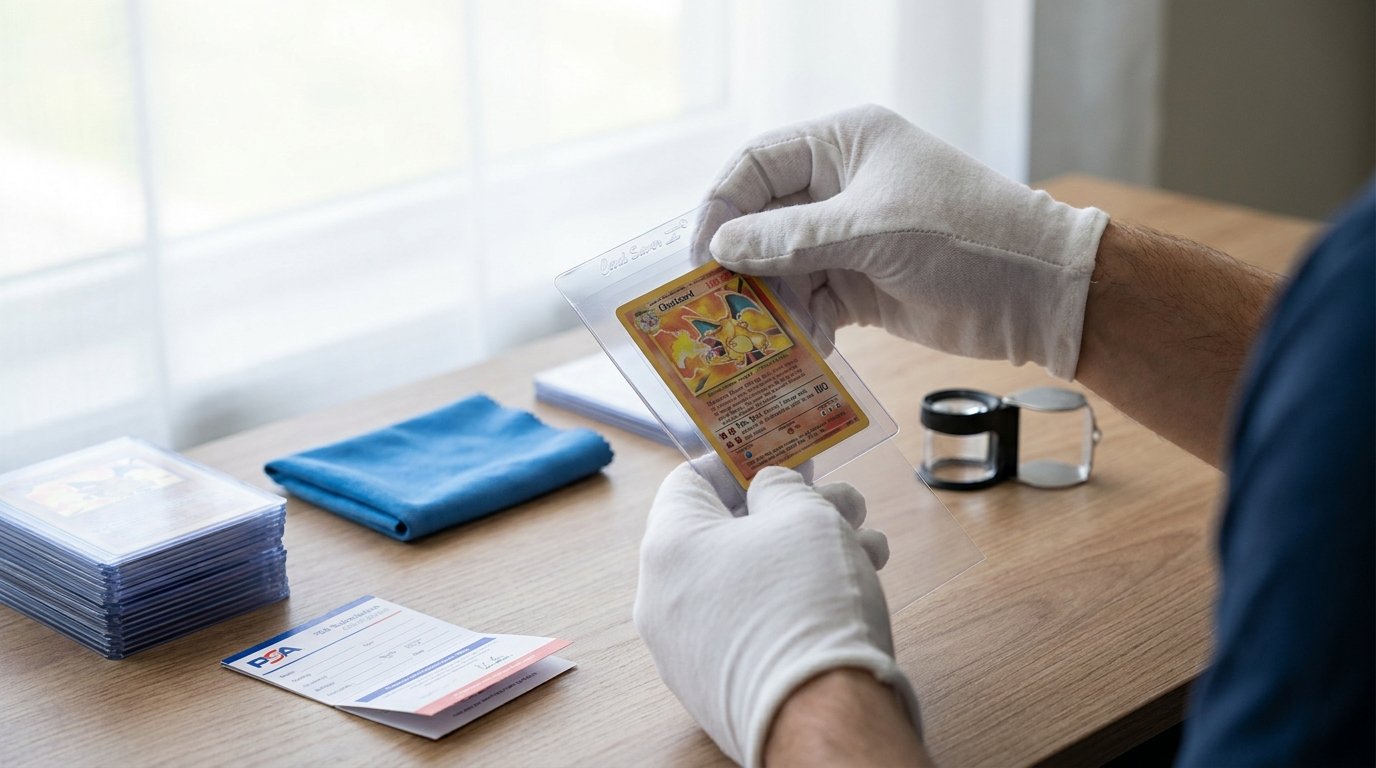
Proper preparation of your cards before submission to PSA is a critical step that can significantly influence the final grade and the overall success of your submission. An expert approach involves meticulous cleaning, protection, and a thorough pre-screening process. Failing to adhere to these recommendations is a common professional mistake that can lead to disappointment or even rejection.
- Initial Inspection and Pre-Screening: Before anything else, conduct a detailed inspection of your cards under good lighting, preferably with magnification. Assess centering, corners, edges, and surface. Compare your cards against PSA’s grading standards or utilize online resources for visual examples of each grade. Be realistic; not every card is a Gem Mint 10. This pre-screening helps in selecting which cards to submit and determining the appropriate service level based on potential value.
- Gentle Cleaning: For surface dust or very light smudges, a gentle cleaning can make a difference. Use a clean, lint-free microfiber cloth specifically designed for delicate surfaces (e.g., lens cloths). Lightly wipe the card’s surface. Avoid using any liquids, chemicals, or abrasive materials, as these can permanently damage the card or leave residues that graders will detect. Never attempt to “erase” imperfections or use any methods that could be interpreted as alteration, which would result in an “Authentic Altered” label or outright rejection.
- Proper Protection: Once inspected and cleaned, immediately place your cards into penny sleeves, which are thin, soft plastic sleeves that protect the card’s surface from scratches. After the penny sleeve, insert the card into a semi-rigid card holder (often called a “card saver”) or a top loader. Semi-rigid holders are generally preferred by PSA as they are easier for their staff to remove the cards from without causing damage. Ensure the card fits snugly but without bending. Avoid rigid top loaders for submission unless specifically instructed, as these can be harder to manipulate.
- Organizing Your Submission: For multiple cards, organize them according to your PSA submission form. Number them clearly and ensure the cards match the order on your paperwork. Secure bundles of cards with rubber bands placed around the protective holders (not directly on the cards themselves) or use submission boxes designed for grading. This organization streamlines PSA’s receiving process and reduces the chance of errors.
- Common Mistakes to Avoid:
- Over-cleaning or Using Harsh Cleaners: This is the most frequent error, leading to surface damage.
- Submitting Cards with Obvious Flaws: Don’t waste money grading cards with heavy creasing, significant corner wear, or severe surface damage, unless they are extremely rare and value is purely for authentication.
- Improper Packaging: Cards sliding around in a box during transit are susceptible to damage. Use bubble wrap, packing peanuts, or other cushioning materials to prevent movement.
- Inaccurate Declared Value: Over-declaring value unnecessarily increases grading costs and insurance, while under-declaring risks insufficient compensation in case of loss or damage. Be honest about a card’s potential market value.
By following these expert recommendations, collectors can significantly improve their chances of a positive grading outcome and safeguard their valuable assets. Furthermore, for those looking to sell their collectibles, a properly graded card through services like PSA can substantially increase its market appeal and realized price. If you are considering how to get Pokemon cards graded, these preparation steps are equally vital.
Choosing the Right PSA Service Level
Selecting the appropriate PSA service level is crucial for balancing cost, desired turnaround time, and the declared value of your card. Each service level comes with specific criteria and pricing, making it essential to evaluate your submission carefully. The “declared value” is your estimate of the card’s fair market value once graded, which determines the maximum insurance coverage and influences the service tier you must use.
| Service Level | Declared Value Limit (per card) | Estimated Turnaround Time | Typical Cost (per card) | Best For |
|---|---|---|---|---|
| Value | Up to $499 | 65-120 Business Days | $22 – $30 | Modern cards, higher volume vintage, moderate value items. |
| Economy | Up to $499 | 65-120 Business Days | $22 – $30 | Similar to Value, often used for sports cards. |
| Regular | Up to $999 | 30-60 Business Days | $45 – $75 | Higher value modern & vintage cards, faster processing than Economy. |
| Express | Up to $2,499 | 10-20 Business Days | $150 – $250 | Significant cards requiring quicker turnaround, lower-tier investment pieces. |
| Super Express | Up to $4,999 | 5-10 Business Days | $300 – $450 | High-value cards with strong market demand, urgent sales. |
| Walk-Through / Premium | $5,000+ (or no limit) | 1-5 Business Days | $600 – $6,000+ | Extremely rare, high-value, or iconic cards requiring the fastest possible service. |
Note: Prices and turnaround times are estimates and subject to change by PSA. Always check the official PSA website for the most current information.
Choosing incorrectly can lead to delays or additional charges. If you submit a card under an Economy service with a declared value of $1,000, PSA will “upcharge” it to the appropriate Regular or Express service level, and you will be billed the difference in grading fees. This not only increases your cost but can also significantly delay your order as it moves through different internal processing queues. Always err on the side of caution with declared values if a card’s potential graded value is uncertain. Consulting with experts at Comic Buying Center can provide clarity on expected values for your collectibles.
The Value of Professional Grading
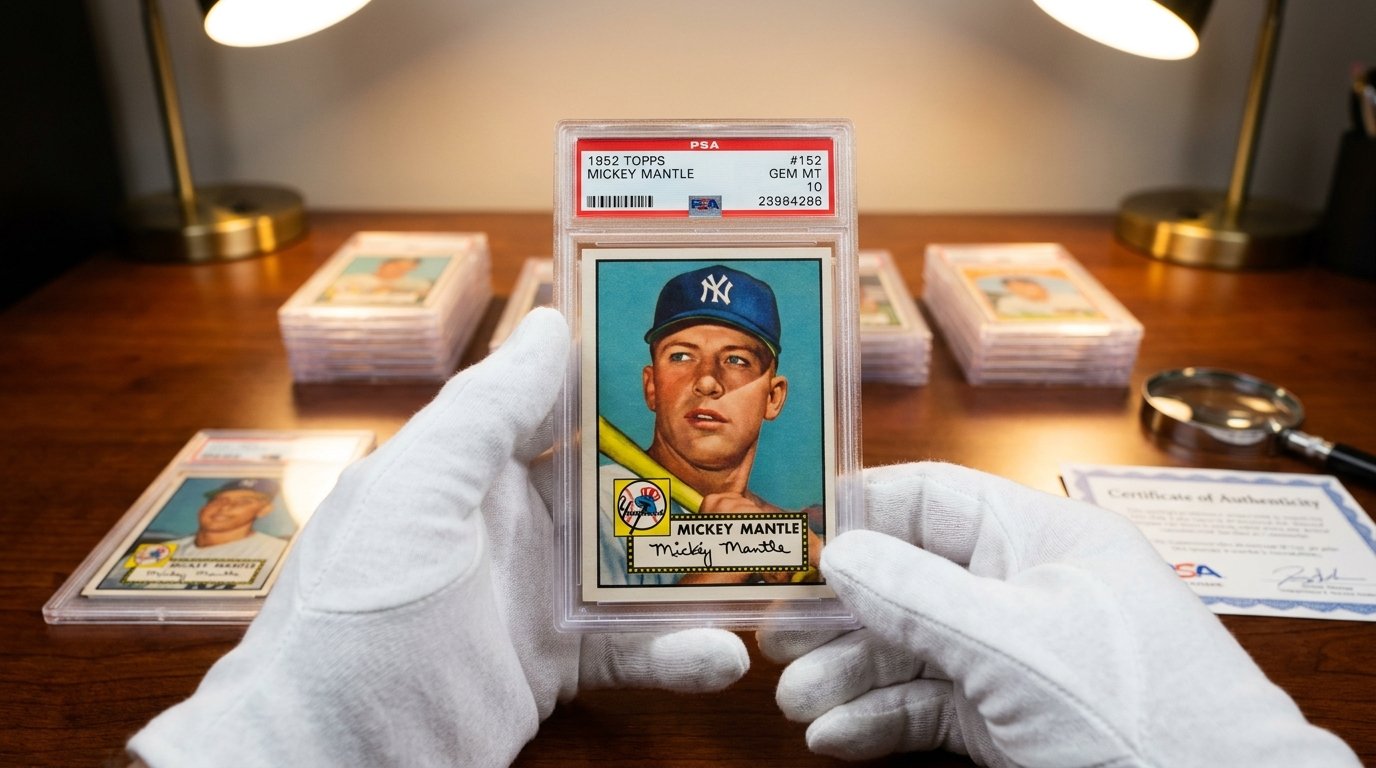
Professional grading by PSA profoundly impacts the value and marketability of collectible cards. It transforms a raw, uncertified item into a verifiable asset with a clear, universally understood condition rating. This process is particularly critical for high-value cards, where even a slight difference in grade can translate into thousands or hundreds of thousands of dollars. The investment in grading fees is often justified by the significant return on investment it can provide, especially for vintage and iconic cards.
Foremost, PSA grading provides indisputable authenticity. In an era where sophisticated counterfeits and altered cards are a concern, a PSA slab assures buyers that the card is genuine and has not been tampered with. This peace of mind is invaluable, eliminating the need for buyers to personally verify the item’s legitimacy. A publicly available certification number allows anyone to look up the card’s details and images on PSA’s database, further cementing its credibility. The impact on market value is evident: a pristine example of a Rare 1st Edition Charizard card, once graded, sees a dramatic increase in value and demand. This phenomenon extends across various types of collectibles, as illustrated by the record-breaking sale of Logan Paul’s Pokémon card, where its PSA 10 grade played a central role in its multi-million dollar valuation.
Moreover, graded cards possess enhanced liquidity. They are easier to sell and often fetch higher prices at auction or through private sales because the buyer market trusts the grade. Sellers don’t need to argue about condition; the slab speaks for itself. This standardization allows for global trading and creates efficient markets for collectibles. For long-term collectors, grading also serves as a protective measure, encapsulating the card in a secure holder that guards against physical damage and environmental degradation, thereby preserving its condition and value for future generations. The cost of grading a card typically represents a small fraction of the potential value increase, making it a strategic decision for many serious collectors and investors in the hobby.
FAQ
What is PSA grading, and why is it important?
PSA (Professional Sports Authenticator) grading is the process of authenticating collectible cards and assigning them a numerical condition grade from 1 to 10. It is important because it provides an objective, standardized assessment of a card’s condition and authenticity, which significantly increases its market value, liquidity, and protects it for long-term preservation.
How does PSA determine a card’s grade?
PSA graders assess cards based on four primary attributes: centering, corners, edges, and surface. Each card undergoes multiple evaluations by expert graders under controlled conditions, with the lowest-performing attribute often dictating the overall grade. A Gem Mint 10 requires near-perfection in all four categories.
How long should I expect to wait for PSA grading services?
Turnaround times for PSA grading vary greatly depending on the service level chosen (e.g., Economy, Regular, Express) and PSA’s current submission volume. Estimates can range from a few business days for high-tier services to over 6-12 months for economy submissions during busy periods. Always check PSA’s official website for current estimates.
Can I submit any card for PSA grading?
While PSA primarily grades sports, non-sports, and TCG cards, they also grade certain other collectibles like tickets or packs. However, not every card is suitable for grading. Cards with significant damage, obvious alterations, or questionable authenticity may be rejected or receive an “Authentic” designation without a numerical grade.
What does “declared value” mean in PSA submissions?
Declared value is the submitter’s estimate of a card’s fair market value once it has been graded. This value dictates which service level you must choose, as higher declared values require higher-tier (and more expensive) services. It also determines the maximum insurance coverage for your card during the grading process and shipment.
Is it worth grading lower-value cards with PSA?
Grading lower-value cards may not always be cost-effective, as the grading fee could exceed the potential increase in the card’s market value. It is generally recommended for cards that show potential for significant value appreciation, are part of a personal collection you wish to preserve, or are key components of a set you are building.