
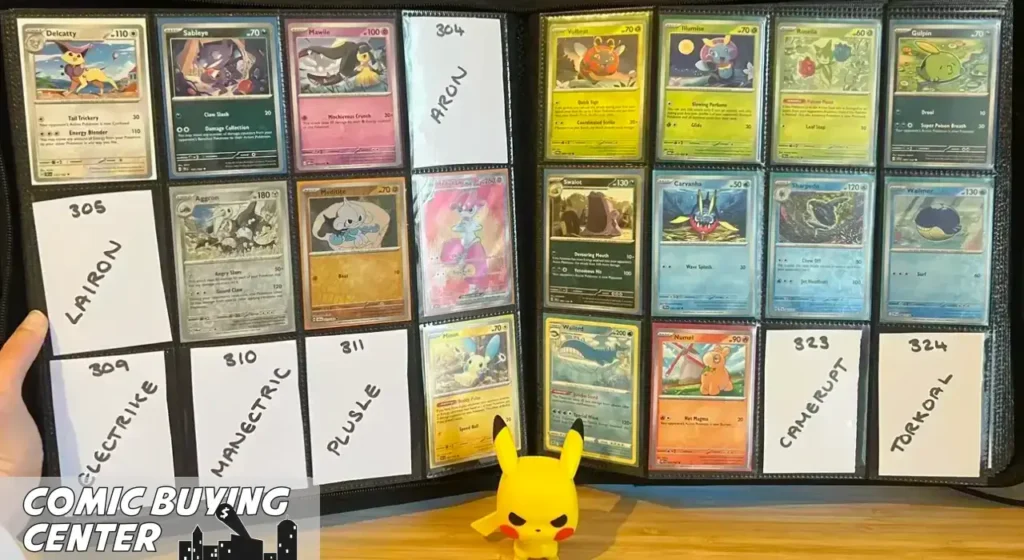
Why Organizing Your Pokemon Cards Matters
Organizing your Pokemon cards is not just about aesthetics; it’s about making everything look neat. It helps protect them from everyday wear and tear and slow aging, especially when you use sleeves, binders, or proper storage boxes. It also makes it much easier to find the exact card you want without digging.
Good organization also helps with trading and playing. When your cards are sorted, you can build decks without any issues, pull trade options when you need them, and avoid bringing damaged cards to games or meetups. And finally, you can see what you own, spot duplicates, track what you’re missing, and manage your budget more responsibly instead of buying the same cards again by accident. It happens much more often than you’d think.
What You’ll Need to Organize Pokemon Cards
Note that you don’t need everything at once. What you buy depends on how you plan to store your cards, like in a binder display, box storage, graded slabs, or a mix of everything. Don’t go all in at the start; there’s no need for that. Start with simple storage and upgrade when needed, unless you have high-end cards, of course.
Here’s what collectors typically use:
Basic protection
- Penny sleeves (first layer of protection)
- Top loaders (rigid holders for valuable cards)
- Team bags (to seal top loaders)
Binder setup
- Acid-free binders (D-ring preferred)
- 9-pocket archival pages made for standard TCG cards
- Divider tabs to separate sets or categories
Box storage
- Cardboard storage boxes (for bulk cards)
- Plastic storage cases (for better durability)
- Silica packs (optional, helps battle moisture)
For higher-value cards
- Magnetic one-touch holders
- Graded slab sleeves
- A safe or lockbox (optional, for very expensive items)
Tracking tools
- Spreadsheet, collection app, or cataloging software
- Labels for set sorting
How to Sort Pokemon Cards (Best Methods)
There isn’t just one “right” way to sort Pokemon cards. The best method depends on how big your collection is, if you play the game, trade often, or just collect for fun. Some collectors choose simple systems, while others go for very detailed, structured ones. It depends on your needs. Properly sorting and storing your cards actually matters, especially if you want to sell Pokemon cards later. So, how to organize pokemon cards?
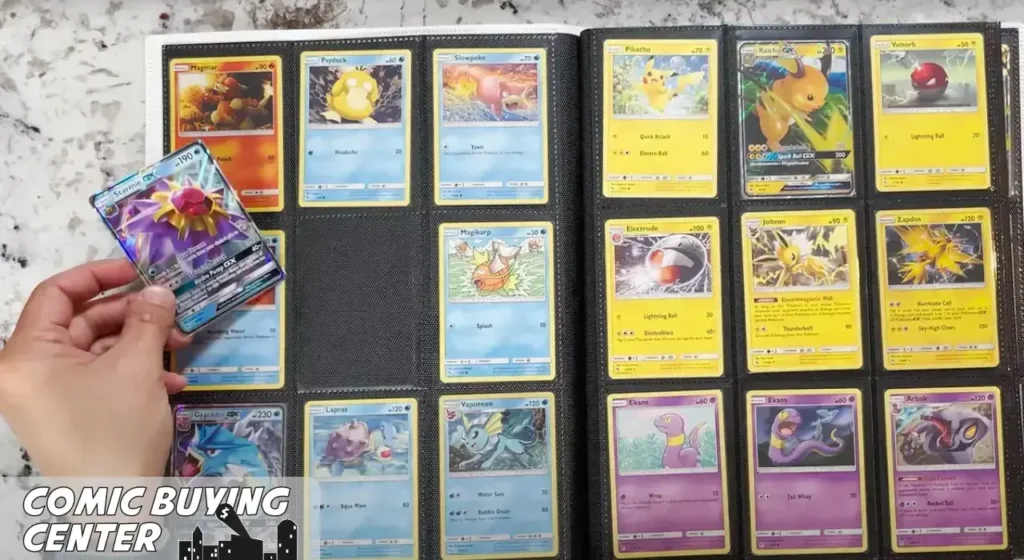
By Set and Card Number
The simplest way of how to organize pokemon cards is by set and number. Sorting by set and card number follows the official Pokemon TCG structure, making it one of the cleanest and most organized methods. Each card has a number printed at the bottom (for example, 45/198) that indicates its position within that set. You simply place cards in numerical order within each set.
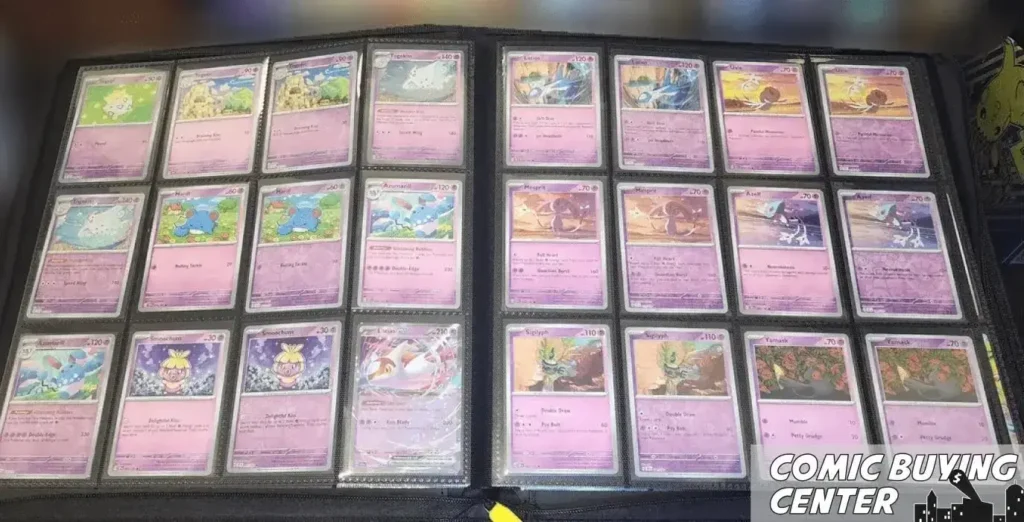
By Pokemon Type
If you don’t know how to sort pokemon cards, consider card types. Sorting by Pokemon type means grouping cards based on their elemental category, like Fire, Water, Grass, Electric, Psychic, Fighting, Darkness, Metal, or Dragon. Each card clearly shows its type symbol in the top corner, so organizing them this way is pretty easy.
By Rarity
If your collection is not too big and you focus on rarity, then that’s one of the best ways to organize pokemon cards. Sorting by rarity means grouping cards based on their rarity symbol, which appears near the bottom of the card. A circle marks a common, a diamond means uncommon, and a star indicates rare. In modern sets, you’ll also see higher tiers like double stars, gold stars, or special illustration rares.
Custom Hybrid
A custom hybrid system combines two or more sorting methods to meet your specific needs. For example, you might organize by set first, then sort each set by rarity, or group cards by Pokemon type and separate high-value pulls into a special section. Some collectors even keep a “favorites” or “trade” binder apart from their main collection.
Organizing Pokemon Cards in Binders
Binders are one of the safest and most popular ways of organizing pokemon cards, but only if you use the right setup.
Not all binders are equal. Look for:
- D-ring binders instead of round rings. These don’t bend cards as much and put less pressure on cards.
- Acid-free, archival-safe materials. This prevents long-term yellowing or chemical damage.
- Side-loading 9-pocket pages. Cards slide in from the side, so they don’t slip out as easily.
- A zippered binder (optional but recommended) for better dust protection.
- Avoid cheap binders with tight rings or low-quality plastic pages. They can damage cards over time.
Here’s how you properly put cards into binders without damaging them:
- Sleeve the card first. Always put valuable cards in penny sleeves before placing them in binder pockets.
- Insert gently from the side. Don’t force the card. Slide it in carefully, or you may damage the edges.
- Don’t overload pockets — one card per slot (or two back-to-back if needed, but only for lower-value cards).
- Store upright. Keep the binder standing vertically like a book, not stacked flat under heavy items.
- Avoid heat, humidity, and sunlight. Store in a cool, dry place. Moisture is a silent card killer. Direct sunlight can also damage cards, so avoid it.
Organizing Bulk and Extra Cards
Once your collection grows, bulk commons and uncommons can pile up. It would be wise to separate bulk storage from your main collection. Consider these pokemon card organization ideas.
For large quantities, use sturdy cardboard or plastic storage boxes made for trading cards. Sort bulk by simple categories like set, Pokemon type, or rarity, whatever makes it easiest for you. Small divider cards or labeled tabs go a long way.
Keep your binders reserved for the “main” part of your collection, like rares, holos, favorites, and higher-value cards. If bulk starts being TOO bulk, consider making a trade box or setting aside duplicates. Keep it organized, and it will make storing and trading easier.
Tips for Maintaining Your Pokemon Card Organization
First, choose a proper environment. Store cards in a cool, dry place, away from direct sunlight. High humidity can cause warping, and heat can fade colors or weaken cardstock over time. Don’t store your cards in basements, attics, or spots near windows.
Second, handle cards properly. Wash and dry your hands before sorting. Always hold cards by the edges. Even tiny skin oils can affect surfaces over time, especially on holo cards.
Third, rotate and review your collection periodically. Every few months or so, check for:
- Binder ring pressure marks
- Pages bending or sagging
- Sleeves that need replacing
- Moisture signs
For higher-value cards, consider double-sleeving or rigid holders. If you use storage boxes, don’t overpack them. Tight pressure can cause edge wear.
And finally, review your system as your collection grows. As your collection grows or changes, so should your storage system. What works for 200 cards won’t work for 2,000.
Conclusion: Find the System That Works for You
There’s no single correct way to organize or collect Pokemon cards. The best system is the one that matches your goals and budget. Some collectors choose complete sets, others want only rare cards, and some just enjoy the nostalgia. What matters most is that your storage system makes sense to you and helps you stay consistent.
If you’re still figuring out how to start collecting pokemon cards, keep it simple at first and adjust as you learn and your collection grows. Questions like ‘when did pokemon cards come out?‘ or ‘are pokemon cards a good investment?‘ are part of the bigger picture, but your personal goals should affect your decisions. And if your interests expand into other collectibles or you decide to sell comic books, staying organized will always make things easier.