
The concept of the “rarest video game in the world” is not singular but rather a fascinating intersection of scarcity, historical context, and market demand. While many titles are hard to find, certain games stand out due to their extremely limited production runs, promotional origins, or unique circumstances. For collectors seeking the absolute pinnacle of rarity, the conversation frequently begins with titles like Gammation Products’ Gamma Attack for the Atari 2600, often cited as having only a single known copy. Another prime example is Nintendo World Championships for the NES, produced in quantities as low as 26 units for a competition. Identifying a truly rare game requires understanding its history, verifying its authenticity, and assessing its condition. Whether you possess what you suspect might be a diamond in the rough or are simply curious about the highest echelons of game collecting, a professional appraisal from specialists like Comic Buying Center can provide a clear understanding of its market value. These experts offer comprehensive valuations for your unique gaming treasures.
Key Takeaways
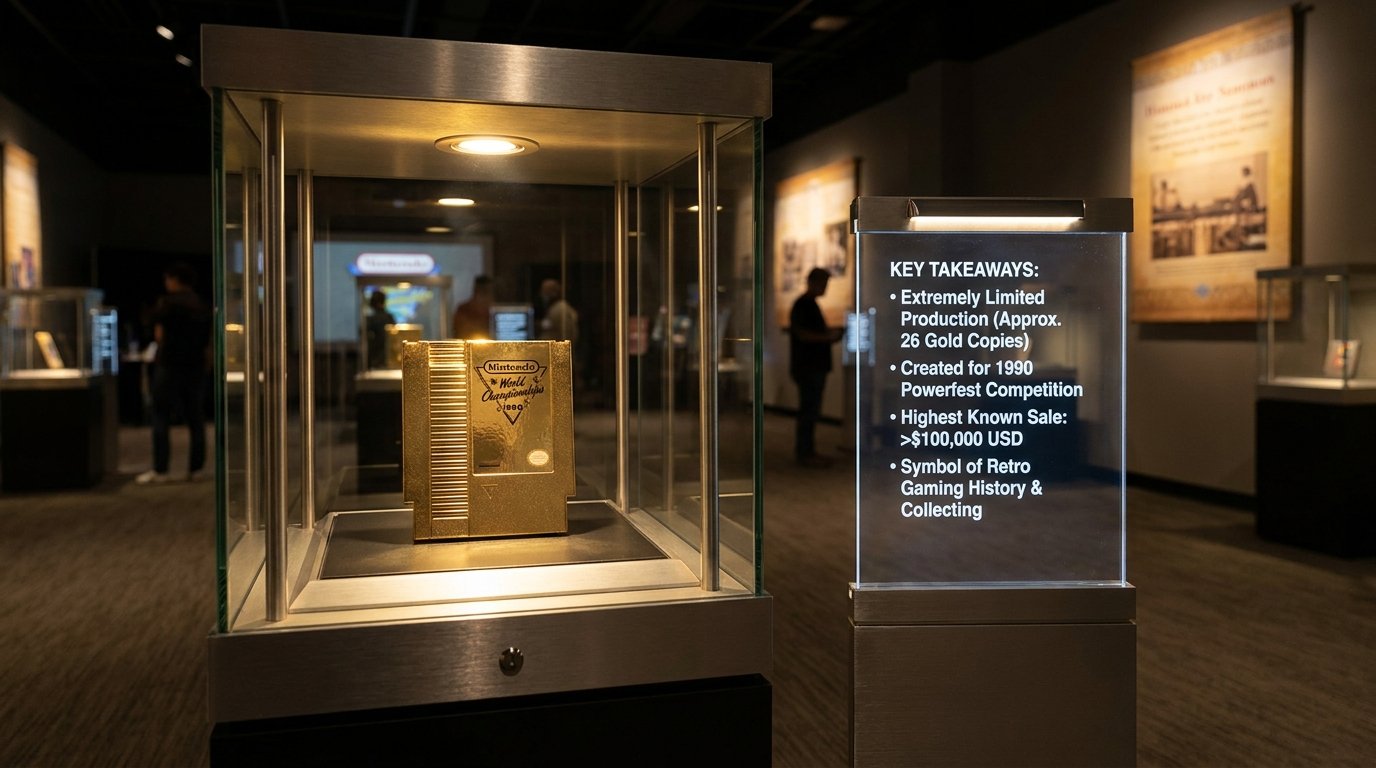
- Rarity in video games stems from extremely limited production, promotional distribution, or historical significance.
- The value of a rare game is heavily influenced by its condition, completeness (CIB), and third-party grading.
- Titles like Gamma Attack (Atari 2600) and Nintendo World Championships (NES) consistently rank among the most valuable due to their severe scarcity.
- Authenticating rare games is crucial; many fakes or reproductions exist, necessitating expert verification.
- Professional appraisals offer accurate market valuations and guidance, helping collectors avoid common pitfalls in selling their valuable assets.
Identifying Truly Rare Video Games: Beyond Production Numbers
The pursuit of truly rare video games extends far beyond simply finding old cartridges. Genuine rarity is a complex tapestry woven from factors that transcend mere age or initial sales figures. While low production numbers are a primary driver, other elements contribute significantly to a game’s elusive status and subsequent market value. Understanding these nuances is essential for both budding collectors and those who believe they might possess a hidden gem.
One critical factor is a game’s distribution method. Many of the most sought-after titles were not mass-produced for retail sale. Instead, they emerged from specific promotional events, development prototypes, or as part of highly restricted bundles. For instance, games created for national competitions, like the aforementioned Nintendo World Championships, were never intended for a broad consumer market. This limited, targeted distribution creates an inherent scarcity that cannot be replicated by standard commercial releases, no matter how poorly they might have sold.
Regional exclusivity also plays a significant role. A game might have been widely available in one territory but received an extremely limited or even unreleased status in another due to licensing issues, console region locking, or market strategy. This can create pockets of extreme rarity for specific versions of games that are otherwise common. The history and story behind a game’s release, or lack thereof, often imbues it with an additional layer of desirability for serious collectors. This narrative element often drives fascination and competition among enthusiasts.
The Pantheon of Elusive Video Game Titles
Delving into the world’s most elusive video games reveals a landscape dominated by titles with extraordinary backstories and mind-boggling valuations. These games represent the apex of scarcity, often fetching prices in the tens or even hundreds of thousands of dollars at auction. Their rarity is not merely a matter of age but a testament to unique circumstances, limited production, or pivotal roles in gaming history.
Gamma Attack (Atari 2600)
Considered by many to be the rarest video game in the world, Gamma Attack for the Atari 2600 is a legend in collecting circles. Produced by Gammation Products, a short-lived company known more for peripherals, this title is believed to exist in only a single known copy. Owned by renowned collector Anthony DeNardo, a copy was listed on eBay in 2008 with an asking price of $500,000. This staggering figure highlights the unparalleled demand for items with truly singular existence.
Nintendo World Championships (NES)
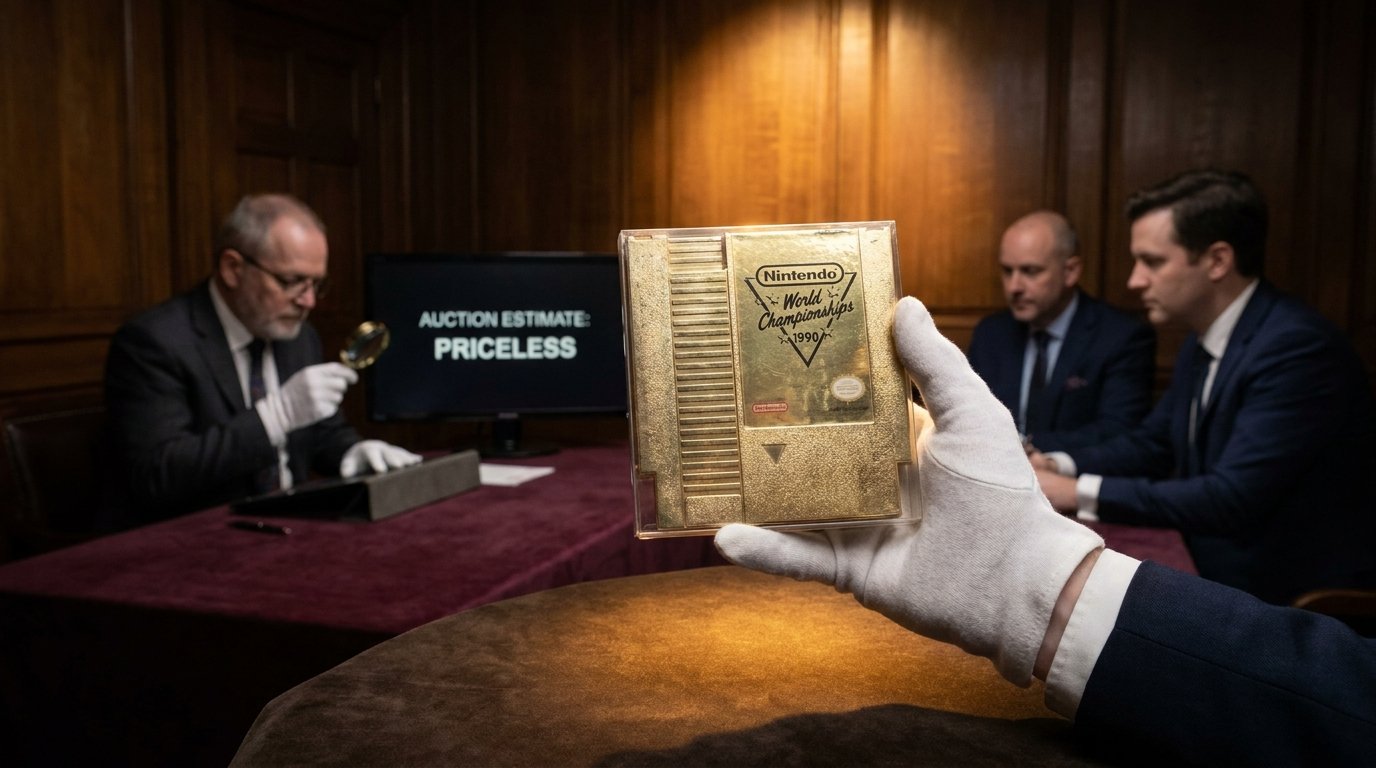
The Nintendo World Championships cartridge for the NES is another titan of rarity. Created specifically for Nintendo’s 1990 national gaming competition, this cartridge featured modified versions of Super Mario Bros., Rad Racer, and Tetris. Only 26 copies of the coveted gold cartridge were awarded to finalists, making it one of the most celebrated and valuable games. Prices for these golden variants have ranged significantly, with some selling for upwards of $100,000 to $175,000, depending on condition and provenance.
Stadium Events (NES)
Originally released in North America in 1987 by Bandai, Stadium Events for the NES is infamous for its rarity. The game was designed to be played with the Bandai Family Fun Fitness mat, a peripheral that Nintendo quickly acquired and rebranded as the Power Pad. Before the rebranding, only a small number of Stadium Events cartridges were sold, and most were recalled. It is estimated that fewer than 20 copies exist in circulation, with fewer still being factory-sealed. In 2015, a factory-sealed copy sold for an astonishing €30,000 (approximately $33,000 at the time). An unsealed copy even sold for $12,000 after being purchased for $7.99 in a thrift store.
Tetris (Sega Genesis / Mega Drive)
While Tetris itself is ubiquitous, a specific version for the Sega Genesis / Mega Drive holds extraordinary rarity. Only around 10 copies of this game were ever produced due to a complex licensing dispute between Nintendo and Atari, who both claimed exclusive rights to the puzzle phenomenon at the time. The Sega version was never officially released. A signed copy by creator Alexey Pajitnov was reportedly put up for sale for $1 million in 2011, though its actual sale price is difficult to verify. Even unsigned copies command prices ranging from $2,500 to $14,000, depending on their condition and whether they come with original packaging.
Blockbuster World Championships II (Sega Genesis)
Similar to the Nintendo equivalent, the Blockbuster World Championships II cartridge for the Sega Genesis was created for a major gaming competition. This specific cartridge contained a special version of NBA Jam Tournament Edition and Judge Dredd. Experts believe only two or three copies of this cartridge are known to exist, making it exceptionally rare. Its estimated value can range from $9,000 to $15,000, reflecting its unique historical context tied to the popular video rental chain.
Other notable rare titles include Birthday Mania for the Atari 2600, which was a custom-order game with personalized labels, and the English-language version of King of Fighters 2000 for the Neo-Geo AES, produced in very limited quantities as SNK faced bankruptcy.
Factors Driving Value in High-Stakes Game Collecting
The monetary value of a rare video game is determined by more than just its scarcity; several interlocking factors contribute to its final market price. Collectors and appraisers meticulously examine these elements to arrive at an accurate valuation. Ignoring any of these components can lead to significant discrepancies in perceived worth.
Condition
The physical state of a game is paramount. A game in pristine, like-new condition will always command a much higher price than a worn or damaged copy. This applies to the cartridge, disc, manual, and any included accessories. Collectors often refer to a grading scale, similar to comics or sports cards, where professional services assess and assign a numerical score to a game’s condition. A grade of 9.0 or higher, indicating near-mint status, can dramatically increase value. For example, a sealed, mint-condition copy of a moderately rare game might sell for ten times the price of an unsealed, but still functional, copy.
Completeness (CIB – Complete In Box)
A game that is “Complete In Box” (CIB) includes the original box, manual, and all inserts, alongside the game itself. These components must also be in excellent condition. A truly complete package, especially for older titles, signifies that the item has been carefully preserved over decades, indicating a higher level of care and making it more desirable to collectors. For many titles, a CIB copy can be valued at least 50% to 100% higher than a loose cartridge alone.
Third-Party Grading
Professional grading services, such as WATA Games or CGC Video Games, authenticate games and encapsulate them in tamper-evident cases with a verifiable condition grade. This process provides an objective, standardized assessment of a game’s condition, removing subjectivity and increasing buyer confidence. Graded games, especially those with high scores, consistently achieve top prices at auction. According to reports from major auction houses like Heritage Auctions, a professionally graded, sealed game consistently outperforms non-graded equivalents in high-value sales, often by a margin of 20% to 50% or more.
- Provenance: The documented history of ownership can add significant value, especially for ultra-rare items.
- Demand: Popularity of the console, franchise, or developer can influence how many collectors are vying for a specific title.
- Historical Significance: Games tied to significant moments in gaming history (e.g., first appearances, genre-defining titles) carry added weight.
- Authenticity: Verifying that a game is not a reproduction, bootleg, or modded cartridge is fundamental to its value.
Expert Appraisal: Navigating the Collectibles Market
Navigating the complex and often opaque market for rare video games requires a level of expertise that goes beyond casual observation. An expert appraisal is not merely about assigning a price; it involves a comprehensive evaluation that considers every nuanced aspect of a game’s authenticity, condition, and market standing. This professional insight protects both buyers and sellers, ensuring fair transactions and mitigating common pitfalls.
One of the most common professional mistakes to avoid is underestimating the prevalence of fakes and reproductions. As the value of certain retro games skyrockets, so does the sophistication of counterfeiters. An expert appraiser possesses the knowledge to identify subtle indicators of inauthenticity, from cartridge manufacturing details to label fonts and internal circuit board components. Without this expertise, collectors risk acquiring valueless fakes, or worse, selling genuine articles for less than their true worth due to uncertainty.
A thorough appraisal also provides crucial context regarding market trends. The value of collectibles, while generally appreciating, can fluctuate based on renewed interest, documentary releases, or even major auction results. An appraiser stays abreast of these dynamics, offering guidance on the optimal time and method for selling. For instance, according to an analysis by PriceCharting, the value of graded retro video games has shown a compound annual growth rate exceeding 15% in certain market segments over the last five years, indicating a robust but dynamic market that requires informed navigation.
Furthermore, an expert can advise on the best way to present your collection. This includes recommendations on cleaning, storage, and whether professional grading is a worthwhile investment for specific titles. For games with potential grading eligibility, understanding the benefits and costs of services like WATA or CGC is paramount. A professional opinion helps you make these strategic decisions, maximizing your return and preserving the integrity of your collection.
A Comparative Look at Rare Video Game Categories
Rare video games can be categorized based on their unique attributes and the reasons behind their scarcity. Each category presents distinct challenges and opportunities for collectors. Understanding these classifications helps in identifying value and navigating the market more effectively.
| Category of Rarity | Defining Characteristics | Example Titles | Typical Valuation Factors |
|---|---|---|---|
| Promotional/Competition | Created for specific events, not retail sale; extremely limited production. | Nintendo World Championships (NES), Blockbuster World Championships II (Sega Genesis) | Historical significance, low production number, condition. |
| Unreleased/Prototype | Games developed but never officially launched; early versions or beta builds. | Tetris (Sega Genesis), various console prototypes. | Existence verification, functional status, historical context of cancellation. |
| Region-Specific/Limited Run | Exclusive to a particular geographical market or produced in very small batches for retail. | Stadium Events (NES NTSC), Japanese exclusive titles. | Regional market demand, production run size, localized packaging. |
| Custom-Order/Personalized | Games made individually for specific customers, often in tiny quantities. | Birthday Mania (Atari 2600) | Uniqueness of customization, confirmed existence, original documentation. |
| Error/Variant | Games with manufacturing errors, misprints, or minor design variations that were quickly corrected. | Various early game print runs with unique labels or programming quirks. | Recognized error, documentation, demand for specific variant. |
Monetizing Your Collection: The Process of Selling Rare Video Games
Deciding to sell rare video games is a significant step, and approaching the process strategically ensures you receive fair value for your cherished items. The market for vintage collectibles is dynamic, requiring diligence and an understanding of best practices to avoid common pitfalls. For those in Libertyville, IL, and surrounding areas, Comic Buying Center offers a straightforward and trustworthy process.
The first critical step involves accurately assessing the potential value of your collection. While online resources can provide general price ranges, a professional appraisal offers precise, up-to-date valuations based on market trends and expert knowledge. This initial assessment helps you set realistic expectations and negotiate effectively.
Next, consider the condition and completeness of your games. Gather all original boxes, manuals, and inserts. Clean any visible dust or grime carefully, but avoid aggressive cleaning methods that could damage the item. For highly valuable games, professional grading might be a worthwhile investment to authenticate and certify condition, significantly boosting buyer confidence and final sale price.
When you are ready to sell, reputable buyers like Comic Buying Center provide a secure and transparent process. We specialize in offering fair prices and a hassle-free experience for a wide range of collectibles, including valuable video games. Our experienced team provides professional appraisals and clear explanations, ensuring you understand the value of your items every step of the way. Whether you are a longtime collector or selling for the first time, our goal is to make the experience simple and trustworthy. To learn more about our process and receive an appraisal, visit our sell video games page or stop by our showroom.
FAQ
What makes a video game rare?
A video game’s rarity is primarily determined by its limited production run, specific distribution methods (like promotional giveaways or competition prizes), or its status as an unreleased prototype. Factors such as regional exclusivity, licensing disputes, and short print runs also contribute significantly to scarcity.
How can I tell if my old video game is valuable?
To determine if your old video game is valuable, examine its condition, confirm it’s complete with its original box and manual (CIB), and research past sale prices of identical items. Look for unique identifiers like special edition labels, promotional tags, or unusual packaging. A professional appraisal is the most accurate way to ascertain its true market value.
Which console has the most valuable rare games?
The Nintendo Entertainment System (NES) and Atari 2600 are home to some of the most consistently valuable rare games, largely due to their age, the impact they had on gaming history, and the extremely limited runs of certain promotional or prototype titles. Other consoles like the Neo-Geo AES also feature incredibly rare and expensive titles.
Are factory-sealed games always worth more?
Yes, factory-sealed games are almost always worth significantly more than their unsealed counterparts. The original factory seal indicates that the game is untouched and in pristine, new condition, which is highly desirable for collectors. This condition premium can increase a game’s value by several multiples.
How do professional grading services affect a game’s value?
Professional grading services authenticate a game and provide an objective, third-party assessment of its condition, encapsulating it in a tamper-evident case. This process enhances buyer confidence, reduces speculation about authenticity and condition, and often leads to higher sale prices, especially for highly sought-after titles.