
Why Fake Pokémon Cards Are a Growing Problem
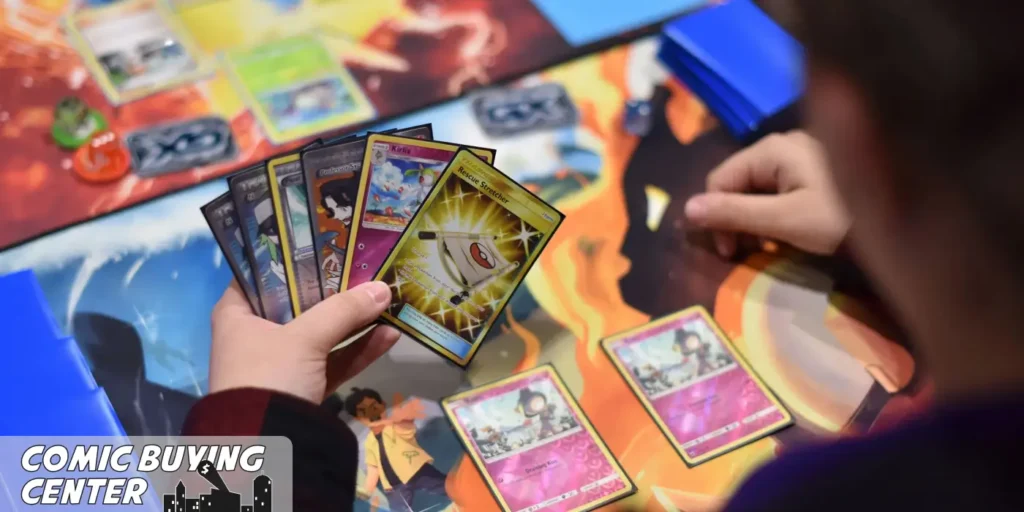
The Pokémon TCG is pretty popular right now, and the same goes for other big games like MTG and Yu-Gi-Oh. When something gets this popular, scams start popping up, and fake cards are among the most significant problems. Some Pokémon cards go for serious money, so of course, people try to fake them.
The annoying thing is that making a “decent-looking” fake isn’t that hard anymore. A decent printer, the right paper, and a little effort can fool someone who isn’t used to checking their cards. So yes, anyone can get scammed, even without realizing it.
If you buy singles, booster packs, or collections, it helps a lot to know the basics. A little knowledge goes a long way when you’re spending your own hard-earned money on a hobby you care about.
Key Differences Between Real and Fake Pokémon Cards
Before we go into the details, it helps to know this: spotting fake Pokemon cards mostly comes down to noticing small things that feel “off.” You usually don’t need special tools or years of experience – just a basic idea of what real cards typically look and feel like. And now, let’s talk about details. Cause the devil is always there, right? So, how to tell if a Pokemon card is fake?
Card Material and Texture
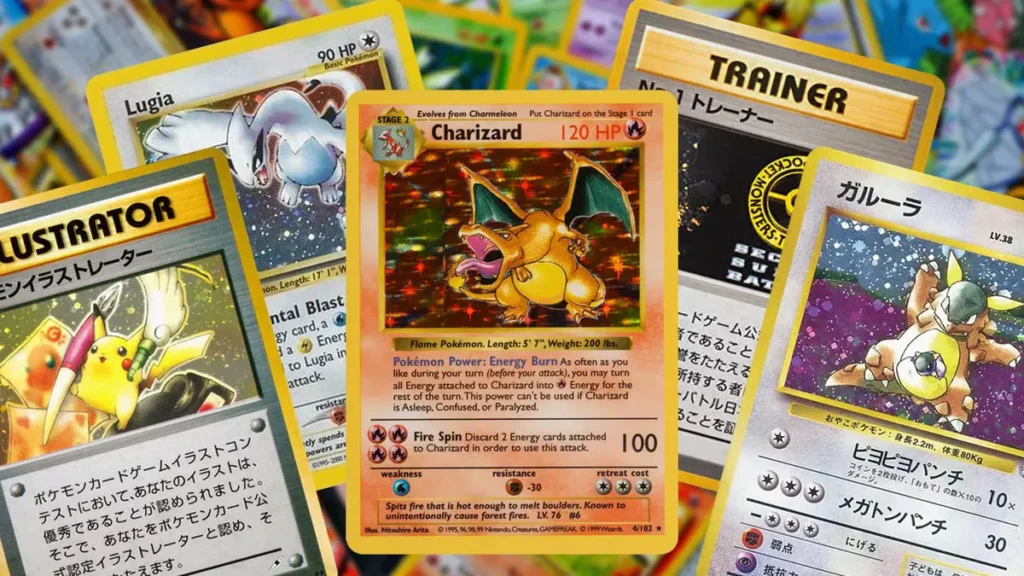
Fake: Fake Pokemon cards often feel wrong the moment you hold them. They’re usually printed on thin, cheap cardstock that bends too easily. The surface might feel rough, waxy, or oddly glossy. Some fakes even “flop” when you tap them on a table because the material has no firmness.
Genuine: Authentic cards are made from sturdy, layered cardstock with a smooth, clean finish. The paper weighs it and doesn’t bend without resistance. The surface feels even, the edges are clean, and the card keeps its shape. Real cards also flex back instead of staying bent.
Printing Quality and Color
Fake: Fake vs real Pokémon cards often have muddy colors, faded text, or artwork that looks slightly “off.” The image might be blurry, the outlines too, and the colors may be too bright or too dull. Misaligned borders are also very common. Sometimes the picture sits too far left, right, or is tilted.
Real: Genuine cards have sharp lines, clean text, and stable, balanced colors. The artwork is good, the borders are even, and nothing looks out of place. The color tone is consistent across the whole card, and letters never appear stretched, squished, or oddly spaced.
Holographic and Foil Effects
Fake: How to spot fake Pokemon cards? The holo can look flat, too shiny in one spot, or completely the wrong pattern. Fake EX/GX/V/Full Art cards often use cheap foil that doesn’t sparkle or shift when you tilt it. Some even throw random glitter everywhere or put foil on cards that were never supposed to have foil at all, and vice versa.
Real: Genuine holo and foil patterns have depth and move cleanly when you tilt the card. The shine is even, the colors don’t bleed, and cards that shouldn’t be foil simply aren’t.
Weight and Dimensions
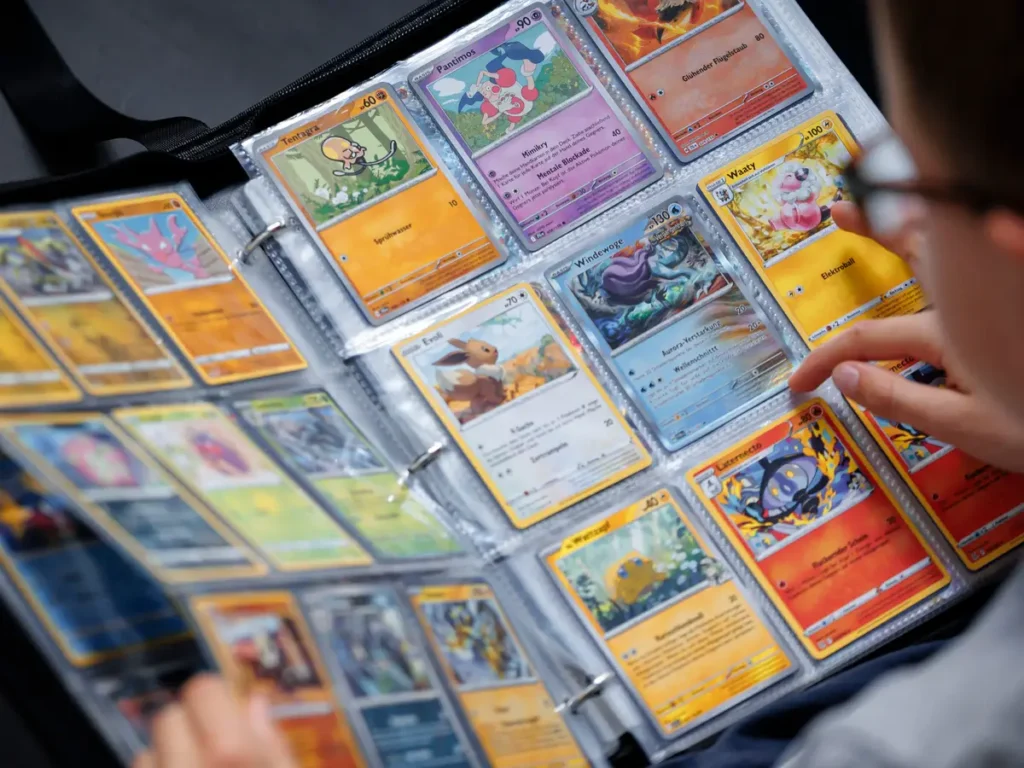
Fake: How to know if a Pokemon card is fake? Fake cards often have the wrong size or thickness. Many feel lighter than they should, bend too easily, or feel slightly “paper-ish.” Some fakes are the right size, but the edges look uneven or cut at odd angles. A fake card that’s too thick or noticeably heavier than others is also a bad sign – scammers sometimes layer materials to mimic the inner blue core.
Real: How to tell if Pokemon cards are real? Real Pokemon cards are very consistent. A standard card is 2.5 x 3.5 inches and roughly 2 grams. The thickness is uniform, and the edges are clean and smooth. When you stack real cards, they line up perfectly without gaps or crooked edges.
Gold Metallic Pokemon Cards Fake vs Original
Fake: How do you know if a Pokemon card is fake? Most “gold” cards you see online are unlicensed metal or gold-foil replicas. They’re usually heavy, fully metallic on both sides, and often have the entire back printed in gold rather than the standard blue design. Text can look off (wrong font, wrong spacing), and the artwork may be blurry or stretched. Many fakes also use random glitter, overly shiny surfaces, or “engraved” details that don’t exist on any real TCG card.
Real: Official Pokemon metal cards are minimal. The most known authentic ones are promotional items (like the Burger King gold-plated cards) or special releases where the front design matches an actual TCG card, and the back is the standard blue Pokemon card back with only the Pokemon logo appearing metallic. The details are clean, the colors are correct, and nothing about the card looks too shiny or fully gold from edge to edge.
Common Types of Fake Pokemon Cards
- Complete fakes. These try to copy a real card 1:1. Same name, same artwork, same set symbol. The devil is in the details: poor cardstock, blurry print, off-center borders, wrong shade of blue on the back, or holo that looks flat. These are the ones most often slipped into “cheap vintage lots” or sketchy booster packs.
- Reprinted or “replicas.” Often sold as “reprints,” “training proxies,” or “replica Charizard,” and so on. They’re not official, even if the seller says “same size and feel.” The back is usually wrong, the text may be slightly off, and the card might not match any real set number. On their own, they’re just proxies, but the problem starts when someone resells them as real.
- “Custom” cards (fan art, unofficial). These use new art, joke text, or crazy high HP and damage. Some look professional, with full-art foiling or metal printing. They’re fine as art pieces, but they have zero value as real Pokemon cards and can confuse newer collectors if people pretend they’re rare promos.
- Fake promo cards. These pretend to be event prizes or trophy cards: World Championships, special store events, stamped pre-releases, etc. Red flags are wrong logo placement, fonts that don’t match, numbers that don’t exist on any real promo list, or “gold” stamps that rub off easily. Because real promos can be worth a lot, this is where scammers really try to cash in.
How to Authenticate Pokemon Cards Like a Pro
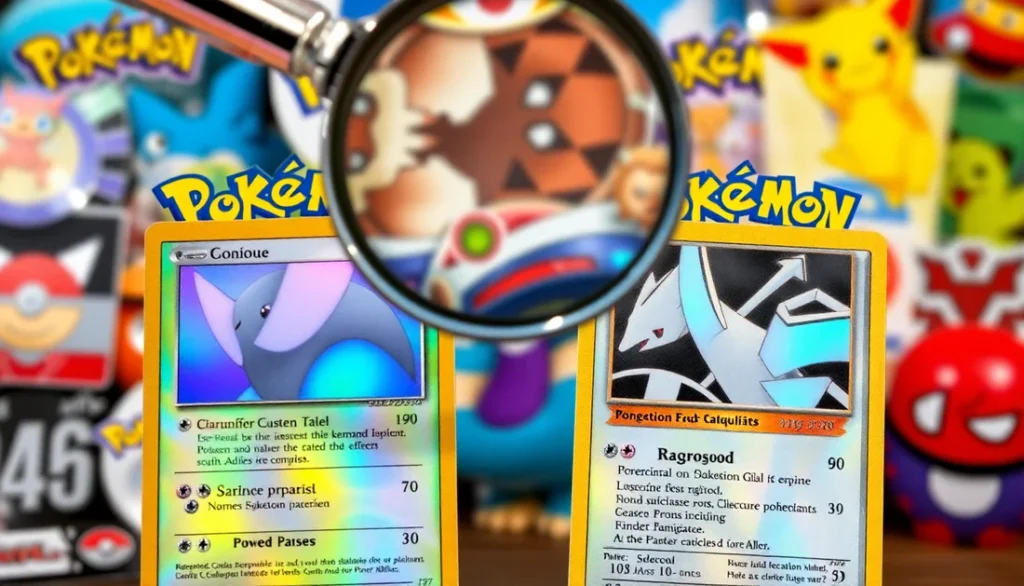
If you’re into buying Pokémon cards, especially older or pricey ones, you really need to know how to check if they’re real. There are lots of fakes around, and some of them look convincing. Here are some valuable tips to help you.
Read the Card Carefully
Reading the text on the card is the easiest and quickest way to spot a fake. Look for spelling mistakes, grammar errors, missing accents in “Pokémon,” or weird wording like “Pocket Monster” on modern cards. Also watch for impossible stats – no real Pokemon card has over 340 HP.
This method is simple, but not always perfect. Some fakes copy text from real cards, and a few ancient official cards had minor misprints. Still, obvious errors almost always mean the card isn’t real.
Card Back can Show Mistakes
Checking the back of the card is one of the easiest ways to find real and fake Pokemon cards. Real Pokemon cards always use the same colors and border layout, no matter the year. Fakes usually mess this up – the blue can look uneven, the border might “bleed” into the center, or the whole back might look faded. This method is very reliable because scammers rarely match the real back perfectly. To use this method, you need a proven real card on hand to compare it to.
Compare with a Verified Original
When you’re not sure about a card, the easiest check is to compare it to a real one from the same set. Look at everything side-by-side – art, foiling, borders, and how the card feels. Fake cards often have thin or weak cardstock, the wrong weight, flat foil, or rough edges. Real cards have clean cuts, even texture, and foiling that matches the artwork. This method takes a bit of practice, but once you learn to notice the small details, comparing to a confirmed real card becomes one of the most reliable checks you can do.
Use Professional Authentication Services
If you’re looking at a card that’s really rare or pricey and you still have doubts, the safest, easiest, and most reliable option is to use a professional authentication service. Experts know the tiny details, and they can confirm if a card is real before you spend serious money. It’s the most reliable option when the stakes are high. And if you’re unsure who to ask, places like ComicBuyingCenter can help you avoid costly mistakes.
Fake vs Real Pokémon Cards — Quick Checklist
- Card texture feels wrong. Real cards feel firm. Fake ones bend too easily or feel too smooth.
- Colors look off. Watch for washed-out blues on the back or colors that look too bright or too dull.
- Blurry text or artwork. Real cards have sharp lines. Fakes often look pixelated or slightly off-center.
- Wrong fonts or spacing. Look for weird letter shapes, uneven spacing, or spelling errors.
- Destructive holo/foil patterns. Real holo moves cleanly when tilted, fake holo often looks flat, random, or “too shiny” in one spot.
- Foil on cards that shouldn’t have foil (or vice versa). A huge red flag.
- Wrong size or weight. Originals have fixed dimensions. Fakes can be slightly thinner, thicker, or lighter.
- Card back mismatch. Compared to a real card, the blue border shouldn’t bleed into the lighter blue, and colors shouldn’t be faded.
- Set symbols or HP values that make no sense. Many fakes use impossible stats or wrong set icons.
- Energy symbols look strange. Wrong size, wrong shape, or printed slightly off.
- Too cheap to be real. Rare cards listed for suspiciously low prices are almost always fake.
Final Thoughts on Spotting Fake Pokemon Cards
Spotting fake Pokémon cards isn’t as hard once you learn the basic signs. Little things like the print, texture, and holo usually give you the answer faster than anything a seller says. And with so many people collecting now, some even starting because they used to sell comic books, fakes are everywhere. It makes sense, mainly when the most expensive pokemon card can sell for more than a car.
How many pokemon cards are there? Knowing what’s real helps a lot. And if you’re spending real money, learning how to grade pokemon cards or asking a pro to check them is always worth it. A little caution saves you from costly mistakes.