
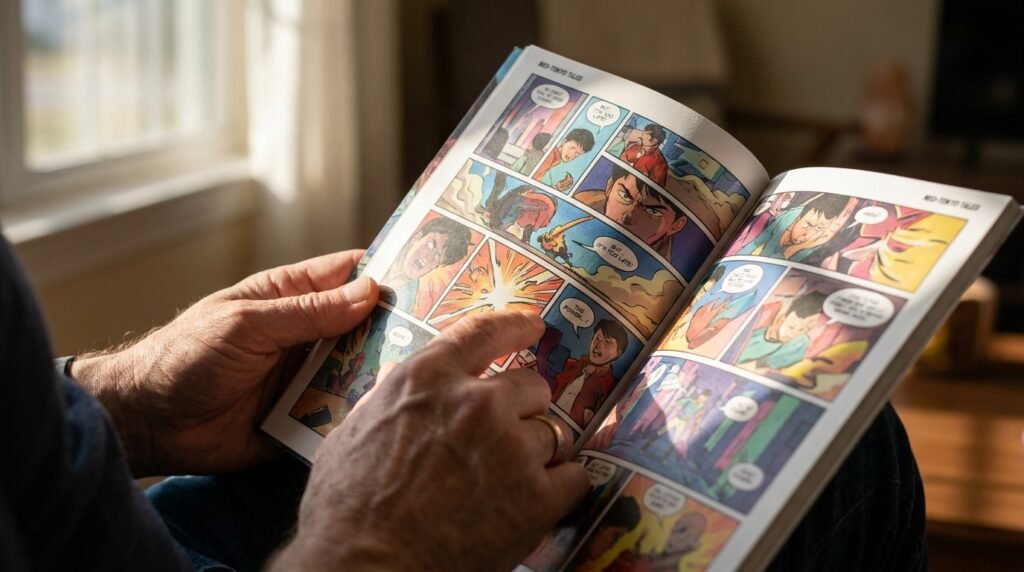
Reading a comic book is a distinct experience, blending sequential art with narrative text to tell stories in a dynamic visual language. For new readers seeking the simplest entry, begin with a self-contained graphic novel or a collected trade paperback (TPB) that compiles a complete story arc. These formats offer full narratives without requiring extensive background knowledge, making them ideal for immersion. When approaching any comic page, the fundamental rule for Western comics is to read panels and speech balloons from left-to-right, then top-to-bottom, following a natural ‘Z’ pattern across the page. For those venturing into ongoing series, always seek out Volume 1 or identified jumping-on points to ensure a coherent understanding of the story’s progression. Comic Buying Center provides expert guidance on evaluating, selling, and appreciating comics, ensuring you navigate the collecting world with confidence.
Key Takeaways
- Start your comic reading journey with complete stories, such as Original Graphic Novels or Trade Paperbacks, for a satisfying narrative experience.
- Always interpret comic book pages by reading panels and dialogue from left-to-right, then top-to-bottom, in a consistent ‘Z’ pattern.
- Understand the distinct differences between single issues, collected editions, and graphic novels to choose the format best suited to your reading preference.
- Utilize online resources and the expertise of local comic shops to decipher complex character histories and find optimal reading orders for expansive universes.
- Recognize that both the visual art and the written text are critical components of the storytelling, requiring active engagement from the reader.
Mastering the Art of Reading a Comic Book Page
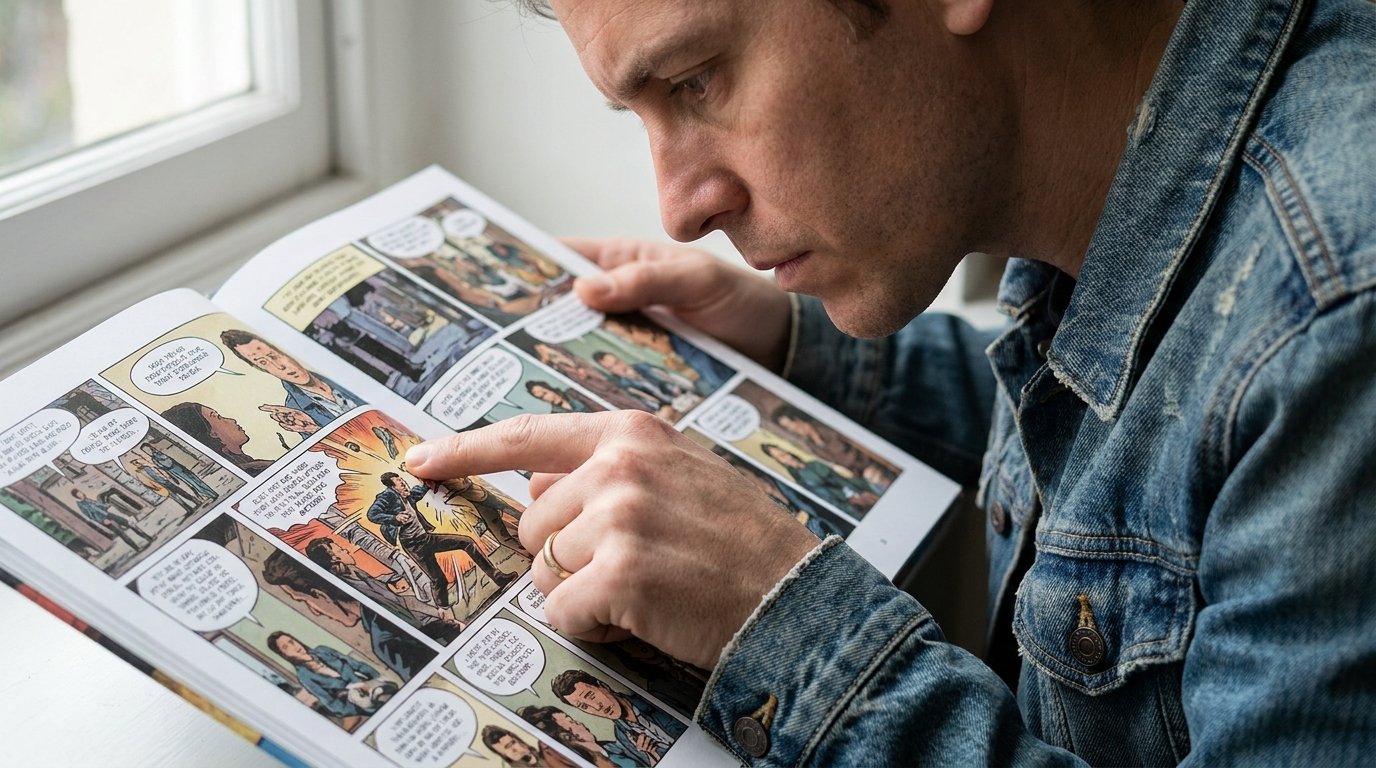
Understanding how to interpret a comic book page is fundamental to appreciating its unique storytelling. Unlike a traditional novel, comics rely on a visual grammar where panels, speech balloons, and sound effects work in concert to convey narrative, emotion, and action. The primary method for navigating a comic page in Western publications is the “Z-pattern” reading order: start at the top-left panel, read across to the right, then move down to the next row and repeat. This sequence ensures the story unfolds as the creators intended.
Each component on the page serves a specific purpose. Panels are the individual frames that contain a piece of the story, much like a film strip. The size and shape of a panel can dictate pacing; larger panels often highlight significant moments or slow down the action, while smaller, rapid-fire panels can accelerate a scene. The space between panels, known as the gutter, is crucial. It represents the unseen passage of time or action that the reader’s mind fills in, creating a dynamic reading experience. An expert tip for new readers is to pay attention to how panels transition. Are they moving moment-to-moment, showing continuous action, or jumping dramatically from scene-to-scene? This tells you about the story’s pace and emphasis.
Dialogue and internal thoughts are conveyed through various textual elements. Speech balloons, typically rounded or oval, contain character dialogue and point with a tail towards the speaker. Thought balloons, often cloud-shaped with small bubbles leading to the character, represent internal monologue. Caption boxes, usually rectangular, provide narration, location details, or time jumps. These elements guide the reader through the conversation and narrative flow. Sound effects (SFX), such as “WHAM!” or “CRACK!”, are integrated directly into the artwork, adding an auditory layer to the visual action. According to a 2023 study by the Comic Art Council, readers process visual and textual information in comics nearly simultaneously, demonstrating the effectiveness of this integrated design.
- Begin at the top-left panel of the page.
- Read the speech and thought balloons within that panel from left to right, then top to bottom.
- Scan the rest of the panel’s artwork for details and emotional cues.
- Move to the next panel to the right, repeating the process.
- Once you’ve reached the rightmost panel in a row, drop down to the leftmost panel of the next row.
- Continue this “Z-pattern” until you have read all panels on the page.
- Pay close attention to caption boxes, which often provide essential narrative context or transitions between scenes.
Choosing Your Entry Point: Single Issues, Trade Paperbacks, and Graphic Novels
The world of comics offers several primary formats, each catering to different reading preferences and engagement levels. Understanding these formats is essential for selecting the right starting point, especially for those new to the medium. The choice between a single issue, a trade paperback, or an original graphic novel often dictates the initial commitment required and the immediate narrative satisfaction you will experience.
Single issues are the traditional, periodical releases, typically published monthly. They are akin to individual episodes of a television series, offering a small segment of an ongoing story. A standard single issue usually contains 22-24 pages of story content, and they generally retail for $3.99-$5.99. Collecting single issues allows readers to stay current with their favorite series and experience stories as they unfold, often providing a communal experience with other fans discussing weekly developments. However, starting an ongoing series with single issues can be challenging due to existing continuity. For collectors, specific first issues or rare variants can hold significant value, making the condition of these individual comics a critical factor. For those looking to sell such collectibles, professional appraisal, like that offered by Comic Buying Center, is invaluable.
Trade Paperbacks (TPBs) are collected editions that compile several single issues, usually a complete story arc, into a single volume. If single issues are episodes, then TPBs are entire seasons. They typically collect 4-6 issues, sometimes more, and provide a convenient way to read a complete narrative without waiting for monthly releases. TPBs are generally priced between $14.99 and $29.99, offering a cost-effective way to catch up on a series or dive into acclaimed storylines. They are highly recommended for new readers as they offer self-contained arcs, making them far more accessible than jumping into an ongoing single issue series. Most major storylines from popular characters like Batman or Spider-Man are readily available in this format.
Original Graphic Novels (OGNs) are distinct from collected editions in that they are created as standalone, complete stories from their inception. They are not compilations of previously released single issues but are conceived and published as full-length books. OGNs often feature unique art styles and diverse genres, ranging from memoirs and historical accounts to fantasy and science fiction, extending far beyond the superhero genre. These stand-alone narratives are arguably the most accessible entry point for beginners, as they require no prior knowledge of characters or universes. Prices for OGNs typically range from $19.99 to $39.99, reflecting their complete and often lengthier narratives. According to industry reports from Circana BookScan, graphic novel sales in North America consistently outperform single issues in the broader book market, indicating their growing appeal and accessibility to a wider audience.
Comic Book Formats Compared
| Feature | Single Issue | Trade Paperback (TPB) | Original Graphic Novel (OGN) |
|---|---|---|---|
| Format | Individual periodical | Collection of issues | Standalone story |
| Story Length | Single chapter/episode | Complete story arc (4-12 issues) | Complete, self-contained narrative |
| Cost (Average) | $3.99 – $5.99 | $14.99 – $29.99 | $19.99 – $39.99 |
| Ideal For | Following ongoing series, hardcore collectors | Binge reading story arcs, new readers | New readers, complete narratives, diverse genres |
| Collectibility Factor | High for rare first appearances, key issues | Moderate, primarily for reading | Varies by author/artist prestige, critical acclaim |
Navigating the Comic Book Reading Order: From Arcs to Universes
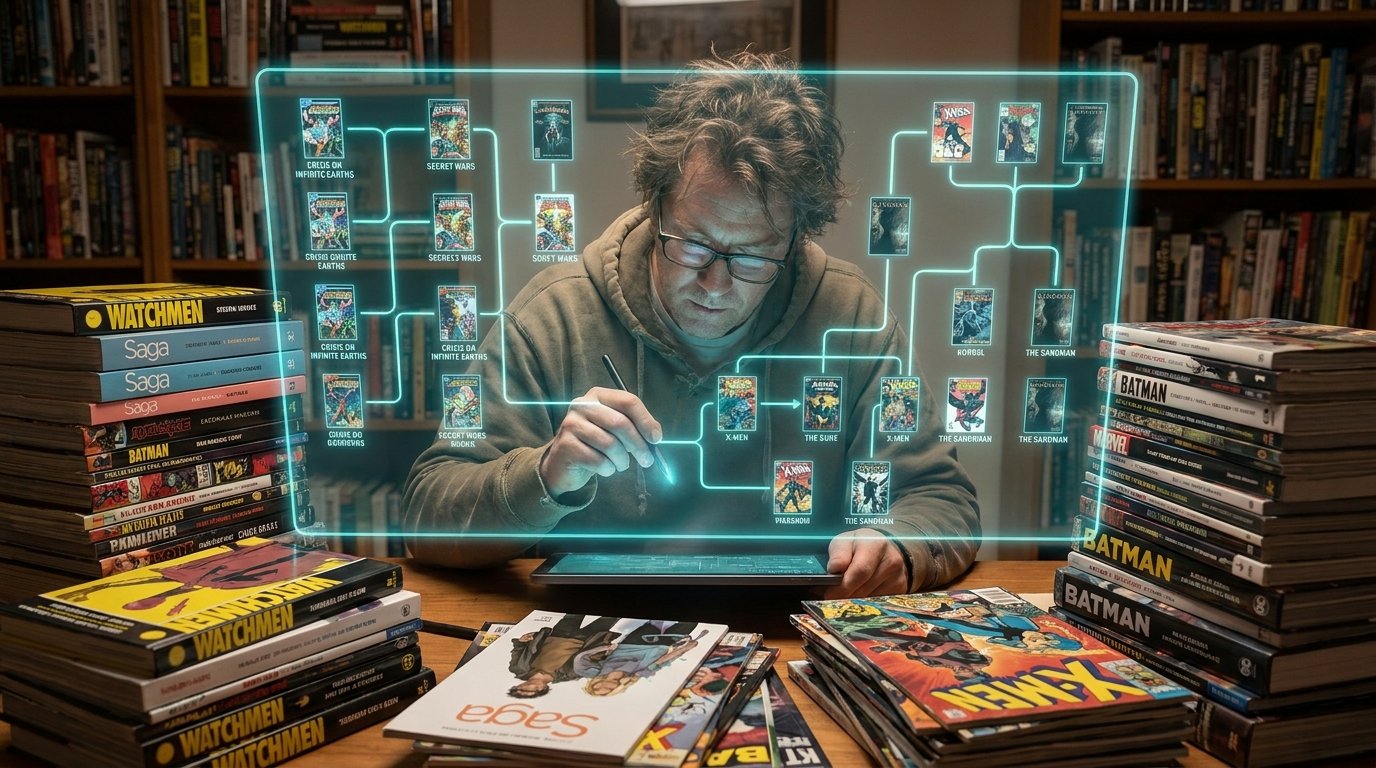
Once you move beyond standalone graphic novels, navigating the complex reading orders of ongoing comic book universes can seem daunting. Major publishers like Marvel and DC have decades of intertwined storylines, character evolutions, and significant events that can confuse new and even seasoned readers. The key is to approach this not as a linear historical endeavor but as a curated exploration of stories that interest you.
Comic book narratives are structured into “story arcs,” which are self-contained sequences typically spanning a few issues within a larger series. These arcs often build towards significant “events” that cross over multiple titles, temporarily altering the status quo of an entire universe. Understanding these arcs is more practical than attempting to read every single comic ever published by a particular character or team. A common professional mistake new readers make is attempting to start at the absolute beginning of an 80-year-old character’s history. This approach is a recipe for burnout; many early comics do not reflect modern storytelling sensibilities, and the sheer volume is overwhelming.
Effective strategies for navigating reading orders include focusing on critically acclaimed runs by specific writers or artists. Often, a new creative team will provide a soft reboot or a fresh starting point for a character, allowing new readers to jump in without needing decades of backstory. Websites like Comic Book Herald or even Wikipedia offer extensive, fan-curated reading guides for various characters and events. These resources break down convoluted timelines into manageable essential reading lists, often suggesting “jumping-on points” that minimize the need for prior knowledge. For example, rather than reading all of Spider-Man’s history, you might start with a specific run like “Ultimate Spider-Man” or “The Amazing Spider-Man by Dan Slott,” which are known for their accessibility and quality.
Another approach is to follow significant “events.” While these can be complicated, they often serve as turning points that define new eras for characters. Publishers frequently release collected editions of these events, complete with tie-in issues, making it easier to read the entire story in a coherent manner. It is important to note that many modern comics are designed with new readers in mind, frequently providing internal recaps or summaries to catch you up. For valuable vintage comics or key issues within these sprawling narratives, understanding their market position is crucial, and resources like a comic book price guide can help illuminate their significance and worth.
Decoding Visual Storytelling: Panels, Gutters, and Beyond
Comic books are not merely illustrated text; they are a unique medium where the visual elements convey as much, if not more, meaning than the written word. The art dictates pacing, expresses emotion, defines character, and builds worlds. Mastering how to read a comic book involves actively interpreting these visual cues in conjunction with the text.
The design of individual panels plays a crucial role. A panel’s size, shape, and even its border can communicate critical information. Large, full-page panels, known as “splash pages,” are typically reserved for major reveals, epic battles, or to establish a grand setting, often slowing down the reader’s eye to emphasize significance. Conversely, small, numerous panels packed onto a page can create a sense of urgency, speed, or claustrophobia. Irregularly shaped panels or those that break out of their borders can signify chaos, supernatural events, or a character’s heightened emotional state.
The “gutter”—the space between panels—is where much of the unwritten storytelling occurs. As Scott McCloud articulates in “Understanding Comics,” the reader’s mind actively fills the gaps in the gutter, creating continuity and movement. This phenomenon, known as “closure,” is what makes sequential art work; the reader mentally connects the dots between discrete moments, generating a sense of flow and time. An artist’s skill often lies in choosing what not to show, allowing the reader’s imagination to participate in the narrative construction.
Color, line work, and perspective are also powerful storytelling tools. Colorists use palettes to establish mood, indicate time of day, or differentiate between realities. A dark, muted palette might suggest a grim atmosphere, while vibrant hues denote optimism or a fantastical setting. Pencilers and inkers utilize line weight and style to define character, show texture, and convey motion. Dynamic, heavy lines might emphasize power, while delicate, fine lines could convey fragility. Furthermore, the chosen perspective (e.g., eye-level, bird’s-eye, worm’s-eye) influences how the reader perceives the characters and their environment, guiding their emotional response. A typical comic production team consists of at least five key roles: writer, penciler, inker, colorist, and letterer, each contributing significantly to this complex visual symphony. This collaborative effort, common in the comic industry since the 1940s, ensures a cohesive and rich narrative experience.
Building Your Collection: Tips for New and Experienced Readers

Beyond simply reading, many enthusiasts find joy in collecting comic books, turning their passion into a tangible archive of stories and art. Building a thoughtful collection involves understanding acquisition methods, preservation techniques, and how to assess potential value, whether for personal enjoyment or future sale. Comic Buying Center in Libertyville, IL, serves as a valuable resource for both nascent and veteran collectors.
For new collectors, starting with readily available trade paperbacks or original graphic novels is often recommended. These offer complete stories and are less prone to the immediate value fluctuations of single issues. However, if you aim to collect single issues, particularly those with potential for future value, purchasing “new comic book day” releases from a local comic shop is common. For older or rarer issues, exploring back issue bins at conventions, specialized shops, or online marketplaces is necessary. Be mindful of condition; a comic’s grade significantly impacts its value. A professional comic book grading service can assess this accurately.
Preservation is paramount for maintaining the long-term value and readability of your collection. Proper storage involves using acid-free bags and boards to protect individual comics from environmental damage, moisture, and creasing. These protected comics should then be stored upright in specialized longboxes, which shield them from light exposure and physical stress. Fluctuations in temperature and humidity, common professional mistakes, can cause pages to yellow, brittle, or develop mold, severely depreciating a comic’s condition and value. A consistent, cool, and dry environment is ideal.
Understanding when to seek a professional appraisal is crucial for collectors considering selling their items. If you possess a collection that includes key issues, first appearances, or comics from the Golden or Silver Age, an expert appraisal can provide an accurate valuation and guide your selling strategy. The comic book market, which reached an estimated $2.11 billion in 2023, according to a joint analysis by Circana BookScan and Comichron, reflects a robust and diverse interest in both modern and vintage comics. This statistic highlights the potential value hidden within collections, making informed selling decisions essential. Comic Buying Center provides professional appraisals and helps collectors sell various items, from rare comic books to vintage toys, ensuring a fair and transparent process.
FAQ
What is the best way to start reading comics?
The best way to start reading comics is by picking up an Original Graphic Novel (OGN) or a Trade Paperback (TPB) that collects a complete story arc. These formats offer self-contained narratives that require no prior knowledge, making them highly accessible for beginners.
How do you know which order to read comic panels?
In most Western comic books, you read panels and speech balloons from left to right, then from top to bottom, following a natural “Z-pattern” across each page. This ensures the story unfolds in the intended sequence.
Which type of comic is best for new readers?
Original Graphic Novels (OGNs) and Trade Paperbacks (TPBs) are generally best for new readers. OGNs are standalone stories, while TPBs collect complete story arcs, both offering full narratives without requiring extensive background on character histories or universe continuity.
When should I consider getting my comic books appraised?
You should consider getting your comic books appraised if you believe they might hold significant monetary value, such as rare first editions, key issues, or a substantial collection accumulated over many years. An appraisal provides an accurate market value, essential for selling or insurance purposes.
Is reading comics different from reading manga?
Yes, the primary difference is the reading direction. While most Western comics are read from left-to-right, manga (Japanese comics) are traditionally read from right-to-left. Additionally, artistic conventions, paneling, and storytelling pacing can differ between the two forms.
Can I read comics digitally?
Yes, many platforms offer digital comics. Services like ComiXology, Marvel Unlimited, DC Universe Infinite, and even Kindle provide vast libraries of comics and graphic novels accessible on tablets, computers, and smartphones, often through subscription models or individual purchases.