
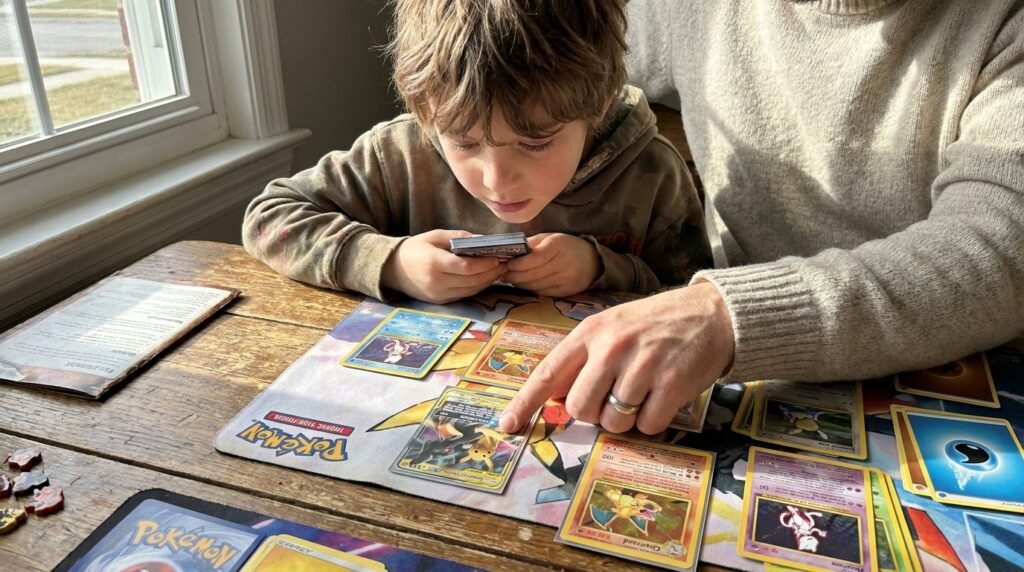
Navigating the vibrant world of the Pokémon Trading Card Game (TCG) can appear complex, but its core mechanics are built on accessible, strategic principles. To effectively play the Pokémon TCG, players must construct a 60-card deck comprising Pokémon, Energy, and Trainer cards, then engage in turn-based combat with the primary goal of “knocking out” an opponent’s Pokémon. For beginners, acquiring a pre-built theme deck, such as those found in a Battle Academy box set, offers an immediate, balanced playing experience and simplifies the initial learning curve, allowing focus on turn structure and basic interactions. More experienced players will find success in custom deck building, carefully balancing Energy types with Pokémon attack costs and incorporating Trainer cards for strategic advantage. Understanding the interplay of Weakness, Resistance, and Retreat Costs is paramount for competitive play, ensuring you position your Pokémon optimally and manage resources efficiently throughout the battle. The ultimate victory conditions involve either taking all six of your Prize Cards by consistently knocking out opponent’s Pokémon, depleting your opponent’s bench so they have no active Pokémon to replace a knocked-out one, or forcing your opponent to run out of cards in their deck.
Key Takeaways
- Begin your journey with a pre-built theme deck to grasp fundamental gameplay mechanics.
- Master the three essential card types: Pokémon, Energy, and Trainer, and their respective roles.
- Understand the sequential flow of each turn: Draw, Action, and Attack phases.
- Strategically utilize Pokémon Weakness, Resistance, and Retreat Cost to gain an advantage.
- Focus on accumulating Prize Cards by knocking out opponent’s Pokémon to secure victory.
How to Begin Your Pokémon TCG Journey: Essential Components and Setup
Starting your adventure in the Pokémon Trading Card Game requires a few fundamental components and a clear understanding of the game’s initial setup. Every player needs a standard 60-card deck, precisely assembled according to the game’s rules: no more than four copies of any single card (excluding basic Energy cards) and at least one Basic Pokémon to start the game. Most new players opt for a pre-constructed theme deck, which provides a balanced selection of Pokémon, Energy, and Trainer cards, ready for immediate play. These decks are designed to introduce common strategies and card interactions without the complexity of custom deck building.
To begin a match, both players shuffle their 60-card decks thoroughly. A common professional practice is to shuffle your opponent’s deck as well, a courtesy that ensures fair play and random distribution. Each player then draws an initial hand of seven cards. From this hand, each player must select one Basic Pokémon to be their Active Pokémon, placing it face-down. Up to five additional Basic Pokémon can be placed face-down on the Bench, serving as backup Pokémon. If a player draws an opening hand without any Basic Pokémon, they must reveal their hand to their opponent, reshuffle, and draw seven new cards; this is known as a “mulligan.” For every mulligan a player takes, their opponent has the option to draw one additional card.
After selecting their Active and Benched Pokémon, players take the top six cards from their remaining deck and place them face-down to the side as their “Prize Cards.” These cards are crucial for victory: each time a player knocks out an opponent’s Pokémon, they claim one of their Prize Cards. The first player to collect all six of their Prize Cards wins the game. Before the game officially begins, both players flip their Active and Benched Pokémon face-up. A coin flip determines who takes the first turn. According to official Play! Pokémon rules, the player who goes first cannot play a Supporter card or attack on their initial turn, which balances the advantage of acting first.
Decoding Pokémon Card Types: Abilities, Attacks, and Strategic Utility
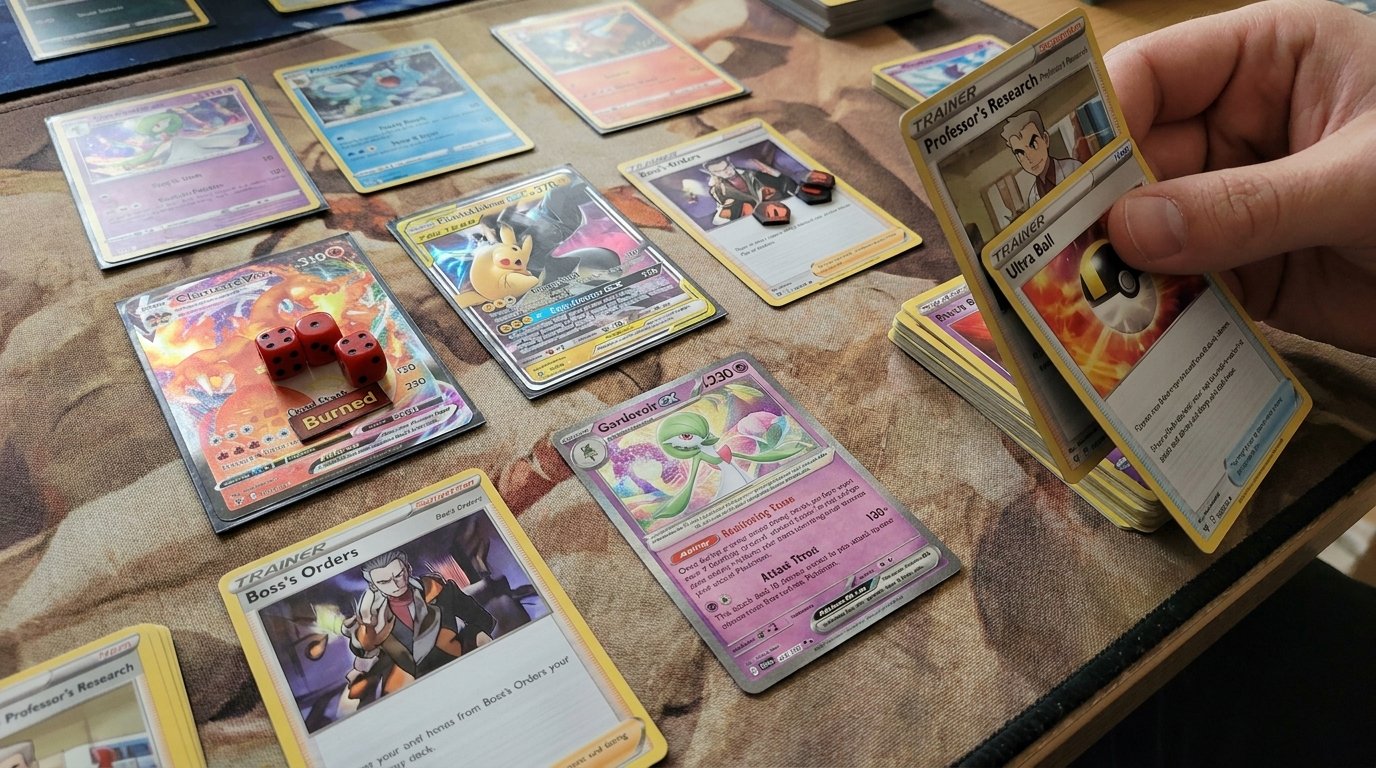
The Pokémon Trading Card Game revolves around three primary card types: Pokémon cards, Energy cards, and Trainer cards, each with distinct roles that contribute to strategic gameplay. Understanding the nuances of each type is critical for both constructing an effective deck and executing winning plays. Pokémon cards are the central figures of your team, representing the creatures you battle with. Each Pokémon card features vital information, including its Hit Points (HP), indicating how much damage it can withstand; its Type (e.g., Fire, Water, Grass), which dictates its interactions with other Types through Weakness and Resistance; and its attacks or abilities. Attacks require specific Energy cards to be attached to the Pokémon to be used, dealing damage to the opponent’s Active Pokémon or triggering various effects. Abilities, unlike attacks, often have no Energy cost and can be used at specific times, such as once per turn or when the Pokémon is played, providing ongoing benefits or immediate effects.
Energy cards fuel your Pokémon’s attacks, and their strategic management is paramount. There are basic Energy cards (like Fire, Water, Grass, Lightning, Psychic, Fighting, Darkness, Metal, Colorless, Dragon, and Fairy, although Dragon and Fairy are now typically represented by other types or Colorless in modern sets) and special Energy cards, which often provide additional effects alongside energy. Players can attach one Energy card from their hand to one of their Pokémon (Active or Benched) per turn. The cost of an attack is depicted by symbols next to it, specifying the number and type of Energy cards required. For instance, an attack costing two Fire Energy and one Colorless Energy needs three Energy cards attached, with at least two being Fire, and the third can be any type. The expert recommendation here is to ensure your deck’s Energy count aligns with the attack costs of your Pokémon; a common mistake is having too few or too many Energy cards, leading to inefficient turns.
Trainer cards are versatile tools that offer various strategic advantages, categorized further into Item, Supporter, and Stadium cards. Item cards can be played as many times as desired during your turn, before attacking, and offer effects like drawing cards, searching your deck for specific Pokémon, or healing damage. Supporter cards are powerful, offering significant effects like drawing multiple cards or manipulating the game state, but only one Supporter card can be played per turn. Stadium cards remain in play once used, affecting both players until another Stadium card replaces it. Properly utilizing Trainer cards is often what differentiates a good player from a great one, as they provide critical flexibility and resource management. For more details on collecting these invaluable game pieces, you can visit our sell Pokémon cards page to understand their market value.
The Flow of Combat: Navigating Turns in the Pokémon Card Game
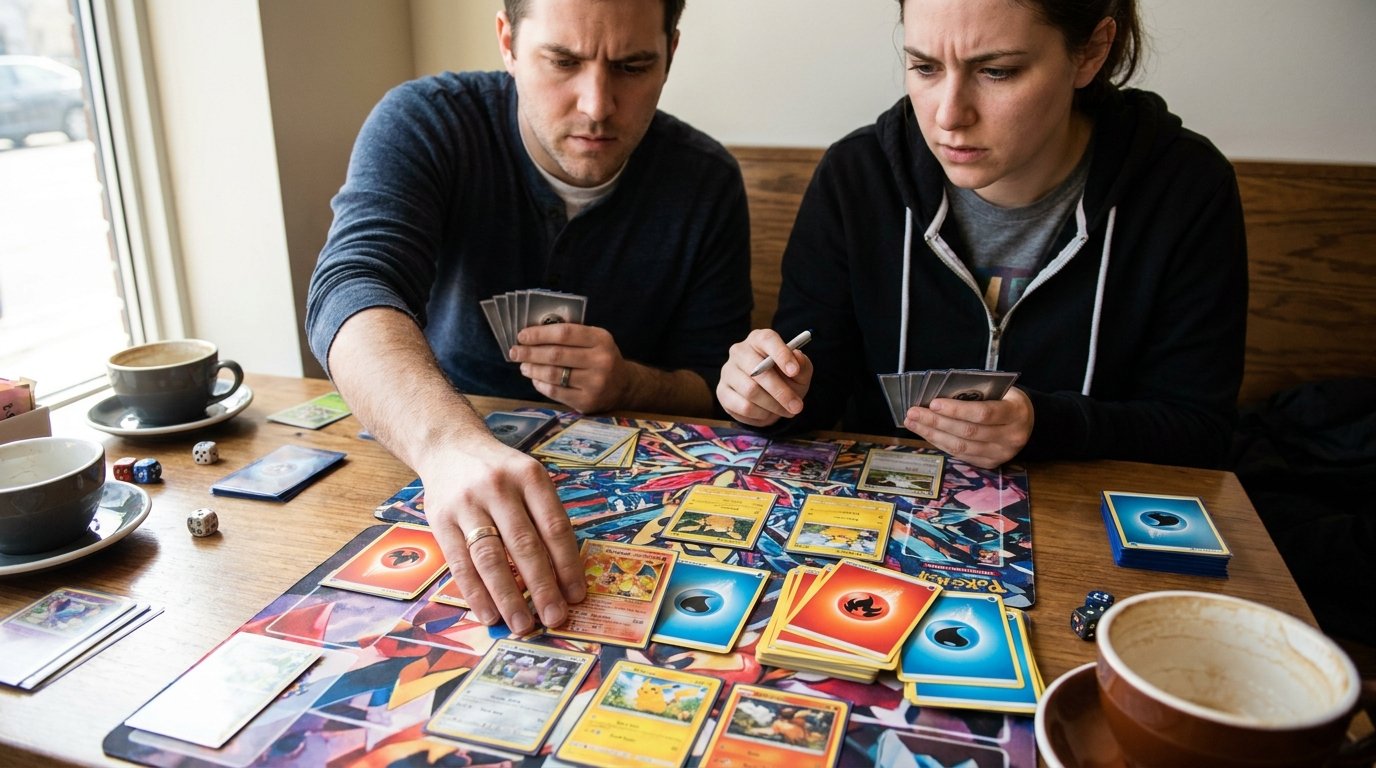
A typical turn in the Pokémon Trading Card Game follows a structured sequence, ensuring fair play and strategic depth. Understanding this flow is crucial for executing your strategy and reacting to your opponent’s moves. Each turn begins with the Draw Phase: the active player draws one card from the top of their deck. This is a non-negotiable step; failure to draw a card at the start of your turn due to an empty deck results in an immediate loss.
Following the Draw Phase is the Action Phase, where players can perform a variety of actions in almost any order, as many times as rules permit, before declaring an attack. Key actions include:
- Playing Basic Pokémon: You can place any number of Basic Pokémon from your hand onto your Bench, up to a maximum of five Benched Pokémon.
- Attaching Energy: You may attach one Energy card from your hand to one of your Pokémon (Active or Benched) per turn.
- Evolving Pokémon: If you have an evolved form in your hand (Stage 1 or Stage 2), you can place it on top of a corresponding Basic or Stage 1 Pokémon. A Pokémon cannot evolve on the same turn it was played unless a specific card effect allows it. A Pokémon can only evolve once per turn.
- Playing Trainer Cards:
- Item Cards: Play as many as you like.
- Supporter Cards: Play only one per turn.
- Stadium Cards: Play only one per turn. If a new Stadium is played, the old one is discarded. Only one Stadium card can be in play at a time.
- Using Abilities: Many Pokémon have Abilities that can be used during your turn, typically without an Energy cost, though some are restricted to specific conditions or once per turn.
- Retreating Your Active Pokémon: You can switch your Active Pokémon with one of your Benched Pokémon by paying its Retreat Cost. The Retreat Cost is indicated by Colorless Energy symbols on the card, and you must discard that many Energy cards from your Active Pokémon to complete the retreat. Your new Active Pokémon takes its place. This action can only be performed once per turn.
The Action Phase concludes with the Attack Phase. During this phase, if your Active Pokémon has the necessary Energy attached, you may choose one of its attacks and use it. Once an attack is declared, its effects are resolved, and damage is applied to the opponent’s Active Pokémon. Damage is typically tracked using damage counters (each counter often representing 10 damage), which remain on the Pokémon until healed or until the Pokémon is knocked out. If an Active Pokémon accumulates damage equal to or exceeding its HP, it is “knocked out,” and the player whose Pokémon was knocked out places it and all attached cards (Energy, Tools) into their discard pile. The attacking player then claims one Prize Card. A crucial strategic decision is managing your Benched Pokémon and their Energy attachments to ensure you always have a follow-up attacker ready, avoiding a scenario where you have no Pokémon to bring to the Active Spot, which results in a loss.
Mastering Pokémon TCG Game Play: Strategies for Victory
Achieving consistent victories in the Pokémon TCG extends beyond merely knowing the rules; it requires strategic thinking, efficient resource management, and anticipating your opponent’s moves. One fundamental strategy is effective deck synergy. Your deck should not just be a collection of powerful Pokémon; instead, its cards should work together to achieve a cohesive game plan. For example, a deck might focus on quickly evolving powerful Stage 2 Pokémon, or it might revolve around a Basic Pokémon that deals consistent damage while utilizing Trainer cards for healing or energy acceleration. A common professional mistake is to include too many different types of Pokémon without enough Energy or Trainer support for any of them, leading to an inconsistent and unreliable strategy.
Resource management is another critical aspect of mastery. This includes careful consideration of when to attach Energy cards, when to evolve Pokémon, and when to use your single Supporter card per turn. For instance, attaching Energy to a Benched Pokémon might seem like a passive move, but it prepares a powerful attacker for future turns. Knowing when to retreat a damaged Active Pokémon to preserve it and bring in a fresh attacker, paying its Retreat Cost, can be a game-saving decision. Furthermore, understanding the concept of “Prize Trading” is vital: sometimes, allowing an opponent to knock out a less valuable Pokémon to set up a larger counter-attack that takes multiple Prize Cards is a worthwhile sacrifice.
Exploiting Weakness and Resistance is perhaps the most direct way to gain a combat advantage. Every Pokémon has a Type, and many have a Weakness to a specific Type (e.g., Fire is Weak to Water, meaning Water attacks deal double damage). Conversely, some Pokémon have Resistance (e.g., Fighting is Resistant to Psychic, meaning Psychic attacks deal 20 less damage). Recognizing these interactions and actively trying to bring Pokémon with type advantage to the Active Spot can dramatically shorten battles and preserve your own resources. The official Pokémon TCG tournament scene, with events like the World Championships, showcases how players meticulously analyze the current “meta-game” – the prevailing popular and effective strategies – to build decks that counter dominant archetypes or capitalize on overlooked synergies. Learning from these high-level plays, even casually, provides immense insight into advanced strategy.
Here is a comparison of different ways to engage with playing the Pokémon TCG:
| Method of Engagement | Description | Pros | Cons |
|---|---|---|---|
| Pre-built Theme Decks | Ready-to-play 60-card decks with a specific strategy. | Ideal for beginners, balanced, affordable ($10-$20). | Limited customization, may not be highly competitive. |
| Battle Academy Box Set | Includes multiple pre-built decks, playmats, and step-by-step guides. | Excellent for learning with family/friends, great value for new players. | Decks are simple, focus on teaching, not high-level play. |
| Pokémon TCG Live | Official digital game, playable on multiple platforms. | Free-to-play, practice against AI or real players, access to many cards. | Digital experience lacks physical card interaction, requires internet. |
| Custom-built Decks | Player constructs a 60-card deck from individual cards. | Unlimited strategic possibilities, highly competitive potential. | Requires deep game knowledge, can be expensive to acquire specific cards. |
Advanced Strategies for Competitive Pokémon TCG Play
For players aspiring to compete in local tournaments or online leagues, developing advanced strategies moves beyond basic turn mechanics into nuanced decision-making and meta-game understanding. One such strategy involves “deck manipulation.” This refers to using Trainer cards and Pokémon Abilities to search your deck for specific cards, draw extra cards, or shuffle discarded cards back into your deck. For instance, a Supporter card like Professor’s Research allows you to discard your hand and draw seven new cards, which is excellent for finding key components but requires careful timing to avoid discarding vital resources. Another example is the use of Pokémon with “search” abilities, like Jirachi V’s “Dream Protector,” which lets you look at the top 5 cards of your deck and attach any Energy card you find there to a Benched Pokémon.
Managing your Prize Cards is another critical advanced concept. While the goal is to take all six, sometimes strategically leaving certain Prize Cards for later can be beneficial. For example, if you know a crucial card is in your Prize Cards, you might prioritize knocking out less valuable Pokémon from your opponent to dig for that card. Conversely, an opponent might try to “stall” you by presenting Pokémon that are difficult to knock out, forcing you to use more resources than necessary, while they set up their own win condition. According to a 2023 analysis by Limitless TCG, a leading platform for competitive Pokémon TCG data, players who prioritize aggressive Prize card removal often win games in 8-12 turns, highlighting the importance of efficient damage output.
Energy acceleration, the ability to attach more than one Energy card per turn or attach Energy from places other than your hand, is a cornerstone of many powerful competitive decks. Without this, some high-cost attacks would be too slow to be effective. For example, some Pokémon have abilities that let you attach Energy from your discard pile or from your deck directly to them. Understanding these mechanisms and integrating them into your deck construction provides a significant advantage, allowing you to power up powerful attackers faster than your opponent. The art of “bench sitting” is also important; choosing which Pokémon to put on your bench, considering their abilities, potential evolution lines, and types, shapes your future turns and reactive capabilities. A good competitive player constantly assesses their opponent’s board, their own hand, and the potential cards remaining in their deck to plan several turns ahead, always working towards their win condition while disrupting the opponent’s.
Common Mistakes to Avoid When Playing Pokémon TCG

New players often make several common mistakes that can hinder their gameplay and lead to frustration. Recognizing and avoiding these pitfalls can significantly improve your experience and success in the Pokémon TCG. One frequent error is neglecting Energy management. Players might attach Energy only to their Active Pokémon, leaving their Benched Pokémon unprepared for battle. An expert recommendation is to “stage” your Energy attachments, dedicating one Energy per turn to a Benched Pokémon that you anticipate will be your next attacker. This ensures a consistent flow of powerful Pokémon into the Active Spot, maintaining offensive pressure.
Another common mistake is not fully understanding or utilizing Trainer cards. Some players hoard Item cards, waiting for a “perfect moment” that may never arrive, or they forget to play their crucial Supporter card for the turn. Trainer cards are designed to provide immediate advantages, such as drawing more cards, searching your deck for specific Pokémon, or healing damage. A good practice is to always evaluate your hand for the best Trainer card to play at the start of your Action Phase, maximizing its impact. Remember, you can only play one Supporter and one Stadium card per turn, so choosing the most impactful one is crucial.
Furthermore, many beginners overlook the importance of Retreat Cost and strategic switching. A Pokémon with high Retreat Cost can become a liability if it gets stuck in the Active Spot with unfavorable type matchups or low HP. While retreating costs Energy, sometimes it is a necessary investment to save a valuable Pokémon or bring in a more suitable attacker. Cards like “Switch” or “Escape Rope” can bypass Retreat Costs entirely, allowing for free switching, and including such cards in your deck is a smart move. Finally, an often-underestimated mistake is not reviewing the rules for specific card interactions. The Pokémon TCG features a vast array of cards with unique effects, and misinterpreting how an ability or attack works can lead to incorrect plays or even disputes. Always clarify specific card texts, especially those concerning special conditions or damage calculation, to ensure fair and accurate gameplay. Our team at Comic Buying Center, based in Libertyville, IL, frequently clarifies complex rules for collectors and players alike, ensuring everyone has a clear understanding of their cards’ potential.
FAQ
What is the objective of the Pokémon TCG?
The main objective of the Pokémon Trading Card Game is to be the first player to collect all six of their Prize Cards. Players achieve this by “knocking out” their opponent’s Pokémon through strategic attacks. Other victory conditions include an opponent having no Pokémon left to play or being unable to draw a card at the start of their turn.
How many cards are in a standard Pokémon TCG deck?
A standard Pokémon TCG deck must contain exactly 60 cards. Within this deck, players are generally limited to including no more than four copies of any single card, with the exception of basic Energy cards, which can be included in any quantity.
Which types of cards are used in the Pokémon TCG?
The Pokémon Trading Card Game utilizes three primary types of cards: Pokémon cards, which represent the creatures that battle; Energy cards, which are required to power up Pokémon’s attacks; and Trainer cards, which provide various strategic effects and advantages.
When can I evolve a Pokémon?
You can evolve a Pokémon during your Action Phase of a turn by placing its evolved form from your hand onto the corresponding Basic or Stage 1 Pokémon. A Pokémon cannot evolve on the same turn it was played, and a Pokémon can only evolve once per turn, unless a specific card effect overrides these rules.
Is it expensive to start playing the Pokémon TCG?
Starting the Pokémon TCG can be very affordable. Pre-built theme decks typically cost between $10 and $20 and provide everything needed for immediate play. The Pokémon Battle Academy box set is another cost-effective option, offering multiple decks and accessories. Building highly competitive custom decks can be more expensive, depending on the rarity and demand for specific cards.
Can I use any Pokémon card to play?
While you can use most Pokémon cards for casual play, competitive and officially sanctioned tournaments often adhere to specific “Standard” or “Expanded” formats. These formats restrict which card sets are legal for play, typically rotating older sets out to keep the game fresh and balanced. Always check the current format rules if you plan to play competitively.