
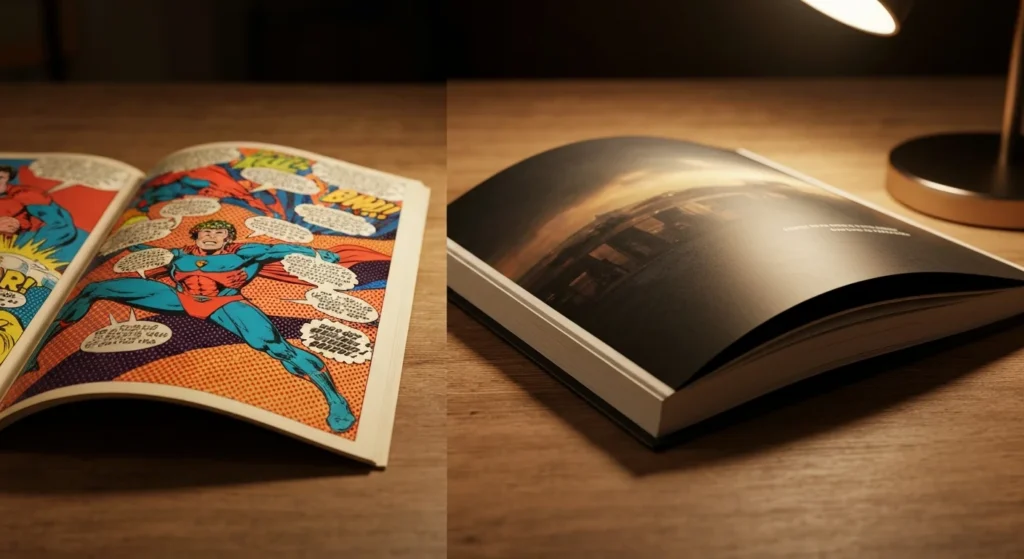
For collectors prioritizing serialized storytelling, monthly investments, and high-value single issues, choose the comic book. For readers seeking complete, self-contained literary narratives with durable bindings and thematic depth, select the graphic novel. The primary difference between these formats lies in how publishers produce, structure, and distribute them. Modern comic books are thin, stapled, periodical pamphlets featuring ongoing storylines that resolve over many months or years. Conversely, graphic novels are thicker, square-bound books containing a complete story or a compiled run of single issues. While comic books offer the thrill of weekly anticipation and potential investment growth, graphic novels provide a convenient, shelf-friendly reading experience. Understanding these distinct formats helps you build a satisfying collection, make smarter purchases, and accurately evaluate the market value of your graphic literature. The global collectors’ market values both formats, but they serve completely different niches for enthusiasts and investors alike.
Key Takeaways
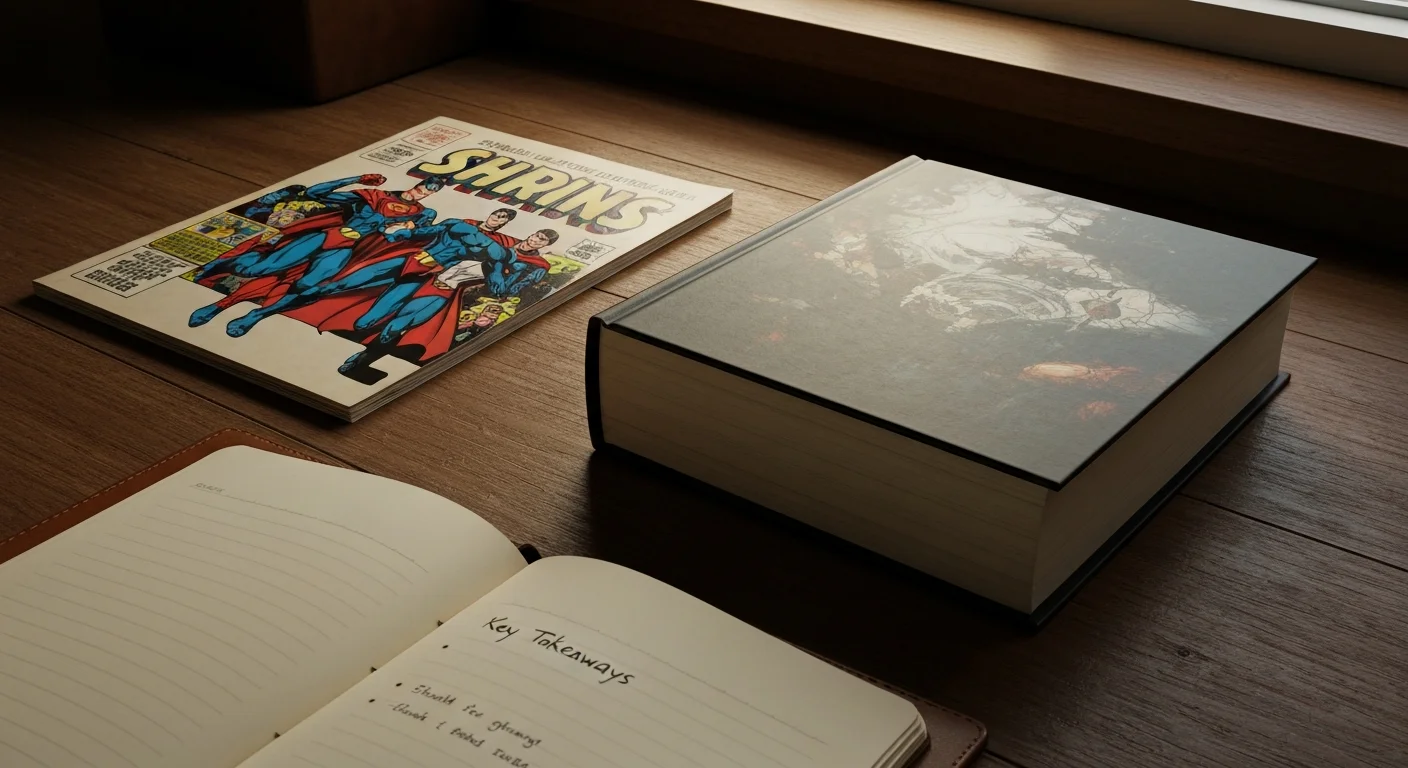
- Publishing Format: Comic books are thin, stapled periodicals (floppies), while graphic novels are square-bound, book-length narratives.
- Story Structure: Comic books rely on serialized, episodic arcs with regular cliffhangers, whereas graphic novels present complete, standalone stories.
- Collectibility: Single-issue comic books hold significantly higher vintage investment value and grading potential than compiled graphic novels.
- Trade Paperbacks: Many modern graphic novels are actually “trade paperbacks” that compile 5 to 10 serialized comic book issues into one volume.
- Pricing Dynamics: Single issues cost $4 to $6, while graphic novels and trade paperbacks retail between $15 and $40.
Defining the Difference Between Comic Book and Graphic Novel Formats
The distinction between these two formats shapes how audiences buy, read, and preserve sequential art. Periodical comic books, often called “floppies” in collector circles, consist of thin paper pages bound by staples. This method is known as saddle-stitch binding. These issues typically run 32 to 48 pages and feature advertisements, letter columns, and ongoing episodic stories. Publishers release these installments on a strict weekly or monthly schedule. They distribute them through specialized comic shops and digital platforms.
In contrast, a graphic novel is a standalone book containing a complete, complex narrative. These books feature perfect binding, meaning the pages are glued to a flat spine, mimicking traditional literature. Graphic novels contain zero advertisements and focus entirely on telling a singular story from beginning to end. According to publishing statistics tracked by Publishers Weekly, graphic novels now dominate mainstream bookstore sales, appealing to readers who prefer binge-reading complete stories over waiting for monthly installments.
The materials used also vary significantly between the two formats. Comic books traditionally used cheap newsprint, though modern publishers have upgraded to glossy paper. Graphic novels use heavier, high-quality matte or glossy paper stocks that preserve ink colors for decades. This physical durability makes graphic novels ideal for libraries and traditional bookstores, whereas delicate comic books require specialized protective storage to prevent degradation over time.
Structural Storytelling: Graphic Novel vs Comic Books
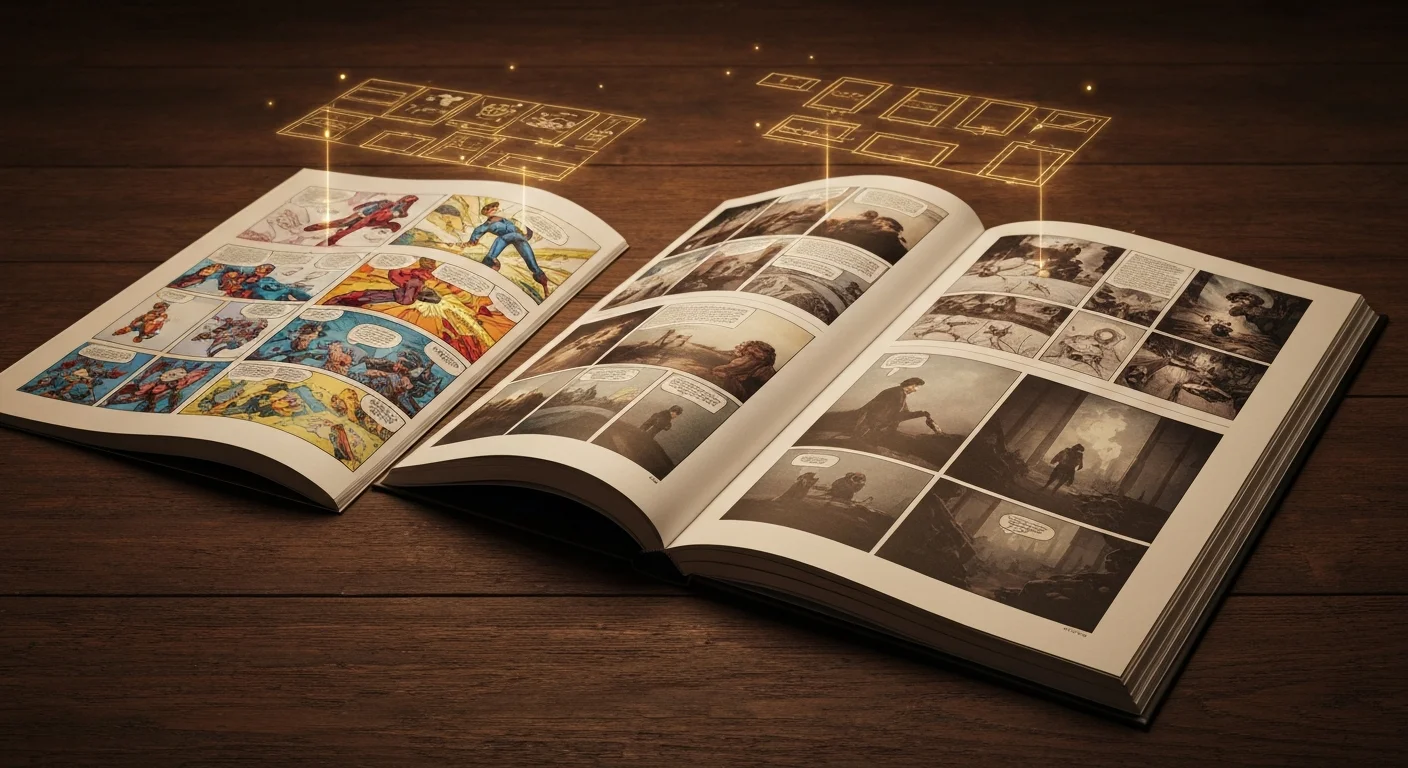
The choice of format dictates how creators construct their plots, balance pacing, and build suspense. Serialized comic books use a unique rhythm designed to keep readers coming back month after month. Writers must deliver a satisfying 20-page reading experience while ending each issue with a dramatic cliffhanger. This structure requires rapid pacing, frequent action sequences, and regular exposition to catch up new readers who might have missed previous issues.
Conversely, graphic novels afford creators the luxury of pacing similar to a traditional prose novel. Authors can introduce slow-burn character development, intricate subplots, and atmospheric art without the constraint of monthly page limits. This format accommodates diverse genres beyond traditional superheroes, including memoirs, historical non-fiction, and complex fantasy. If you are learning how to read a comic book, you will notice that the visual language remains identical, but the narrative flow in a graphic novel feels much more continuous and cinematic.
This difference has led to a writing style called “writing for the trade.” Since the early 2000s, many comic book writers have structured their monthly series into six-issue story arcs. They do this knowing the issues will eventually be compiled and sold as a single graphic novel volume. While this provides a cohesive reading experience in book format, it can sometimes make individual monthly issues feel decompressed or incomplete on their own.
The Collectibility Angle: Market Value and Preservation
The physical format heavily influences how the collector community values, preserves, and appraises these items. Single-issue comic books represent the primary target for vintage collectors and investors. Because of their fragile paper covers and stapled bindings, high-grade vintage comics are rare and highly sought after. Collectors frequently submit these issues to professional grading services to lock in their condition and maximize resale potential.
On the other hand, graphic novels rarely achieve the astronomical market heights of vintage single issues. While a rare first-edition comic can sell for millions, graphic novels are produced in large print runs on durable paper stocks, keeping their secondary market values relatively stable. For collectors looking to understand the precise valuation of their issues, consulting a professional comic book price guide is the most reliable way to track market movements.
The Evolution of Graphic Novels and Collected Editions
Understanding the modern marketplace requires examining how these formats merged over the last few decades. In the late 20th century, publishers realized that readers wanted to purchase entire story arcs without hunting down individual back issues. This realization birthed the “trade paperback” (often called a trade or TPB), which collects a multi-part comic book storyline into a single, square-bound volume.
Today, the line between original graphic novels (OGNs) and trade paperbacks has blurred for the casual reader. An OGN features entirely new, unpublished material written specifically for the book format. A trade paperback compiles previously published monthly comic book issues. According to industry sales data compiled by Comichron, compiled trade paperbacks and graphic novels make up over 70% of comic industry revenue in traditional book retail channels. This evolution has made graphic literature more accessible to the public while preserving the specialized market for single-issue comic collectors.
This shift also transformed the retail landscape. Historically, comic books were sold alongside newspapers and candy on spinner racks at newsstands, grocery stores, and gas stations. Today, specialty comic shops cater to the weekly single-issue crowd, while major bookstores and school libraries dedicate massive sections to graphic novels. This dual-distribution model ensures that both formats survive and thrive, serving different segments of the reading public.
Comparing the Two Formats Head-to-Head
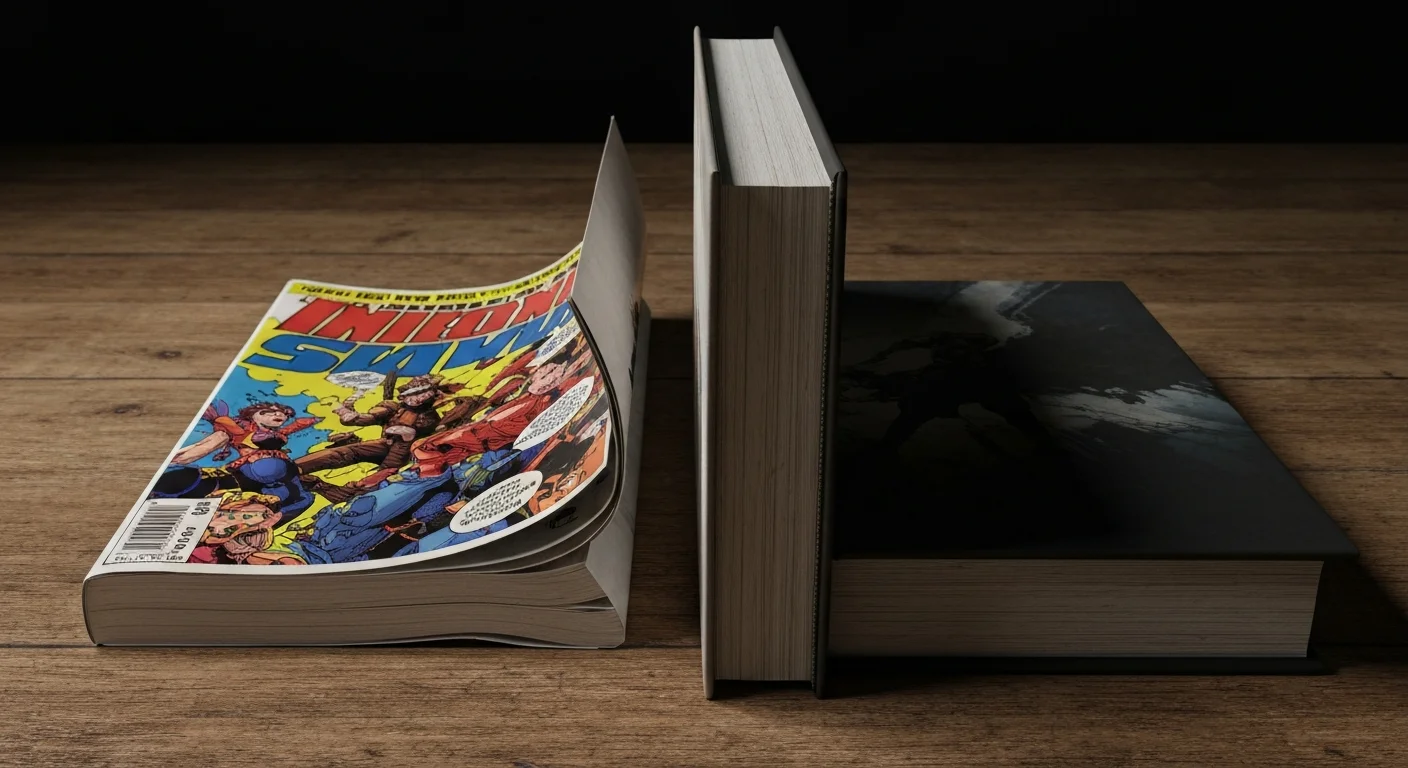
To make an informed decision for your reading habits or collection, you must evaluate the structural, financial, and logistical differences side-by-side. The following comparison highlights how these formats match up across several key categories.
| Feature | Comic Book (Single Issue) | Graphic Novel (or Collected Edition) |
|---|---|---|
| Binding & Cover | Stapled, flexible paper covers | Square-bound, paperback or hardcover |
| Page Count | Typically 32 to 48 pages | Typically 120 to 400+ pages |
| Content | Serialized episodes, ads, letters | Complete stories, zero advertisements |
| Average Price | $3.99 to $5.99 per issue | $14.99 to $39.99 per volume |
| Collectibility | High potential for speculative value | Low investment value, high utility |
As shown in the table, the choice between the two often comes down to budget and physical space. A reader looking to enjoy a massive storyline like “Watchmen” will find the graphic novel format far more affordable and easier to store than hunting down twelve individual, high-grade monthly issues from 1986.
Collector’s Guide: Appraising and Selling Your Collection
As professional appraisers, we frequently see collectors make critical mistakes when valuing their graphic literature. The most common error is confusing a collected trade paperback with the valuable original single issues. For example, owning a graphic novel that compiles the iconic “Batman: The Dark Knight Returns” is fantastic for reading, but it does not carry the same high market value as the original four-issue first printings from 1986.
When preparing to sell your collection, you should follow a systematic process to ensure you receive fair value. Organization and proper identification prevent costly mistakes during appraisal.
- Identify the printing: Check the copyright page of your graphic novel or the indicia on the first page of your comic book to determine the exact printing and edition.
- Assess the condition: Look for spine stress, corner dings, creases, and page yellowing, as condition dictates up to 90% of a collectible’s value.
- Separate single issues from books: Keep your monthly “floppies” stored in acid-free bags and boards, while graphic novels can be stored vertically on standard bookshelves.
- Consult the experts: Reach out to a professional buyer who can evaluate both your single issues and compiled volumes under one roof.
By working with established dealers who understand both the collectible and literary sides of the medium, you can navigate the selling process with confidence and clarity. Whether you possess vintage silver age comics or a modern library of graphic novels, knowing the technical differences ensures you receive an accurate and honest appraisal.
FAQ
What is the difference between comic book and graphic novel?
A comic book is a thin, stapled monthly periodical featuring serialized stories with ads, whereas a graphic novel is a thicker, square-bound book that contains a complete, self-contained narrative. Comic books focus on episodic, ongoing stories, while graphic novels offer a novel-length reading experience without advertisements.
Which format is better for investment and resale value?
Comic books, especially vintage first appearances and key issues, are far better for investment than graphic novels. Graphic novels are printed in massive quantities for reading utility, meaning they rarely appreciate in value on the secondary market compared to fragile, rare single issues.
Is a trade paperback considered a graphic novel?
Yes, in bookstores and libraries, trade paperbacks are classified as graphic novels because they share the same perfect-bound, book-length format. However, purists distinguish trade paperbacks as collections of previously published comics, while true graphic novels contain original, unpublished material.
How should you store and protect graphic novels compared to comics?
Store comic books in acid-free plastic bags with cardboard backing boards inside specialized comic boxes to prevent spine rolls. Store graphic novels vertically on standard bookshelves, away from direct sunlight and high humidity, just like regular literature.
Can you get a graphic novel professionally graded by CGC?
Yes, grading companies like the Certified Guaranty Company (CGC) grade graphic novels, softcovers, and hardcovers. However, because graphic novels are bulky and hold less speculative value, collectors typically reserve professional grading for rare, single-issue comic books.
When did the term graphic novel first become popular?
The term was coined in 1964 but gained mainstream popularity in 1978 when legendary creator Will Eisner used it to market his landmark book, “A Contract with God.” This marketing move helped bookstores and libraries recognize graphic literature as a serious medium for adult audiences.