
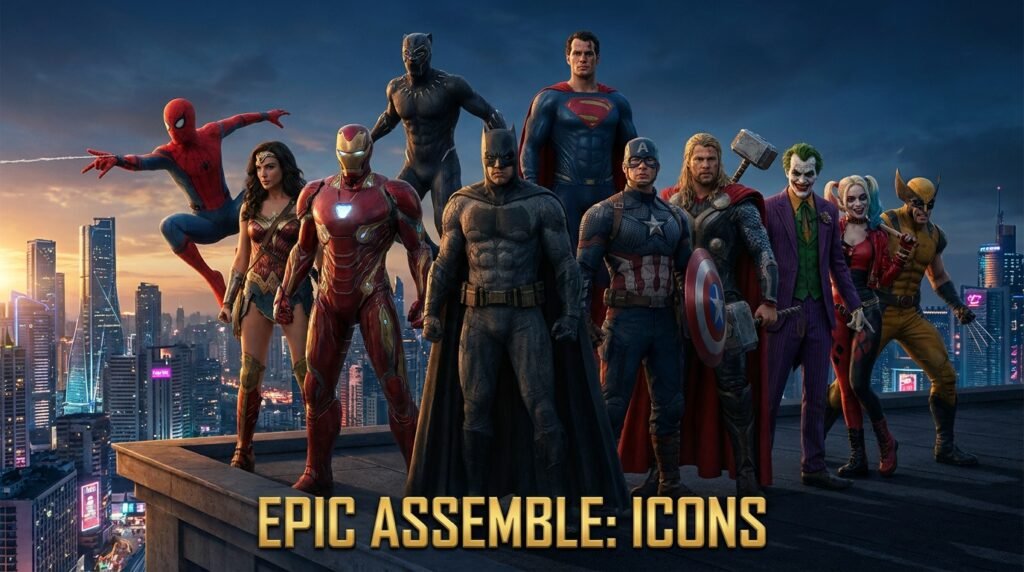
Navigating the vast universe of comic book characters can be a journey of discovery, whether you are a seasoned collector or new to the vibrant world of sequential art. For those seeking to understand the foundational pillars of superhero storytelling, beginning with characters like Superman and Batman offers a direct path into the genre’s enduring themes and origins. If your interest lies in character-driven narratives with profound psychological depth, exploring iconic figures such as Spider-Man or Wolverine will reveal why these personalities resonate with millions. Collectors focused on long-term value and historical significance should prioritize characters whose first appearances or key story arcs consistently command high prices, often reflecting their cultural impact. Ultimately, the “most popular” character often aligns with personal connection and impact, but universal acclaim and decades of storytelling cement certain figures as true legends. The Comic Buying Center helps enthusiasts understand the historical context and market value of items related to these beloved characters, ensuring fair appraisals for those looking to sell or deepen their collection.
Key Takeaways
- Iconic characters transcend their original medium, achieving global recognition through diverse adaptations.
- Longevity and consistent narrative quality are paramount in establishing a character’s enduring popularity.
- Market value for comic books featuring popular characters often correlates with first appearances, key events, and scarcity.
- The “Big Two” publishers, Marvel and DC, house the majority of universally recognized comic book figures.
- Independent creators have contributed significantly, introducing complex characters that resonate with specific fanbases.
Defining Iconicity in Comic Books
Understanding what elevates a comic book character to iconic status involves more than just their initial appearance; it is a complex interplay of cultural impact, narrative longevity, and adaptability across various media. An iconic character becomes a benchmark, influencing subsequent creations and reflecting societal values. Their stories often explore universal themes such as justice, heroism, loss, and the struggle between good and evil, making them relatable across generations and cultures. This enduring relevance is what truly defines their place in the pantheon of popular fiction.
The journey from comic panel to global phenomenon often includes successful transitions into film, television, video games, and merchandising. Consider Superman, who first appeared in Action Comics #1 in 1938. His immediate popularity led to radio shows, animated shorts, and eventually blockbuster films, solidifying his status as a symbol of hope and truth. This multi-platform presence ensures that even individuals who have never read a comic book can recognize and understand the essence of these characters. This broad exposure significantly contributes to their popular appeal and cultural permeation, turning fictional entities into archetypal figures. According to Statista, the global box office revenue for superhero movies reached an estimated $41 billion between 2010 and 2019, underscoring the immense public engagement with these characters outside of print.
The Pillars of Enduring Popularity
Several critical factors contribute to a comic character’s ability to maintain and grow its popularity over decades. These elements are not always present in equal measure but collectively form the foundation for lasting appeal.
- Originality and Innovation: Characters who broke new ground in their inception, offering fresh perspectives or powers, often carve out a unique niche. Batman, for instance, introduced the concept of a superhero without superpowers, relying on intellect and training.
- Relatability: Despite their extraordinary abilities, the most popular characters often possess human flaws, struggles, and aspirations. Peter Parker’s everyday problems as Spider-Man make him incredibly relatable to readers facing their own challenges.
- Strong Supporting Cast and Rogues Gallery: A hero is often defined by their adversaries and allies. Iconic villains like The Joker or Lex Luthor challenge their respective heroes in fundamental ways, enhancing their narratives.
- Consistent Reimagining and Evolution: Characters must adapt to changing times without losing their core identity. Writers and artists regularly update costumes, backstories, and conflicts, keeping the characters fresh for new audiences while respecting their legacy.
- Media Transference: The successful adaptation of characters into other forms of media, particularly film and television, exponentially expands their reach and solidifies their place in popular culture.
A common professional mistake collectors sometimes make is underestimating the long-term impact of consistent, quality storytelling. While first appearances are valuable, characters like Daredevil or Swamp Thing, who experienced significant creative renaissances decades after their debut, prove that sustained narrative excellence can dramatically elevate a character’s standing and market demand. These transformative runs often introduce new layers to established heroes, attracting fresh readers and revitalizing interest in their entire publishing history.
The Golden Age to Bronze Age: Founding Legacies
The earliest eras of comic books laid the groundwork for the modern superhero genre, introducing characters whose influence is still felt profoundly today. The Golden Age, starting in the late 1930s, saw the birth of the first archetypal superheroes, often embodying American ideals during wartime. These figures were predominantly heroic, straightforward, and served as moral compasses for their readers. Their simple, yet powerful, narratives resonated deeply with a public facing real-world challenges.
Superman stands as the undisputed patriarch of superheroes, debuting in 1938. His invulnerability, flight, and commitment to justice set the standard for many heroes to follow. He is not merely a character but a cultural icon representing hope and truth, a concept frequently explored in his ongoing sagas. Following close behind, Batman emerged in 1939, offering a darker, more complex hero driven by personal tragedy and a dedication to intellectual prowess over superhuman abilities. The contrast between these two titans created a dynamic that would define DC Comics and spark countless creative explorations. Wonder Woman, introduced in 1941, brought a much-needed female perspective, championing peace, love, and gender equality with Amazonian strength and wisdom, becoming an enduring feminist icon.
The Silver Age, beginning in the mid-1950s, revitalized the genre with a scientific and fantastical twist, often spearheaded by Marvel Comics. This era introduced heroes with more relatable flaws and internal conflicts, moving beyond the simpler morality of their predecessors. Stan Lee, Jack Kirby, and Steve Ditko were instrumental in creating a universe teeming with compelling characters. Spider-Man, debuting in 1962, revolutionized the industry with his teenage angst, financial struggles, and sense of immense responsibility, making him arguably the most relatable superhero ever created. His struggles with everyday life alongside his crime-fighting duties struck a chord with a new generation of readers.
Marvel’s innovative approach continued with the Fantastic Four (1961), who presented a family unit of superheroes, and The Avengers (1963), an assembly of Earth’s mightiest heroes including Iron Man, Thor, and the Hulk. Each character brought unique powers and personalities, often clashing as much with each other as with villains. The X-Men (1963) explored themes of prejudice and acceptance through a group of mutant heroes, giving voice to marginalized groups and becoming incredibly popular for their social commentary. The Bronze Age (early 1970s to mid-1980s) further deepened these character complexities, tackling more mature and gritty themes. Characters like Wolverine from the X-Men emerged with dark pasts and anti-heroic tendencies, reflecting a more cynical public mood and expanding the definition of what a superhero could be.
These foundational characters continue to dominate popularity polls and media adaptations. Original issues featuring their earliest appearances, such as Action Comics #1 or Detective Comics #27, command astronomical prices, illustrating their unparalleled historical and cultural significance. For instance, a copy of Amazing Fantasy #15 (Spider-Man’s first appearance) sold for $3.6 million in 2021, highlighting the immense value placed on these seminal works and their featured heroes.
The Modern Marvels: Redefining Heroism
The landscape of comic book characters continued to evolve significantly from the late 20th century into the 21st, pushing narrative boundaries and character archetypes. This modern era has seen a diversification of hero types, a deeper exploration of psychological complexity, and an increasing focus on characters that reflect a broader range of experiences and identities. While legacy characters from the “Big Two” still dominate, their stories have become more nuanced, adapting to contemporary societal concerns and literary styles.
Marvel Comics, in particular, has mastered the art of character rejuvenation, taking established heroes and infusing them with fresh relevance. Iron Man, once a B-list character, rocketed to unprecedented popularity in the 2000s, largely due to successful cinematic adaptations that highlighted his flawed genius and charismatic persona. Similarly, characters like Captain America and Thor have seen their stories reinterpreted for a new generation, emphasizing their heroic ideals while also confronting them with modern dilemmas. The ongoing narratives explore themes such as the burden of leadership, the cost of heroism, and the struggle to maintain one’s humanity amidst extraordinary circumstances.
Innovations and Expansions in Character Development
Modern comics often deconstruct the very notion of heroism, examining the moral ambiguities and psychological tolls associated with wielding immense power or responsibility. This approach has led to critically acclaimed runs and new fan favorites.
- Ms. Marvel (Kamala Khan): A prime example of a modern, diverse character who quickly gained popularity. As a Pakistani-American teenager from Jersey City, Kamala’s struggles with identity, faith, and family life alongside her newfound powers resonated with a wide, multicultural audience. Her rapid ascent to mainstream recognition underscores the demand for inclusive storytelling.
- Miles Morales (Spider-Man): Introduced in 2011, Miles took up the mantle of Spider-Man in the Ultimate Marvel universe after Peter Parker’s death. His unique background as a biracial teenager brought a new perspective to the iconic role, earning him immense popularity, especially after the critically acclaimed film Spider-Man: Into the Spider-Verse.
- Black Panther (T’Challa): While dating back to the Silver Age, Black Panther experienced a massive surge in popularity in the modern era, particularly with his solo film debut. His character embodies a fusion of ancient tradition and futuristic technology, exploring themes of sovereignty, leadership, and cultural heritage on a global stage.
- Deadpool: The “Merc with a Mouth” achieved widespread fame for his meta-commentary, irreverent humor, and unpredictable nature. His fourth-wall-breaking antics and anti-heroic charm appealed to readers looking for something different from traditional superhero narratives.
The modern era also sees characters like Doctor Strange and Black Widow gaining significant individual followings, thanks in no small part to their prominent roles in interconnected cinematic universes. These adaptations introduce new facets to the characters, often streamlining their origins or expanding their personal stories to fit broader narratives, thus introducing them to millions of new fans who might then explore their comic book roots. A crucial aspect of this modern success is the ability to maintain the core essence of the character while allowing for thematic and stylistic evolution, ensuring they remain relevant and captivating.
Independent Voices and Anti-Heroes: Expanding the Pantheon
While Marvel and DC hold a dominant share of popular comic book characters, the independent comic scene has consistently introduced groundbreaking figures that challenge conventions and capture niche, yet passionate, audiences. These creators often operate with greater freedom, allowing for more experimental narratives and characters that diverge significantly from traditional superhero archetypes. The rise of companies like Image Comics in the 1990s marked a significant shift, prioritizing creator ownership and fostering an environment for diverse voices and bold storytelling.
Characters from independent publishers often delve into darker, more morally ambiguous territories, blurring the lines between hero and villain. Spawn, created by Todd McFarlane, debuted in 1992 and quickly became a sensation. His story as a former soldier resurrected as a Hellspawn, struggling with his past and new demonic powers, resonated with readers seeking grittier, more mature themes. Spawn’s anti-hero status and striking visual design established Image Comics as a major player and solidified his place as an iconic independent character, leading to films, animated series, and extensive merchandising. This demonstrates how a strong, unique concept can break through the dominance of established publishers.
Key Independent Characters and Their Impact
Independent characters frequently explore themes that are less common in mainstream superhero comics, offering fresh perspectives and challenging reader expectations. These narratives often foreground psychological horror, existential philosophy, or satirical commentary.
- Hellboy: Mike Mignola’s creation, Hellboy, is a demon summoned to Earth as an infant but raised by humans to fight supernatural threats. His gruff demeanor, sardonic humor, and eternal struggle with his demonic heritage make him a compelling figure who grapples with destiny and belonging. The character’s unique blend of folklore, horror, and pulp adventure has cultivated a dedicated global fanbase.
- The Walking Dead Cast: While not a single character, the ensemble cast of Robert Kirkman’s The Walking Dead has achieved massive popularity through its long-running comic series and blockbuster television adaptation. Characters like Rick Grimes, Michonne, and Daryl Dixon (created for the show but integrated into the comic’s spirit) are iconic for their raw humanity, resilience, and complex moral choices in a post-apocalyptic world.
- Saga Characters: Brian K. Vaughan and Fiona Staples’ epic space opera, Saga, features a sprawling cast of memorable characters like Alana, Marko, and Hazel. Their story of a mixed-species family fleeing intergalactic war is rich with intricate world-building, compelling relationships, and adult themes, earning critical acclaim and a devoted readership.
- The Mask: Originally from Dark Horse Comics, this character embodies chaotic energy and anarchic humor, transforming its wearer into a living cartoon character with limitless power. Its popularity surged with the Jim Carrey film adaptation, showcasing how independent creations can transition successfully to mainstream media.
The success of these independent characters highlights the power of original storytelling and distinctive artistic vision. They prove that popular appeal isn’t solely tied to decades of history or corporate backing but can emerge from compelling narratives that speak to contemporary audiences. The market for comics featuring these characters can also be quite robust, with early issues of series like The Walking Dead #1 or Spawn #1 fetching significant prices from collectors. For enthusiasts looking to sell similar items, understanding the nuances of their popularity and condition is vital, and resources like those offered by the Comic Buying Center can provide expert appraisals for vintage toys, comic books, and more.
Understanding Character Value and Collectibility
The popularity of a comic book character directly correlates with the collectibility and market value of the comics in which they appear. This value is not static; it fluctuates based on various factors, including historical significance, scarcity, condition, and current cultural relevance. Collectors and investors alike pay close attention to these elements when assessing a comic book’s potential.
Key issues, such as a character’s first appearance, origin story, or pivotal moments in their narrative, typically command the highest prices. For example, a high-grade copy of Amazing Fantasy #15, the debut of Spider-Man, is one of the most sought-after comics in existence, with values reaching into the millions. Similarly, first appearances of major villains or significant costume changes can also drive up demand. The condition of the comic, graded on a scale from 0.5 to 10.0, is another critical determinant. A comic graded as “Near Mint” (9.4 or higher) can be worth exponentially more than a “Good” (2.0) copy, even for the same issue.
Beyond traditional comic books, merchandise featuring popular characters also holds significant value. Vintage action figures, trading cards, and other collectibles tied to beloved heroes and villains can fetch impressive sums. A 1978 original Star Wars Luke Skywalker action figure, for instance, in its original packaging, can sell for thousands of dollars. The enduring appeal of these characters extends far beyond the printed page, creating a vast ecosystem of valuable items for collectors. Professional appraisals are essential for accurately assessing these items, providing both context and fair market value. The expert team at the Comic Buying Center offers clear explanations of how these factors influence value, ensuring transparency and trust in every transaction.
| Character Era/Type | Defining Traits | Typical Narrative Focus | Cultural Impact & Legacy |
|---|---|---|---|
| Golden Age (e.g., Superman) | Infallible, morally pure, patriotic | Direct good vs. evil, societal uplift, war efforts | Established superhero archetype, symbol of hope |
| Silver Age (e.g., Spider-Man) | Relatable flaws, scientific origins, internal struggles | Coming-of-age, personal responsibility, everyday problems | Introduced humanistic heroes, expanded comic readership |
| Bronze Age (e.g., Wolverine) | Gritty, anti-heroic, morally ambiguous | Darker themes, social commentary, psychological depth | Reflected changing societal norms, more adult storytelling |
| Modern/Independent (e.g., Spawn, Kamala Khan) | Diverse backgrounds, complex identities, deconstructed heroism | Identity politics, existentialism, meta-narratives | Pushed boundaries of representation, creator-owned success |
The Evolution of Fandom: From Pages to Pop Culture
The journey of comic book characters from niche publications to global pop culture phenomena is a testament to their adaptability and universal appeal. What began as sequential art on newsprint has expanded into a multimedia empire, transforming these figures into household names and cultural touchstones. This evolution has been particularly accelerated by advancements in film and television technology, allowing for increasingly sophisticated and immersive adaptations.
Early adaptations, such as the 1940s Superman animated shorts and the 1960s Batman television series, introduced these characters to audiences beyond comic book readers. While often campy, these productions laid the groundwork for broader acceptance. The turning point arrived with films like Tim Burton’s Batman (1989) and Bryan Singer’s X-Men (2000), which demonstrated the commercial viability and narrative depth possible with superhero properties. These films treated the source material with greater respect, attracting both loyal comic fans and new viewers.
The advent of the Marvel Cinematic Universe (MCU) starting in 2008 redefined pop culture itself. By creating a sprawling, interconnected narrative across multiple films and television series, the MCU elevated characters like Iron Man, Captain America, and Thor to unprecedented levels of global recognition. The success of these interconnected stories has led to an explosion in demand for related merchandise, video games, and, crucially, the original comic books. Similarly, DC Comics characters have found renewed popularity through films like Christopher Nolan’s The Dark Knight trilogy and various animated productions. According to Marvel Studios, their films alone generated over $29 billion globally by 2022, showcasing the immense power of these characters in contemporary entertainment.
This omnipresence in media has created a feedback loop: successful adaptations drive new readers to comic shops, and robust comic book sales reinforce the characters’ relevance for future adaptations. This symbiotic relationship ensures that the most popular comic book characters continue to evolve and inspire, captivating new generations and cementing their place in the collective cultural consciousness. From dedicated comic book conventions drawing hundreds of thousands of attendees to ubiquitous merchandise and online fan communities, the fandom surrounding these characters is more vibrant and expansive than ever before. For collectors, this heightened visibility can also influence market trends; a character’s cinematic debut, for example, often leads to a spike in demand for their key comic book appearances, reinforcing the importance of staying informed about both comic and broader media developments.
FAQ
What makes a comic book character truly iconic?
An iconic comic book character is distinguished by their enduring cultural impact, narrative longevity, and widespread recognition across various media. They typically embody universal themes and resonate with audiences through relatable struggles and aspirational qualities, transcending their original publication to become a symbol in popular culture.
Which are considered the most popular comic book characters of all time?
The most popular comic book characters of all time are consistently figures like Superman, Batman, Spider-Man, and Wonder Woman. These characters from Marvel and DC Comics have decades of storytelling, significant cultural penetration through film and television, and resonate globally as archetypes of heroism and justice.
How do media adaptations influence a character’s popularity?
Media adaptations, particularly blockbuster films and popular television series, significantly amplify a comic character’s popularity by introducing them to a much broader, mainstream audience. This exposure often drives new interest in their comic book origins and increases demand for related merchandise and collectibles.
Are independent comic book characters as popular as those from Marvel and DC?
While typically not reaching the same universal recognition as characters from Marvel and DC, many independent comic book characters achieve substantial popularity within dedicated fanbases. Figures like Spawn, Hellboy, and the cast of The Walking Dead have cultivated strong followings and achieved success through their unique storytelling and distinct artistic visions.
Is there a financial benefit to collecting comics featuring popular characters?
Collecting comics featuring popular characters can offer a financial benefit, particularly when focusing on key issues such as first appearances or significant story arcs in high grades. The value is influenced by the character’s enduring appeal, scarcity of the comic, and its physical condition, making professional appraisal beneficial for informed investment or selling.
When did the concept of a superhero first appear in comics?
The concept of a modern superhero, as we recognize it today, first appeared in American comic books in the late 1930s. Superman, making his debut in Action Comics #1 in June 1938, is widely credited with kickstarting the Golden Age of Comics and establishing the core traits of the superhero archetype.