
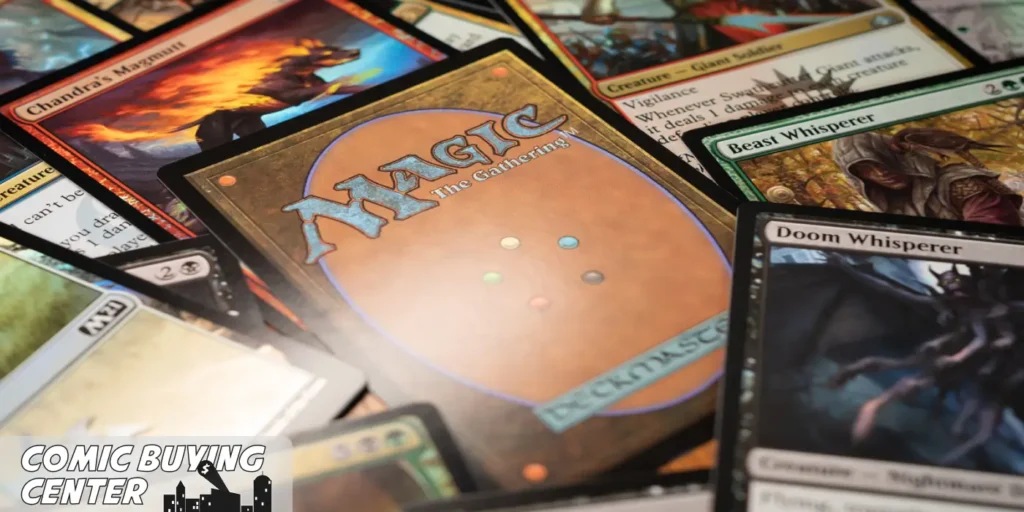
What Makes Magic: The Gathering Cards So Valuable?
Not every Magic card is worth a lot of those crisp $$$, but there are ones that can sell for thousands, sometimes hundreds of thousands. There are a few factors that contribute to this.
The print run is the biggest one. Cards from Magic’s earliest sets, like Alpha, Beta, and Unlimited, were produced in small quantities at a time when nobody knew how big the game would get. That supply never grows. And less supply of something super popular means it’s more expensive.
The Reserved List also matters. In 1996, Wizards of the Coast committed to never reprinting certain cards. Whatever exists is all that will ever exist.
Competitive demand pushes prices even more. Cards that see real play in Vintage and Legacy formats have two markets pulling on the same limited supply: collectors and players.
Condition determines the ceiling. A Power Nine card in poor shape and the same card graded PSA 9 can differ by a whopping $50,000 or more. Old cards, small print runs, no reprints, high demand. That’s the short version of why a 30-year-old piece of cardboard can be worth more than a nice car.
Top 10 Most Expensive Magic Cards of All Time
Magic has been around since 1993, and in that time, only a handful of cards have climbed to prices that would seem absurd to anyone who grew up buying packs at a gas station. Here are the ten most expensive Magic cards ever sold.
Black Lotus
Black Lotus is a zero-cost artifact that taps for three mana of any color, then sacrifices itself. One card, one turn, three free mana gives an advantage so broken it’s been banned from most formats since 1994.
Only 1,100 copies were printed in the Alpha set, making a clean copy nearly impossible to find. This card is also in the Reserved List. In April 2024, a CGC Pristine 10 Alpha copy sold for $3 million in a private sale, which is the most expensive MTG card…yet.
The One Ring (1/1 Serialized)
The One Ring gives its controller protection from everything until their next turn, plus a repeating card draw effect tied to life loss. The card is powerful on its own, but the 001/001 is somehow even more powerful.
It’s the first time Wizards of the Coast printed a unique card that could only be found inside a booster pack – one copy, anywhere in the world. The hunt for it was legendary.
In August 2023, rapper and MTG collector Post Malone purchased it for $2 million, one of the most expensive Magic cards ever.
The Power Nine
The Power Nine is a collection of nine cards, hence the name – Black Lotus, Ancestral Recall, Time Walk, Timetwister, and the five Moxen are all nine cards from Magic’s earliest sets that offer mana acceleration and card advantage that is straight up OP. All nine are restricted in Vintage and banned everywhere else. Yes, they’re just that stupidly strong.
Their value comes from three things: tiny original print runs, placement on the Reserved List, and 30 years of demand from collectors and competitive players.
Black Lotus is #1 (covered above), but the others aren’t far behind. A CGC Pristine 10 Alpha Mox Jet cost $108,000 at a Fanatics Collect Premier Auction, while a CGC Pristine 10 Alpha Ancestral Recall sold for $38,500 in a CertifiedLink auction in December 2023.
Splendid Genesis & Fraternal Exaltation (Richard Garfield Promos)
These two cards were never sold in stores. Richard Garfield, creator of Magic: The Gathering, made them to celebrate the births of his children – Splendid Genesis for his daughter in 1997, Fraternal Exaltation for his son in 1999, distributing copies to close friends, family, and Wizards of the Coast staff. Neither is legal in any format.
Only 110 copies of Splendid Genesis and 220 of Fraternal Exaltation were ever printed. Their value is entirely driven by rarity and genuine uniqueness, because they’re personal artifacts from the game’s creator, not just competitive cards.
The most expensive Splendid Genesis to sell at auction cost $72,000 in a Heritage Auctions sale in June 2022.
Mishra’s Workshop
Mishra’s Workshop taps for three colorless mana, usable only to cast artifact spells. Three free mana on turn one in an artifact-heavy deck may give a serious advantage, enough to make it a popular choice in Vintage for decades.
It’s on the Reserved List and comes from Antiquities (1994), Magic’s second-ever expansion set. Near-mint copies currently trade around $3,400, with high-grade slabbed copies running considerably higher. There’s no single record sale that defines the card; it just never gets cheap.
Old Dual Lands (Original Dual Lands)s
The ten original dual lands (Underground Sea, Volcanic Island, Tropical Island, Tundra, and six others) each tap for two colors of mana with no drawback. No entering tapped, no life payment, like most other cards. They count as two basic land types simultaneously, making them fetchable and synergistic in ways no modern land replicates.
All ten are on the Reserved List, printed only across Alpha, Beta, Unlimited, and Revised. The most valuable tend to be the four half-blue lands: Underground Sea, Volcanic Island, Tropical Island, and Tundra. Alpha Underground Sea currently trades around $33,000, and high-grade slabbed copies go for higher prices.
Juzam Djinn
A 5/5 creature for four mana that deals 1 damage to you at the start of each upkeep. In 1993, that tradeoff was laughably one-sided because a 5/5 could end games in four swings, and paying 1 life per turn barely mattered.
It dominated Magic’s early competitive games and has been very popular in an Old School format ever since. It’s on the Reserved List, comes from Arabian Nights (Magic’s first expansion), and its iconic status keeps demand.
A PSA 10 copy sold for $8,000 in February 2022 – the highest graded sale on record.
Candelabra of Tawnos
Candelabra of Tawnos costs X mana to activate and untaps X target lands. On its own, that sounds modest, but pair it with lands that produce multiple mana, and it generates near-infinite resources in a single turn.
It only ever appeared in Antiquities (1994), Magic’s second expansion, and is on the Reserved List. Competitive Legacy players run it in High Tide and 12-Post decks, meaning demand comes from both collectors and active players on the same small supply.
Near-mint copies currently trade around $2,200-$3,600. The highest confirmed graded sale was a PSA 10 that sold for $3,950 in September 2021.
Time Vault
Time Vault enters the battlefield tapped and doesn’t untap normally, but if you skip your next turn, it untaps. Tap it again and take an extra turn. On its own, that’s a slow trade. Paired with any artifact that untaps other artifacts, it’s an infinite turn engine.
It’s from Alpha/Beta/Unlimited, on the Reserved List, restricted in Vintage, and banned everywhere else. It’s rare and laughably OP.
A PSA 10 Alpha copy sold for $17,400 in 2023 – the highest confirmed graded sale on record.
Copy Artifact
For two mana, Copy Artifact enters the battlefield as a duplicate of any artifact in play, and stays on as an enchantment too. Copy a Mox for free mana, copy a Mishra’s Workshop for three mana a turn, copy whatever’s most broken on the table. A pretty good deal for its price.
It’s from Alpha (1993), on the Reserved List, and with only around 1,100 copies ever printed, it’s scarce. Revised printings exist for around $44, which tells you exactly what the premium on an Alpha copy represents.
A Limited Edition Alpha copy sold for $29,400 at a Fanatics Collect Premier Auction in February 2023.
Most Expensive Modern MTG Cards
The top 10 most expensive magic cards listed above come from Magic’s earliest years. Modern cards work differently, but a handful still cost quite a lot. What are the most expensive Magic: The Gathering cards these days?
Serialized Cards from Universes Beyond
Wizards of the Coast began printing serialized cards (numbered copies with a fixed print run) in 2023, starting with the Lord of the Rings set. The One Ring (covered above) was the most extreme example, but the model has continued across every major Universes Beyond release since.
What drives the prices isn’t just the gameplay power. It’s the combination of franchise crossover, a hard cap on supply, and premium foil treatments that regular cards don’t get.
The Golden Traveling Chocobo from the Final Fantasy set, one of only 77 serialized copies, currently sells for $55,000 to $60,000+, making it the most expensive Universes Beyond card after The One Ring.
High-Value Mythic Rares and Collector Variants
Not every expensive modern card relies on serialization. Some climb through a different combination: powerful competitive gameplay, extremely limited print, and crossover demand.
Modern Horizons sets consistently produce the priciest competitive mythics, including cards like Ragavan and Nimble Pilferer, which peaked above $100 during its ban-scare period. But the highest non-serialized prices now come from premium collector variants in Secret Lair drops. The Cosmic Foil Soul Stone from the Spider-Man Secret Lair features a layered three-dimensional foil treatment with an extremely low pull rate. A card that sells for $58 in its standard version regularly sells for around $33,000 to $35,000 in Cosmic Foil.
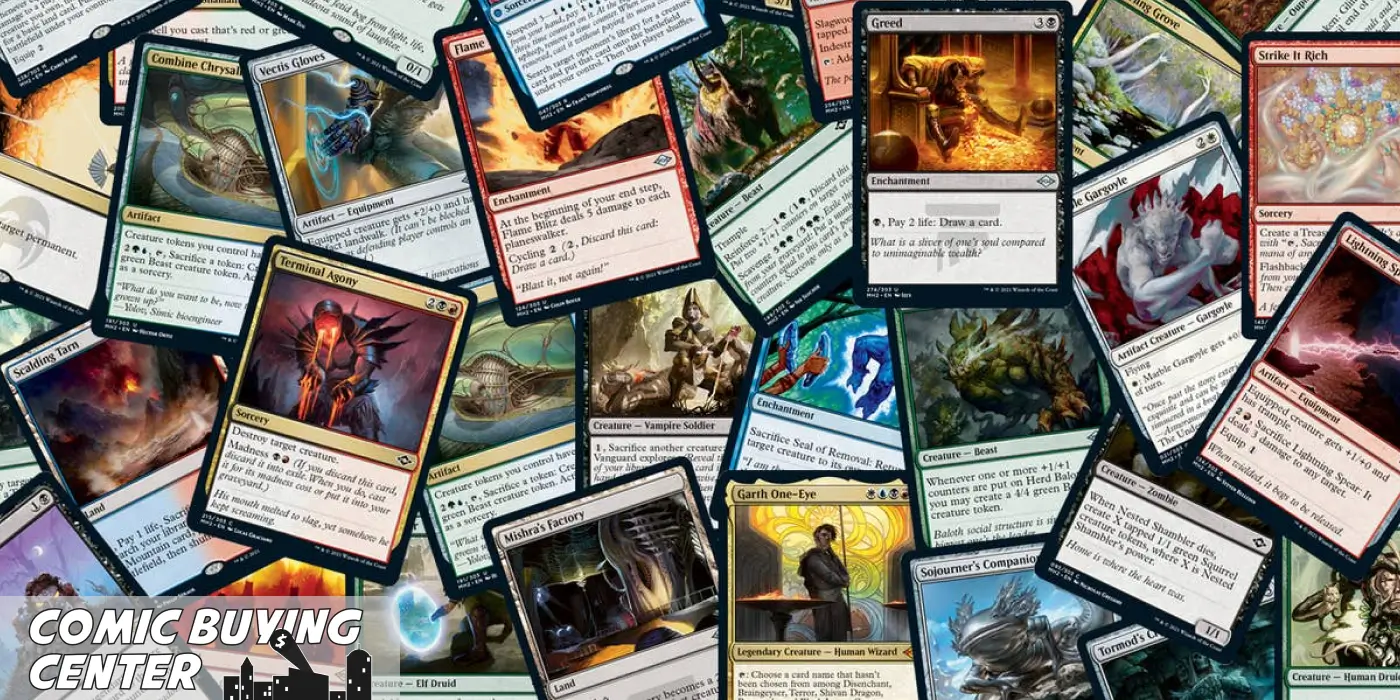
How Are MTG Card Prices Determined?
- Print run and availability. Older cards from small sets have a fixed supply. Reserved List cards can never be reprinted, so they are finite, and nothing can change that.
- Competitive demand. Cards played in Vintage, Legacy, or Commander have active buyers who need copies to play. That keeps prices high even when collectors are not really interested.
- Condition and grade. A PSA 10 and a heavily played copy of the same card can differ in price by tens of thousands of dollars.
- Set and era. Alpha copies cost more than Beta, which cost more than Unlimited, which cost more than Revised, even for identical cards. Earlier print runs are scarcer and have more prestige.
- Crossovers. Universes Beyond cards attract buyers who aren’t traditional MTG collectors. A Final Fantasy or Marvel card can spike purely on franchise recognition.
- Treatment rarity. Serialized copies, special foil variants, and Secret Lair bonus cards are deliberately produced in tiny quantities. The same card in a different frame can be worth 500 times more.
- Market speculation. Like any collectible, MTG prices respond to hype, tournament results, bans, and unbans. A card can double overnight if it suddenly becomes a format definer, or crash just as fast.
MTG Card Market Trends
- Vintage cards have stabilized. After record-breaking sales in 2021-2022, high-grade Power Nine and Reserved List cards settled back 10-20% from their peaks. The very top end still goes for record prices, though. But mid-grade vintage has softened.
- Modern cards are doing the opposite. Universes Beyond crossovers have attracted collectors who don’t play the game at all. The Final Fantasy set in 2025 broke sales records within weeks of release, and Hasbro reported 2024 as Magic’s strongest revenue year on record.
- Singles are winning over sealed products. Experienced buyers know what they want and go straight for it rather than gambling on packs.
- Grading is growing. More than 20 million cards were professionally graded in 2024. High-grade copies are increasingly treated as alternative investments (this is not financial advice).
- The market changes. Tournament bans and unbans can change a card’s price by 50% overnight. Anyone buying or selling should track prices in real time using sites like MTGGoldfish, TCGPlayer, and MTGStocks.
Do You Have Old Magic Cards Worth Money?
Most people who find an old collection don’t know what they’re sitting on. A stack of cards from the early 1990s could be worth a few dollars…or a few thousand. So it’s worth knowing what you have.
At Comic Buying Center, we do more than sell comic books. We buy Magic: The Gathering collections of every size, from single key cards to long boxes full of vintage sets. Our appraisers know the market, follow the latest data, and will give you an honest number and, if you wish, advice on what to do next.
Do you need a quick comic book appraisal or want to sell magic cards you’ve been holding onto for years? We make the process simple and efficient. Bring your collection in, or we’ll come after it. Ergh, that was not a threat; we just offer flexible house calls.
At the end of the day, you might be surprised what’s in that box.